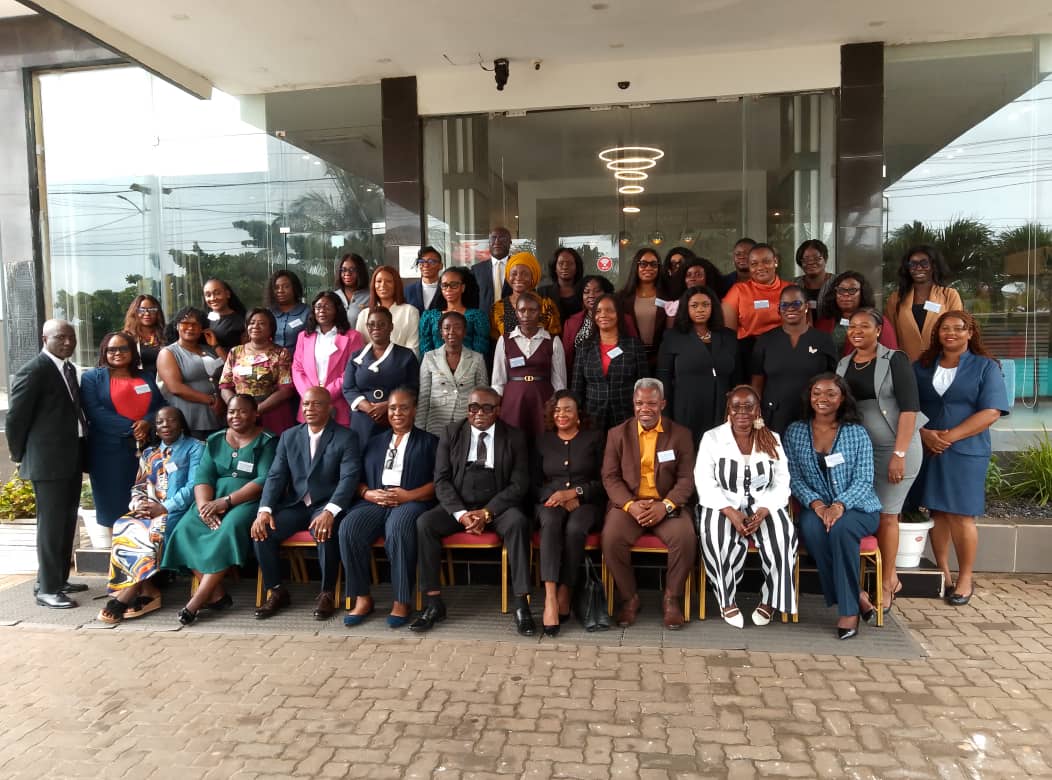
The West African Institute for Financial and Economic Management (WAIFEM) on Monday 14th September, 2026 began a 5-day regional workshop on Women in Leadership: Understanding Gender Dynamics in the Workplace. The programme was held at the Sierra Palms Hotel in Freetown bringing together participants from West African countries, including Liberia, Ghana, Gambia, Nigeria and Sierra Leone.
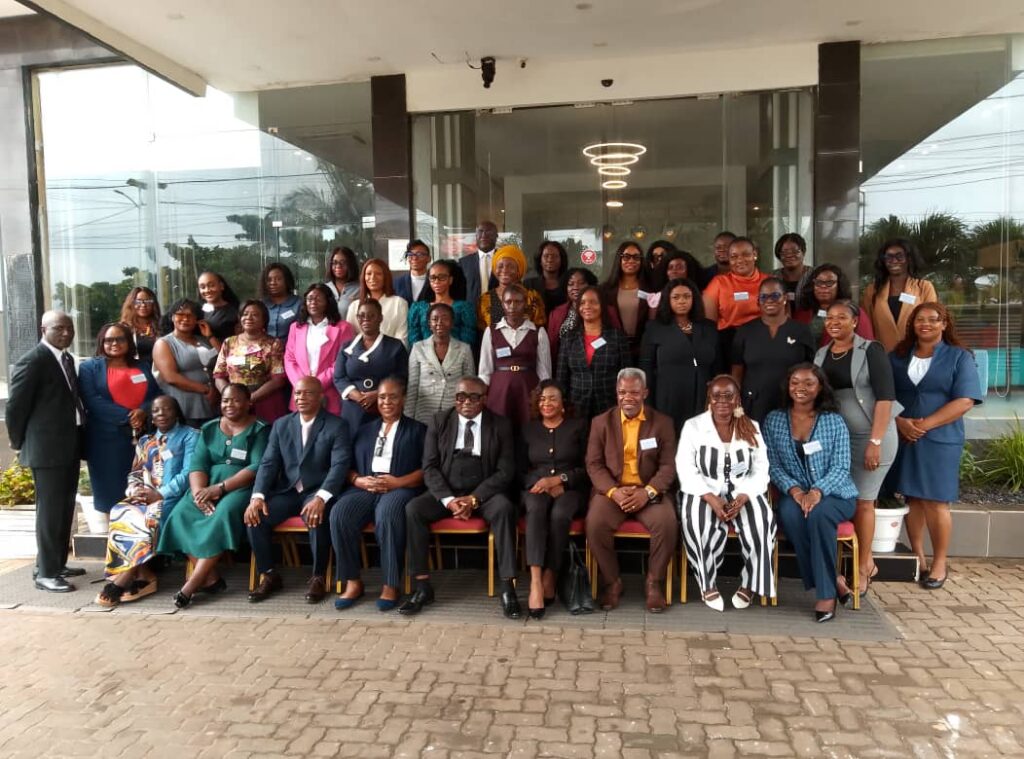
In his welcome address Dr. Alvin Johnson, Director Governance and Institutional Development WAIFEM, representing the Director General of WAIFEM Dr. Baba Y. Musa on behalf of the Management and Staff of WAIFEM thanked participants for coming, adding that it’s an important regional workshop on Women in Leadership: Understanding Gender Dynamics in the Workplace.
He also thanked the Government and people of the Republic of Sierra Leone for their gracious hospitality in hosting such programmed.
Despite growing global leadership concerns, particular emphasis is being placed on bringing women to the forefront of leadership in society. The efforts are targeted at removing the barriers that restrict women’s leadership in both public and private sector organizations.
By engaging in women’s leadership development programs, women leaders become conscious of leadership , not as personal achievement but rather as a process that emerges from bringing together their values, vision, and the future of the organizations they lead. Ultimately, women in leadership roles become the force driving the future of the organizations they lead.
The case for women in leadership is now firmly established, but the leadership gap remains significant.
He said Sierra Leone’s experience provides an encouraging example of what purposeful policy action can achieve. The Gender Equality and Women’s Empowerment Act 2022 and the Public Elections Act 2022 have supported greater participation of women in public life. According to UN Women, women’s representation in the National Parliament rose substantially following the 2023 elections, while the World Bank’s 2026 Gender Data Landscape reports that women held 29.5 percent of parliamentary seats in 2024 and 33.3 percent of ministerial-level positions. These gains are important, but they should be viewed as a platform for further progress rather than an endpoint.
Gender inclusion remains an important dimension of WAIFEM’s capacity-development mandate. Our approach is to ensure that women and men have equitable opportunities to acquire knowledge, develop leadership capabilities and contribute fully to institutional and economic development.
- Mainstream the gender dimension across WAIFEM’s training and capacity-building programmes, ensuring that equity and inclusion are considered in areas ranging from macroeconomic management and financial-sector development to governance, leadership and organisational effectiveness.
- Promote greater participation of women as facilitators, experts and resource persons, thereby strengthening visibility and demonstrating that women can and should occupy positions of influence across technical and professional fields.
- Encourage member institutions to nominate more women for WAIFEM programmes and to create internal leadership pipelines that identify, mentor and prepare high-potential female professionals.
- Strengthen opportunities for mentoring, professional networking and career development so that women can progress from entry and middle-management levels into senior leadership and decision-making positions.
WAIFEM’s own participation data demonstrate progress. Female participation in WAIFEM training had risen to 40.8 percent by 2024, compared with 27 percent during 2008–2015. While this is encouraging, it also reminds us that sustained institutional action is necessary to move from increased participation to greater leadership outcomes.
Over the next five days, participants will explore the dynamics that shape leadership opportunities and workplace relationships, while strengthening their capacity to:
- Recognise and address implicit and explicit gender bias in organisational decision-making;
- Build inclusive leadership cultures based on merit, integrity, accountability and respect;
- Strengthen negotiation, communication, strategic thinking and decision-making skills;
- Develop mentoring and sponsorship approaches that support women’s progression into leadership;
- Design workplace practices that promote fairness in recruitment, promotion, performance management and succession planning; and
- Translate the lessons from the workshop into practical institutional actions and measurable outcomes.
In his Conclusion statements, empowering women in leadership is not merely a question of fairness. It is a strategic imperative for stronger institutions, more productive economies and more resilient societies. In an environment characterised by rapid technological change, demographic pressures and economic uncertainty, West Africa cannot afford to underutilise any segment of its talent.
In his keynotes address, on behalf of the Bank Governor, Dr Ibrahim Stevens, the Director, Legal Affairs Department, Mr. Sullay A. Mannah commended WAIFEM for convening the programme and the regional body’s continued commitment to strengthening human and institutional capacity across West Africa.
He said institutions responsible for economic and financial management, investment in people is not just a simply administrative function; it is an investment in institutional resilience, policy effectiveness, and sustainable development.
Mr. Mannah noted that the important conversation taking place in Freetown and that Sierra Leone’s experience demonstrates that meaningful progress is possible when women are given opportunities to participate fully in public service and national development. ‘’However, representation alone is not enough; women must have the opportunity to advance, lead, and influence workplaces, institutions, and economies,’’ he said.
The issue is no longer whether women have the capacity to lead—they have demonstrated this repeatedly. The challenge is for institutions to identify and develop talent, remove unnecessary barriers, and create enabling environments where capable women can advance, exercise meaningful influence, and succeed in leadership.
The global leadership gap remains significant. The World Economic Forum’s Global Gender Gap Report 2025 found that women occupied only 28.8 percent of top leadership positions globally, despite women representing a much larger share of the global workforce. The International Labour Organization similarly reports that women hold only about three in ten managerial positions worldwide. These figures are not mere statistics.
He said these figures represent lost opportunities. They represent women whose skills may not be fully utilised, organisations that may be drawing from a narrower talent pool than necessary, and economies that may be leaving productive capacity on the table.
Mr. Mannah said for Central Banks, financial institutions, Ministries of Finance, and other public institutions, the issue is particularly important.
‘’Our institutions operate in an increasingly complex environment characterised by technological disruption, financial innovation, climate-related risks, changing demographics and heightened expectations for transparency and accountability. We need the best people to navigate these challenges, and we cannot afford to overlook talent on the basis of gender, Mr. Mannah noted.
He said women in leadership are, therefore, not simply a matter of representation. They are part of the broader question of institutional effectiveness and economic performance. When we develop women as leaders, we are not doing women a favour.
The central theme of the workshop is: Gender Dynamics in the workplace. Gender dynamics are often not obvious. They can exist in the assumptions we make about who is suitable for leadership. They can influence who receives high-profile assignments. They can affect who is invited to important meetings. They can shape perceptions of confidence and assertiveness. They can influence recruitment, promotion, performance assessment, and succession planning. Sometimes these dynamics are deliberate.
He concluded that the history of effective women leaders from Africa to the global stage demonstrates that leadership is not constrained by gender. What often constrains leadership is access to opportunity, development, networks, and institutional support. Our responsibility is therefore clear.
Mr. Abubakarr Noma Adamu, Deputy Programme Manager, GIDD, WAIFEM express gratitude to the Honourable Governor, Bank of Sierra Leone managements and staffs for all the assistance given to WAYFEM towards the execution of the program and also the Sub region representatives for making this possible for this programme.