By Mohamed Konneh
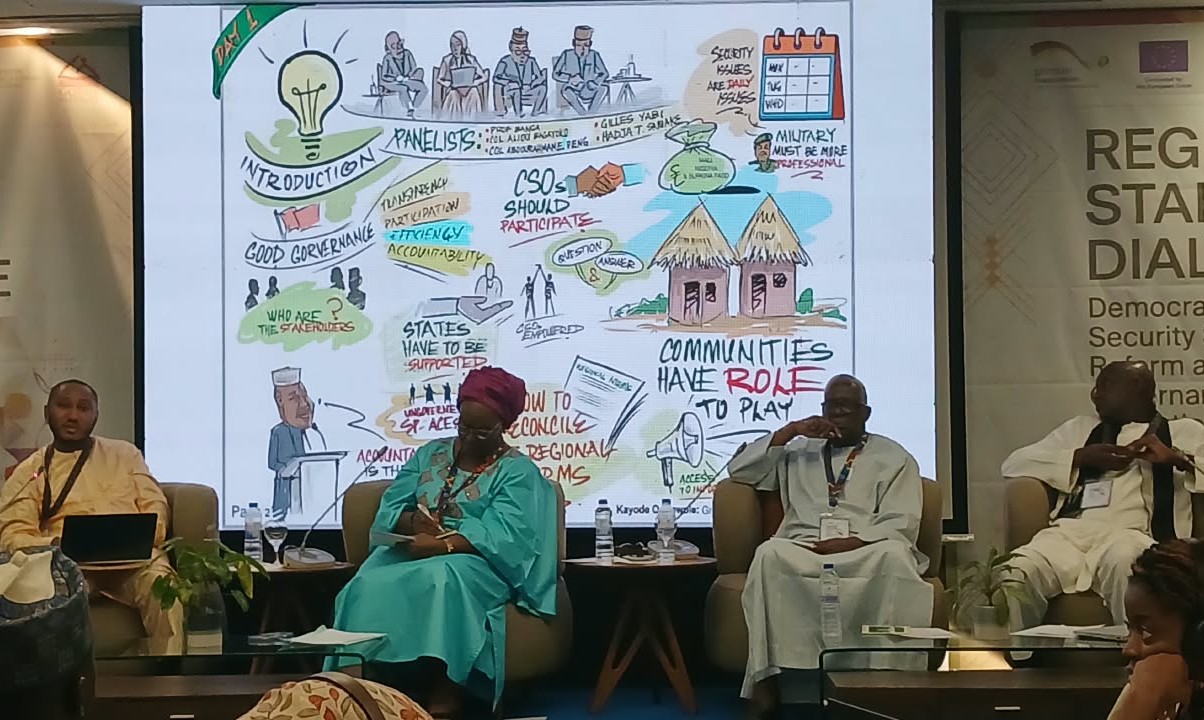
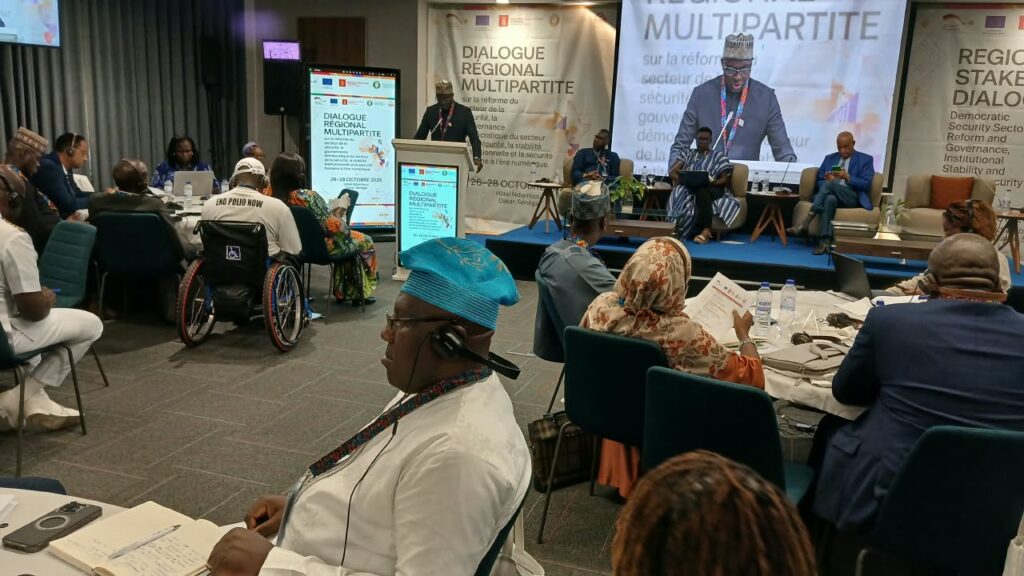
With funding from BMZ, European Union and Danissh Ministry of Foreign Affairs, the ECOWAS Commission, in partnership with the German Agency for International Cooperation (GIZ) through the ECOWAS Peace, Security and Governance (EPSG) Project, on Monday 26th October 2026 convened a three-day Regional Multi-Stakeholder Dialogue in Dakar from holding at Hotel Ndiambour.
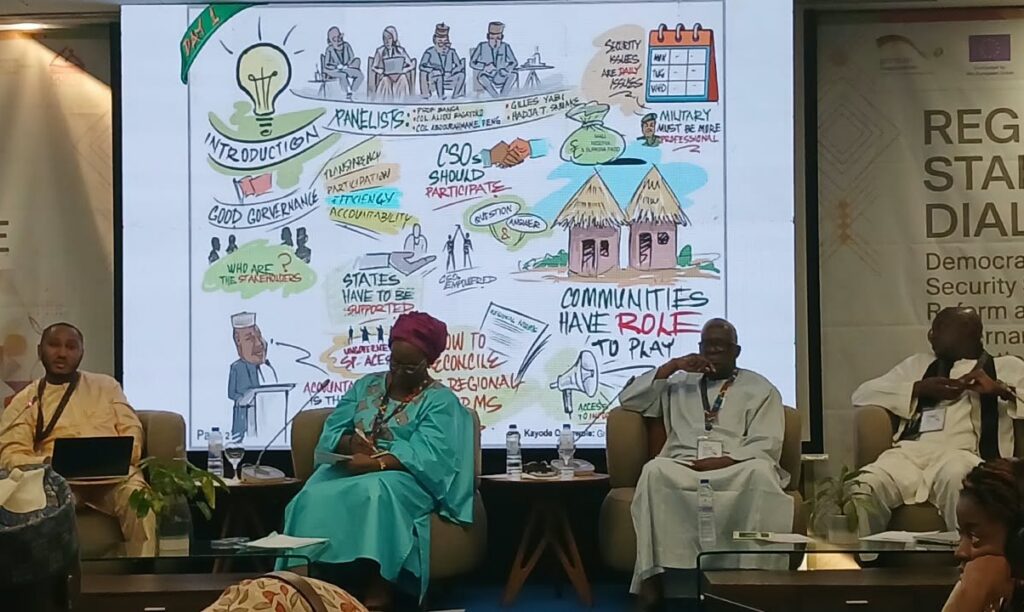
The dialogue is designed, facilitated and documented by the Gorée Institute, one of West Africa’s leading governance think-tanks. The meeting comes at a critical moment for West Africa. The region is going through a period of severe institutional upheaval, marked by a succession of unconstitutional changes of government since 2020.
In his opening remarks the Executive Director of Gorée Institute Doudou Dia said with protracted political transitions dragging on the Sahel countries mainly Burkina Faso, Mali and Niger exiting ECOWAS to form the Alliance of Sahel States (AES), regional norms of constitutional convergence are being severely tested. He said at the heart of the dialogue is one pressing question: How to ensure democratic civilian control over defence and security forces in a time of coups, insecurity and digital disruption.
Mr. Doudou Dia noted that four key trends make the dialogue urgent.
‘’First, the erosion of constitutional order. The recent wave of coups has exposed the sometimes-strained relationship between civilian authorities and defence and security institutions, raising difficult questions about loyalty, professionalism and the rule of law.
Second, accountability mechanisms that remain fragile. Across the region, many parliamentary defence committees lack access to information, technical staff and real budgetary powers. Inspectorates, ombudsmen and national human rights institutions remain unevenly resourced and often unable to provide effective oversight.
Third, persistent insecurity that primarily affects the population. Violent extremism is spreading from the Sahel towards the coastal countries of the Gulf of Guinea. Cross-border crime and inter-community tensions are increasing, serving as a stark reminder that security must be measured by the safety of women, men, young people and local communities — not just the state.
Fourth, the rise of digital threats. Disinformation, cybercrime, attacks on critical infrastructure, unregulated surveillance, and the use of Artificial Intelligence for security purposes are transforming both the nature of threats and the tools of governance. These phenomena raise new questions regarding legality, proportionality and democratic oversight,’’ he narrated.
These dynamics feed into one another. A disinformation campaign can pave the way for, or legitimise, an institutional breakdown. A surveillance tool acquired without parliamentary scrutiny can be used to target journalists or opponents. A security response that overlooks women and young people fuels mistrust.
Declaring the Regional Multi-Stakeholder Dialogue, Hon Abdoul Sonko noted that in ECOWAS, there is currently a lack of a structured regional forum where security actors, oversight bodies, parliamentarians, civil society and researchers can exchange experiences and jointly seek practical solutions.
‘’It is this gap that the Dakar dialogue aims to fill while calling for frank discussions during the three days. Use this dialogue to share experiences and build networks,’’ he said.
The Representative of GIZ, while making her statement thanked the funders of the dialogue and participants for attending.
She said the security sector reform is key to peace and stability of a state and that new questions arise from the aspect of disinformation, fake news and lot more when it comes peace and security.
The GIZ Rep noted that Germany and Demark stand ready in supporting peace and sustainable security within in the region, adding that success of the dialogue is not by the recommendations from the dialogue but the actions taken afterwards.
The dialogue aims to make these links visible and open for frank discussion. The initiative forms part of the implementation of the ECOWAS Conflict Prevention Framework (ECPF) 2020–2030. It is also anchored in the ECOWAS Policy Framework for Security Sector Reform and Governance, the 1999 Protocol on the Mechanism for Prevention, Management and Resolution of Conflicts, the 2001 Additional Protocol on Democracy and Good Governance, the 2011 Code of Conduct for the Armed Forces and Security Services, and the ECOWAS Gender Policy. It contributes directly to the second priority area of the EPSG Project — responsible, rights-based governance of the security sector. It also draws on the Women, Peace and Security (WPS) and Youth, Peace and Security (YPS) agendas.
The general objective is to strengthen regional multi-stakeholder dialogue, knowledge and capacity on democratic governance of the security sector, security sector reform, institutional stability and human security in the digital age, while laying the foundations for a sustainable regional knowledge-generation mechanism.
Specifically, the forum will bring together civil authorities, defence and security forces, parliamentarians, oversight institutions, civil society, researchers, women and youth around the same table in a safe and facilitated space. It will strengthen technical knowledge on accountability and oversight, facilitate open discussion on digital threats, promote peer-to-peer learning between member states, and produce operational recommendations with designated responsibilities and timelines.
The dialogue will also officially launch the regional platform for the production and sharing of knowledge on democratic governance of security, security sector reform and human security in the digital age.