By Mohamed Konneh
The National School Feeding Programme has recorded remarkable progress, now reaching 983,993 children in Government and Government-assisted primary schools across Sierra Leone, according to the Current Status Report as at July 2026.
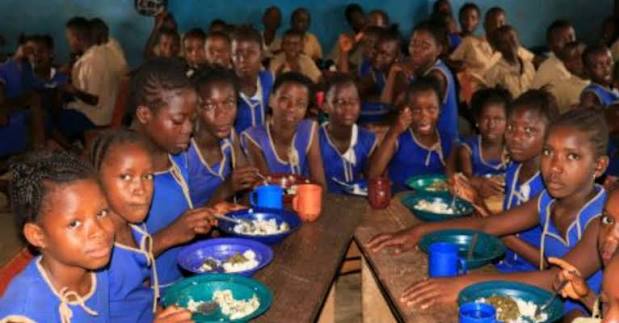
The figures, presented during the bilateral policy hearing and budget discussion 2026, show that 53 percent of the total 1,864,654 learners enrolled in government and government-assisted primary schools benefited from the programme in the 2025/2026 academic year. The presentation was done by the ministry of Basic and Senior Secondary Education at the Miata Civic Center-Youyi Building in the Freetown.
The report further indicates that the programme has achieved 94 percent district coverage, with 15 out of the 16 districts in the country currently covered.
At chiefdom level, 147 out of 203 chiefdoms, representing 72 percent, are now benefiting.
In terms of institutional coverage, 3,712 out of 6,596 Government and Government-assisted primary schools – 56 percent – are now included in the feeding initiative.
The School Feeding Programme is a flagship component of the Free Quality School Education (FQSE) initiative launched by the Government of Sierra Leone. It is designed to boost enrolment, attendance, retention and learning outcomes, particularly for children from poor and vulnerable households, while addressing short-term hunger and malnutrition.
Stakeholders at the presentation described the progress as a major step towards inclusive education and human capital development. The programme has not only helped to keep children in school but has also stimulated local agriculture through the purchase of locally produced food items and created jobs for women cooks and community-based suppliers.
Despite the gains, the report highlights that significant gaps still remain. One district, 56 chiefdoms, and 2,884 primary schools are yet to be covered. Similarly, about 880,661 pupils – representing 47 percent of learners – are still not benefiting from the daily meals.
Education analysts say closing these gaps will require increased government financing, stronger partnerships with development partners such as the World Food Programme, Catholic Relief Services and other NGOs, and improved community ownership.
They also called for strengthened monitoring mechanisms to ensure food quality, transparency in procurement, and timely delivery, especially in hard-to-reach riverine and mountainous communities.
With the government’s commitment to achieving 100 percent coverage, many parents and educators are optimistic that the programme, if sustained and expanded, will significantly contribute to reducing out-of-school children and improving learning outcomes across the country.
The bilateral policy hearing and budget discussion is part of effort for Ministries, Departments and Agency to present their budget for scrutiny. The process which started on the 21st September 2026 will run for the next ten days bringing MDAs together.