By Komba Fillie
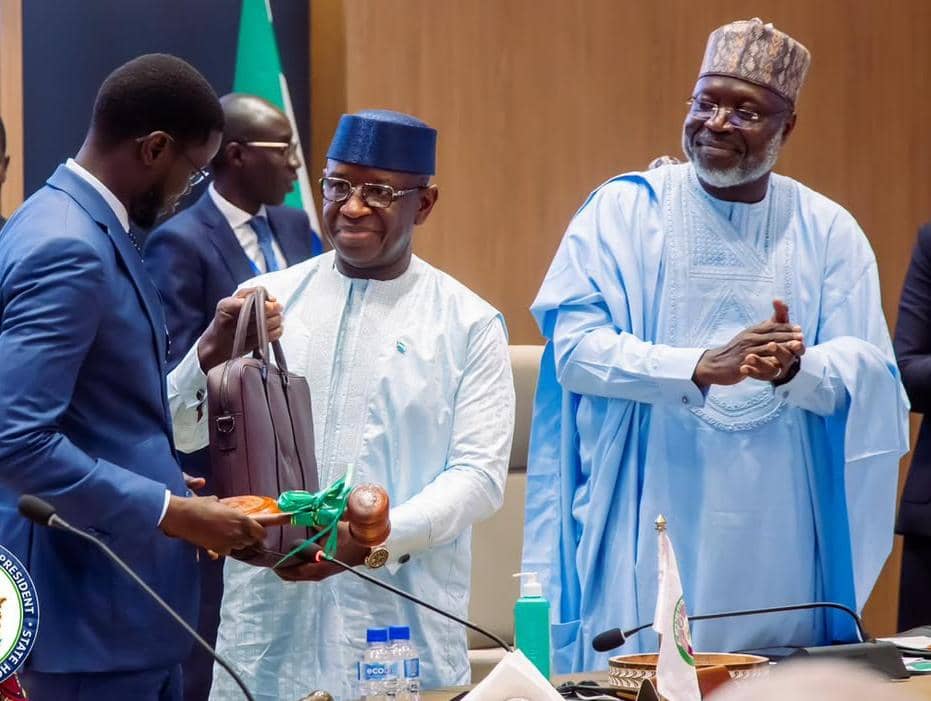
President Bassirou Diomaye Faye of Senegal has officially assumed the Chairmanship of the ECOWAS Authority of Heads of State and Government, inheriting a legacy of transformative regional infrastructure and renewed commitment to West African integration established by his predecessor, President Dr Julius Maada Bio of Sierra Leone.
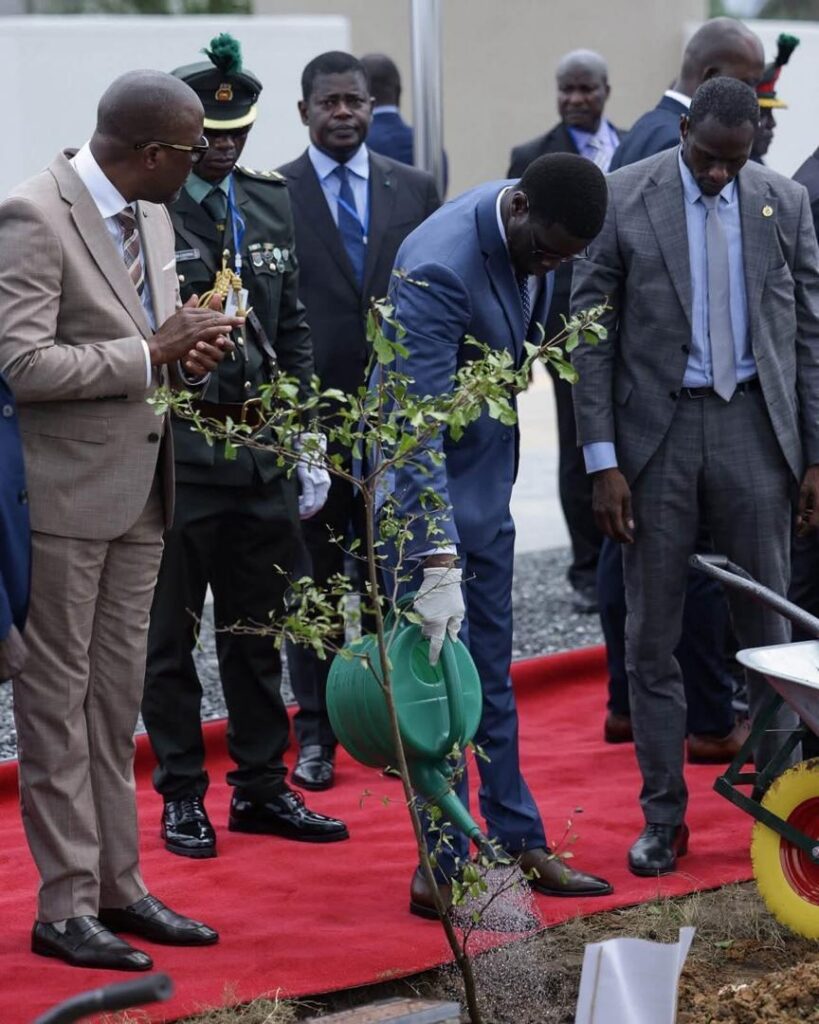
The historic transition unfolded during the ECOWAS Mid-Year Summit 2026 held in Lungi, Sierra Leone, where President Bio commissioned the Julius Maada Bio International Conference Centre and the ECOWAS Logistics Depot on 18th July before presiding over the Summit of the Future on Regional Integration and the 69th Ordinary Session of the ECOWAS Authority of Heads of State and Government on 19th July, where he formally handed over the chairmanship to President Faye.
The Summit also witnessed the appointment of General Birame Diop, former Minister of Defence of Senegal, former Chief of Staff of the Senegalese Armed Forces and former Military Adviser to the United Nations Secretary-General, as the new President of the ECOWAS Commission.
A Call for Action-Oriented Leadership: Reflecting on his one-year stewardship of the regional body, President Bio called on ECOWAS leaders to match vision with action and place greater emphasis on investing in their citizens through resilience, food security, regional trade, peace and accountable governance. He stressed that sustainable development requires stronger disaster preparedness, improved early warning mechanisms and climate resilience, urging Member States to invest in climate-smart agriculture, expand regional food trade and strengthen strategic food reserves.
“Our decisions must be matched by clear responsibilities, adequate resources, realistic timelines and measurable outcomes,” President Bio emphasized. “The next fifty years of ECOWAS will not be defined by the declarations we adopt but by what we deliver to our people.”
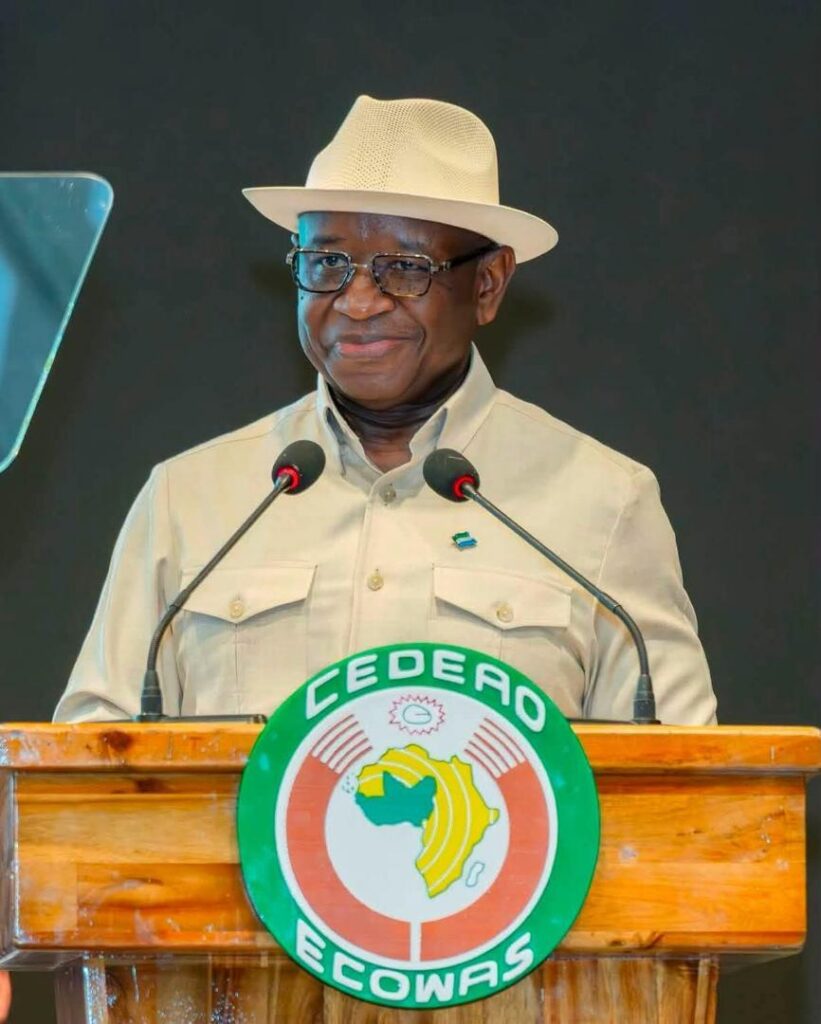
President Bio further noted that the true success of ECOWAS must be measured not by agreements alone but by implementation, industrial transformation and tangible improvements in the lives of West Africans.
Landmark Facilities Symbolise Regional Integration: A day earlier, while commissioning the Julius Maada Bio International Conference Centre and the ECOWAS Logistics Depot, President Bio described the two landmark facilities as symbols of a stronger Sierra Leone serving a stronger West Africa. “Nations are remembered not only for the challenges they overcome but also for the institutions they leave behind. Today, Sierra Leone and ECOWAS are leaving two institutions that will become part of that enduring legacy,” he declared.
Describing Lungi as Sierra Leone’s principal international gateway, President Bio said the commissioning marked the beginning of a new chapter in the country’s development. “From this gateway, Sierra Leone will increasingly connect West Africa to the world,” he stated.
President Bio described the conference centre as a strategic national investment reflecting Sierra Leone’s growing confidence, ambition and influence within the region. “For many years Sierra Leone was known principally for its recovery. Today, we are increasingly recognised for our contribution to regional leadership, democratic governance, peacebuilding and economic opportunity,” he said.
Speaking on the ECOWAS Logistics Depot, President Bio described it as a strategic regional asset that strengthens ECOWAS’ operational readiness to respond rapidly to peace operations, humanitarian emergencies and regional crises. He noted that ECOWAS’ decision to establish the facility in Sierra Leone reflected the Community’s confidence in the country’s stability, strategic location and unwavering commitment to regional cooperation.
Regional Leaders Praise Bio’s Vision: Vice President Dr Mohamed Juldeh Jalloh described both projects as defining symbols of President Bio’s enduring legacy. “Sierra Leone is writing a new narrative, one of exceptionalism. We were once known for conflict, but today we are a trusted convener of regional and global dialogue, shaping not only the future of eight million Sierra Leoneans but contributing to the aspirations of over a billion Africans,” he said.
President Adama Barrow of The Gambia described the conference centre as a fitting monument to Sierra Leone’s ambition and confidence. “This edifice is a testament to the visionary leadership and statesmanship of President Julius Maada Bio. It represents a legacy that future generations will inherit and will serve as a centre for diplomacy, commerce, knowledge-sharing and African cooperation,” President Barrow said.
ECOWAS Commission Hails Bio’s Stewardship: President of the ECOWAS Commission, Dr Omar Alieu Touray, praised President Bio for his exemplary leadership during a period marked by political transitions, security threats, terrorism, economic shocks and climate-related challenges across the region. He expressed profound appreciation to the Government and people of Sierra Leone for the outstanding hospitality and excellent organisation of the ECOWAS Mid-Year Summit.
“Our community confronted unconstitutional changes of government, terrorism, violent extremism, economic shocks and climate-related challenges. Throughout these moments, President Bio’s commitment to peace, dialogue, democratic governance and regional solidarity helped guide ECOWAS with wisdom and determination,” Dr Touray noted.
He also described the commissioning of the ECOWAS Logistics Depot as a practical demonstration of regional integration and called on Member States to embrace a bold regional agenda aimed at increasing intra-regional trade to 40 per cent by 2035, establishing an ECOWAS Single Market by 2030, creating a regional energy market by 2035, restoring constitutional order across the region, and achieving 40 per cent women’s representation in ECOWAS governance institutions by 2028.
International Support for Regional Integration: At the Summit of the Future, United Nations Deputy Secretary-General Amina Mohammed commended President Bio for investing in national infrastructure that simultaneously advances regional integration. “On behalf of the United Nations, we congratulate President Bio for his leadership in addressing climate change, conflict and the challenges confronting West Africa. We remain committed to supporting the region, especially its women and young people,” she stated.
Aliko Dangote, who doubles as Chairman of Dangote Group and Chairman of the ECOWAS Business Council, delivered a powerful statement sharing his experience with delegates at the Summit of the Future on Regional Integration in West Africa.
A New Chapter for West Africa: The 69th Ordinary Session concluded with President Bio formally transferring the Chairmanship of the ECOWAS Authority of Heads of State and Government to President Bassirou Diomaye Faye of Senegal, marking the end of a tenure widely characterised by decisive leadership, strengthened regional cooperation and renewed momentum for integration.
As Sierra Leone hosted one of the most consequential gatherings in the history of the regional bloc, the successful commissioning of two landmark institutions and the peaceful transition of ECOWAS leadership underscored the country’s growing stature as a trusted centre for diplomacy, peacebuilding, regional cooperation and sustainable development in West Africa.
President Faye now assumes leadership of the regional body with a strong foundation laid by his predecessor, inheriting both the momentum of Bio’s accomplishments and the ambitious agenda set forth during the Lungi Summit. The new Senegalese Chairman faces the challenge of building upon this legacy while addressing the complex security, economic and governance challenges confronting the region.