
By Mohamed Konneh
With funding from CIVICUS: World Alliance for Citizens participation, Women in Mining and Extractives (WOME) on Thursday 28th May 2026 launched a video documentary on the impact of the Cyber Crime Act of 2021. The launch is part of a national report and publication on the Multi-stakeholder dialogue-advancing Digital Right and free expression. The activity is part of a project titled: Strengthening Civic Space and Digital Freedoms in Sierra Leone.

Giving the overview of the launching, the Executive Director of WOME, Esther Finda Kandeh said there is every need to look at the Cyber Crime Act of 2021 as it is shrinking the civic space.
Madam Kandeh particularly reference Section 44 of the Act that talks about cyber bullying and stalking.
She said the report captures citizen’s and stakeholders views on the law, documents incidents of abuse and misuse, and highlights the social legal and human rights dimension of digital repression.
‘’Drawing on extensive consultations, we selected a diverse range of participants from government institutions, CSOs, media houses and community representatives across four regions. Our aim is to mobilize a unified advocacy front to advance digital rights and freedom of expression,’’ she said.
Speaking earlier on the chairman for the occasion Alphonso Ghanie of Human Right Defender, Sierra Leone, said awareness raising on the law is key noting not many people understands the law and it provisions.
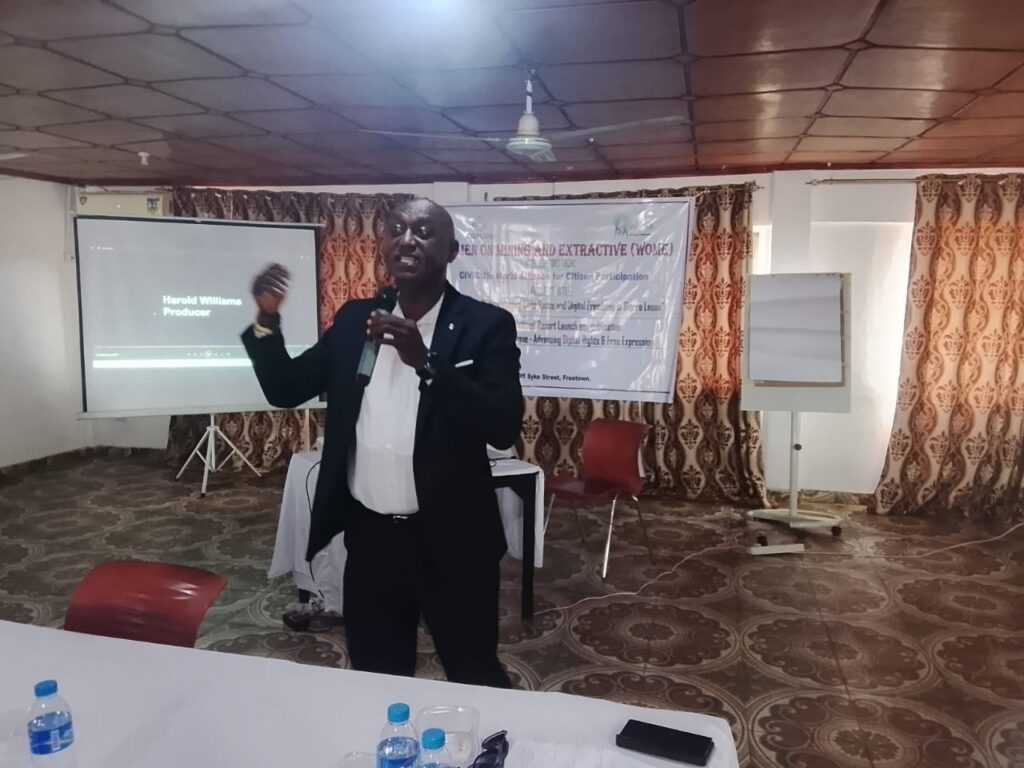
Mr. Ghanie noted that apart from section 44 that are other sections of the cybercrime law that needs review.
In her statement, the National Cybersecurity Coordinator at the Cyber Security Coordinating Agency, Mariama Yomah, thanked WOME for the launch adding that the launch was an important engagement.
‘’I believe the report presented today is the result of extensive consultations, investigations, stakeholder engagements, and analyses conducted across various sectors of society. As the institution mandated under the Cybersecurity and Crime Act to coordinate national cybersecurity efforts, we believe that such engagements are important for strengthening transparency, public trust, accountability, and democratic dialogue within our digital ecosystem,’’ she said.
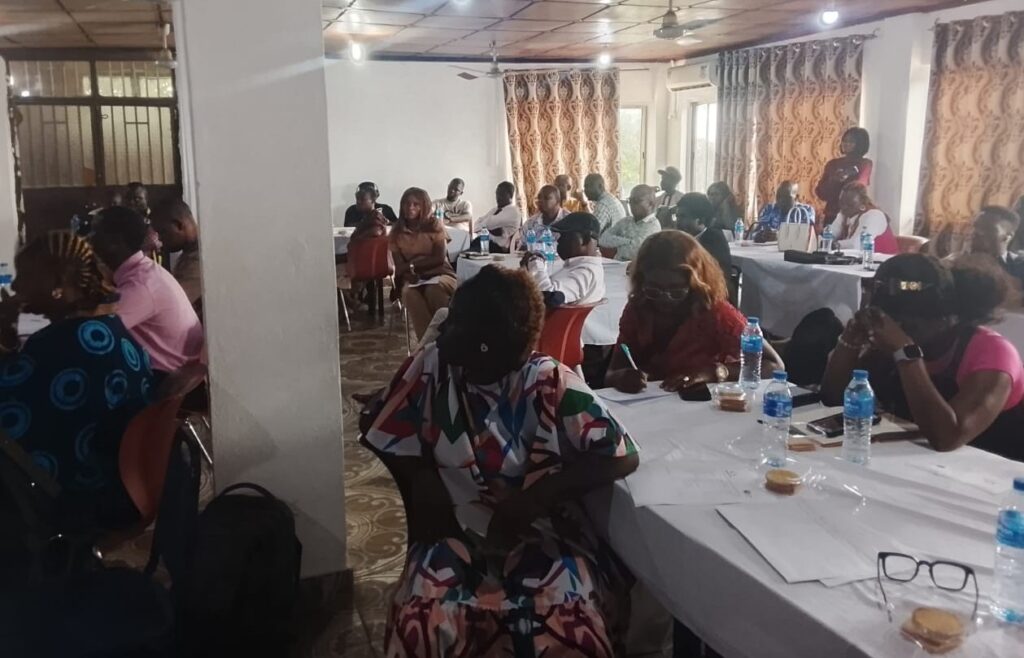
Ms. Yorma said one of the principal concerns repeatedly raised by journalists, civil society organisations, and digital rights advocates is the perception that the Cyber Security and Crime Act is gradually supplanting the repealed criminal libel legislation.
This concern Ms. Yorma said deserves serious attention and open dialogue, while noting that it is equally important to distinguish between the original intent of the legislation, the wording of its provisions, and challenges that may arise from interpretation or operational enforcement practices.
She said the repeal of criminal libel represented an important democratic milestone for Sierra Leone. ‘’Whilst the Cybersecurity and Crime Act was enacted primarily to address cyber-enabled crimes and emerging digital threats, including unlawful access to computer systems, unlawful interception, computer-related fraud, identity theft, cyber extortion, attacks against critical information infrastructure, online exploitation, cyber terrorism, and other malicious digital activities capable of threatening national security, economic systems, public institutions, and citizen safety.’’ She said.
Ms. Yorma noted that the Act also contains provisions addressing harmful conduct facilitated by digital platforms and electronic communications systems. In particular, Section 44 of the Act, relating to cyber stalking and cyber bullying, has generated significant public debate, especially where concerns arise about its interpretation.
Mohamed Konneh made statement on behalf of the Sierra Leone Association of journalists (SLAJ) highlighting some of the challenges of the law since it was enacted.
Konneh noted that Sierra Leone has made important strides in consolidating democratic governance since the end of the civil war.
He said a vibrant civil society, an active media, and growing youth engagement online are signs of a society that values participation, accountability, and free expression.
‘’As we advance, it is critical that we protect and expand civic space and digital freedom—two pillars that enable citizens to speak, organise, critique, and contribute to national development without fear of reprisal,’’ he said.
He said the Civic space is where citizens, civil society organisations, journalists, and communities engage with the state on issues that affect public life. A shrinking or hostile civic space weakens accountability, stifles innovation, and erodes public trust.
‘’It guaranteeing the right to peaceful assembly and association as enshrined in the 1991 Constitution.
It also ensures that public authorities engage civil society in policy formulation, not only in implementation.
It protect journalists, human rights defenders, and activists from harassment, intimidation, and arbitrary detention.
He said the enactment of the Cyber Security and Crime Act in 2021 was a necessary response to the real threats posed by cybercrime, fraud, and online harms. ‘’No country can ignore the need to protect its critical information infrastructure and citizens from malicious actors’’.
He however noted that, any law regulating the digital space must balance security with fundamental rights.
Key concerns from SLAJ include:
Clarity and Proportionality: Offences and penalties must be clearly defined to prevent arbitrary interpretation and application.
Safeguards and Oversight: Independent oversight of surveillance and data access powers is essential to prevent abuse.
Due Process: Accused persons must be afforded fair trial rights, including timely access to legal representation and judicial review.
We in SLAJ Recommends for a Balanced Path Forward
1. Review and Reform: Conduct an inclusive, evidence-based review of the Cyber Security and Crime Act with input from civil society, legal experts, the media, and the private sector. Amend provisions that conflict with constitutional rights and international standards (Section 44).
2. Capacity Building: Train law enforcement, prosecutors, and the judiciary on digital rights, proportionality, and human rights-based approaches to cybercrime enforcement.