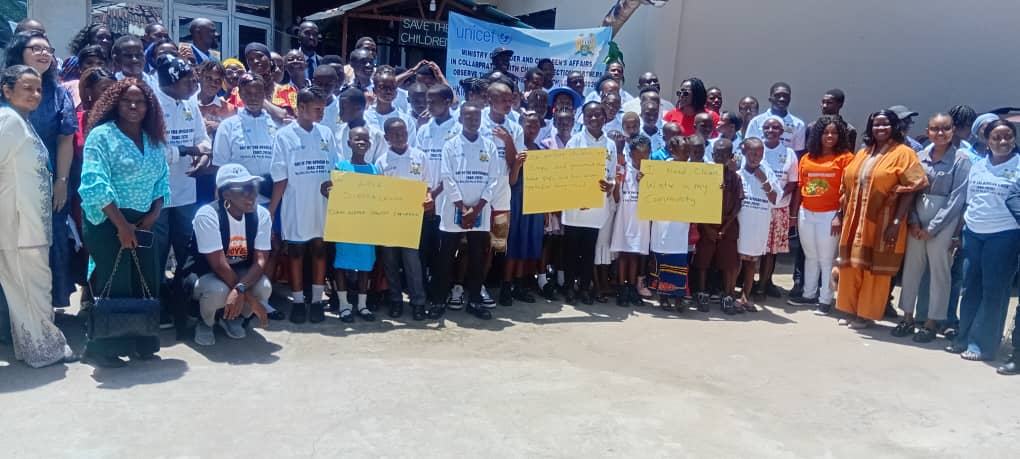
The United Nations Children’s Fund (UNICEF) has called for accelerated investment and collective action to ensure universal access to safe water, sanitation, and hygiene (WASH) for every child, as Africa marks the Day of the African Child.
Speaking in Sierra Leone, UNICEF Deputy Representative Mona Korsgaard said the annual commemoration is a reminder of shared responsibility to uphold children’s rights to survival, development, protection, and participation.
She noted that this year’s theme, “Ensuring Universal Access to Water, Sanitation and Hygiene for Every Child in Africa,” reflects global and continental commitments, including the African Charter on the Rights and Welfare of the Child and the aspirations of Agenda 2040.
Korsgaard stressed that without safe water and adequate sanitation, children cannot survive, thrive, or learn effectively, describing WASH as a foundation for health, education, and dignity.
She highlighted progress in Sierra Leone, where access to basic drinking water has improved significantly in both rural and urban areas, but warned that inequalities remain widespread, particularly in rural communities.
According to UNICEF, thousands of children still face daily risks from unsafe water and poor sanitation, with schools lacking adequate hygiene facilities, contributing to absenteeism and learning challenges, especially among adolescent girls.
The UNICEF official also raised concern about the growing impact of climate change, noting that rising sea levels, flooding, and erratic rainfall are worsening water scarcity and quality issues in vulnerable communities.
She added that coastal communities, which are central to Sierra Leone’s food security and livelihoods, continue to face poor WASH conditions in fish landing sites and markets, increasing health and economic risks.
Reaffirming UNICEF’s commitment, Korsgaard said the agency is working with government ministries, local councils, and partners to expand access to safe water, strengthen hygiene practices, improve school sanitation, and build climate-resilient systems.
She, however, cautioned that current funding remains insufficient, revealing that the WASH sector receives less than one per cent of government expenditure, calling for stronger and more predictable investment.
In a related statement, the Deputy Commissioner of the National Commission for Children, Henry M. Sheku, said WASH is a fundamental human right essential for children’s health, dignity, and education across Africa.
He called for stronger accountability from governments and partners, urging a shift from policy declarations to practical implementation, especially in rural and underserved communities.
Sheku emphasised the role of schools in promoting hygiene behaviour, noting that school health clubs can empower children to become ambassadors of clean and safe environments in their communities.
From Nigeria, officials from the Ministry of Water Resources and Sanitation also reaffirmed regional commitment to universal WASH access, highlighting ongoing national efforts to expand infrastructure, strengthen monitoring systems, and improve rural service delivery.
The statements collectively underscored that achieving universal access to WASH requires sustained investment, stronger partnerships, and community-driven solutions, as stakeholders urged renewed commitment to ensure no child is left behind in Africa’s development agenda aligned with the African Union.
As the Day of the African Child is observed, leaders and institutions have called for urgent action to transform commitments into results, ensuring that every child grows up healthy, safe, and with dignity through equitable access to water, sanitation, and hygiene.