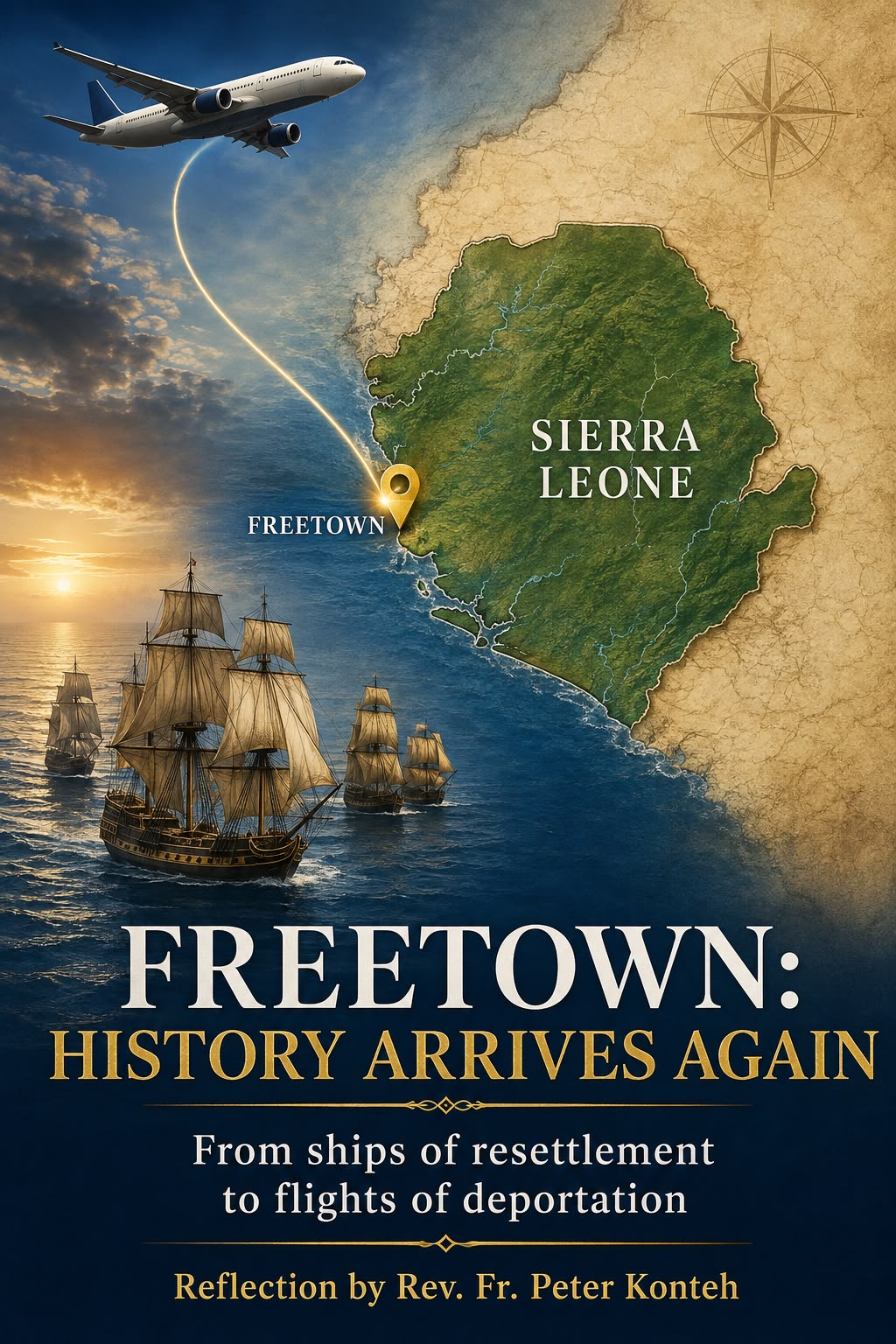
Reflection by Rev. Fr. Peter Konteh
The concerns raised by U.S. Senator Jeanne Shaheen about third-country deportation agreements compel us to reflect upon a painful paradox of history.
Sierra Leone—and particularly Freetown—has long been associated with the resettlement of formerly enslaved and displaced Africans:
* In 1787, several hundred formerly enslaved and poor Black people arrived from Britain to establish the “Province of Freedom.”
* On 11 March 1792, approximately 1,200 Black Loyalists arrived from Nova Scotia and formally established Freetown.
* In 1800, more than 500 Jamaican Maroons were resettled in Sierra Leone.
* Following Britain’s abolition of the slave trade in 1807, thousands of Africans liberated from intercepted slave ships were brought to Freetown from 1808 onward. These people came from many parts of West and Central Africa and helped shape our present Krio identity and national heritage. Parks Canada, United Nations history of Sierra Leone.
More than two centuries later, Sierra Leone is again being asked to receive people who are neither its citizens nor necessarily connected to our country. Reports indicate that the United States entered an arrangement worth approximately $1.5–$1.6 million for Sierra Leone to receive third-country deportees.
Although that amount may initially appear substantial, it is extremely modest when compared with similar arrangements involving other countries. Under the former UK–Rwanda migration arrangement, the United Kingdom paid £270 million into Rwanda’s Economic Transformation and Integration Fund alone. UK Government.
But this must never be reduced to a debate about money. The deeper issue is the transfer of responsibility.
Why do powerful Western nations increasingly seek to move their complicated migration responsibilities beyond their own borders and into poorer countries?
The explanation is often political and economic. Wealthier governments face domestic pressure over migration, so they attempt to move migrants—and the legal, financial and humanitarian responsibilities accompanying them—to countries with weaker negotiating power. Poor nations may be encouraged through financial incentives, diplomatic pressure, development assistance or the fear of consequences if they refuse.
This creates a dangerous imbalance: powerful countries make the decisions, poorer countries carry the risks, and vulnerable migrants endure the consequences.
Senator Shaheen’s own report describes the growing system of third-country deportations as costly, poorly monitored and involving pressure on countries to accept people who are not their citizens. U.S. Senate Foreign Relations Committee
Sierra Leone has a noble tradition of hospitality, but hospitality must not become exploitation. Our poverty must never be treated as permission for powerful nations to transfer their responsibilities to us.
If Senator Jeanne Shaheen is demanding answers from the United States government, Sierra Leoneans equally deserve transparent answers from our own government.
Freetown was founded as a symbol of freedom. It must never quietly be transformed into a convenient holding ground for responsibilities that richer nations are unwilling to carry.
History may repeat itself—but this time, Sierra Leone must speak, question and defend its sovereignty.