
By Mohamed Konneh
The Ministry of Finance has proposed an allocation of NLe232.69 million for the 2027 financial year, with key fiscal targets to increase domestic revenue to 12.3 per cent of Gross Domestic Product (GDP), reduce the public debt-to-GDP ratio to 43.5 per cent and bring the overall budget deficit below 3 per cent by 2027.The proposed budget, amounting to NLe232,688,600, is virtually identical to the Ministry’s indicative expenditure ceiling of NLe232,688,700, leaving a marginal difference of just NLe100.
The allocation is intended to strengthen domestic revenue mobilisation, improve debt sustainability, enhance public financial management and reinforce fiscal governance.

The Ministry outlined its FY2027 budget and strategic priorities during the Bilateral Budget Hearings on 1 October 2026, where representatives of District Budget Oversight Committees (DBOCs), Non-State Actors (NSAs) and Civil Society Organisations (CSOs) scrutinised its expenditure proposals and assessed their alignment with Sierra Leone’s development priorities.
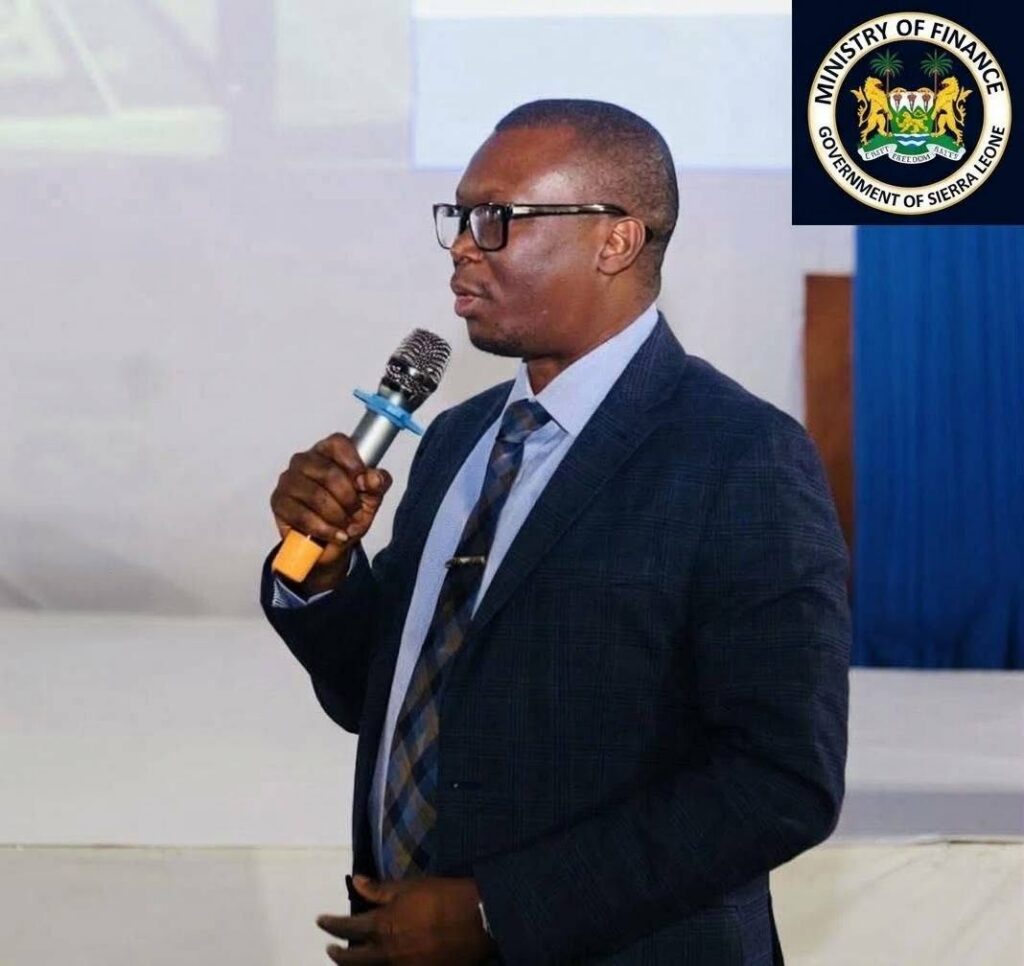
Presenting the Ministry’s programme, Alhaji Abu Komeh, Acting Director of Research and Delivery, identified revenue mobilisation, debt management, budget execution, fiscal risk oversight, macroeconomic coordination and institutional reforms as major priorities for the 2027 financial year.
A central target is to increase domestic revenue from 10.7 per cent of GDP, equivalent to NLe18 billion, in 2025 to at least 12.3 per cent, or approximately NLe25.99 billion, by 2027. The Ministry aims to strengthen revenue collection and expand the resources available to finance public services and development programmes.
The Ministry also plans to reduce the debt-to-GDP ratio from 49.3 per cent in 2025 to 43.5 per cent by 2027, alongside cutting the overall budget deficit, including grants, from 4.4 per cent of GDP in 2025 to below 3 per cent. These targets form part of its broader strategy to strengthen fiscal discipline, contain borrowing pressures and improve the sustainability of public finances.
To support revenue administration and trade facilitation, the Ministry intends to operationalise the National Electronic Single Window, including replacing the existing ASYCUDA system. The initiative is expected to streamline customs procedures, improve transparency and strengthen the collection of trade-related revenue.
The Ministry has also set a target of increasing its project portfolio disbursement rate from 26 per cent to at least 30 per cent, while improving fiduciary oversight and fiscal risk management across State-Owned Enterprises (SOEs), Ministries, Departments and Agencies (MDAs), and public sector projects.
Its institutional reform agenda includes pursuing the enactment of the revised Public Financial Management (PFM) Act, strengthening fiscal decentralisation, improving internal controls and financial reporting, and enhancing the monitoring and implementation of audit recommendations.
The Ministry further intends to strengthen macroeconomic and fiscal policy coordination through regular economic projections, evidence-based research and policy analysis. Other priorities include improving the management of donor-funded projects, coordinating public financial management reforms across central and sub-national government, and positioning Sierra Leone to access climate finance.
The proposed allocation follows an approved budget of NLe164.1 million in 2025, against which the Ministry recorded actual expenditure of NLe164.2 million, representing an overspend of NLe100,000. For 2026, the approved allocation stood at NLe269.3 million, of which NLe188.5 million had been spent by the end of September, leaving a balance of NLe80.8 million.
Major expenditure drivers include administrative costs, support to the National Revenue Authority (NRA) for the procurement of Electronic Cash Register Machines, data connectivity and software licences, and international subscriptions.
The Ministry also reported continued implementation of domestic capital and donor-funded projects, including the Medium-Term Expenditure Framework, the Project Fiduciary Management Unit, the Sierra Leone Urban Resilient Project and the Accountable Governance for Basic Service Delivery initiative, as well as programmes aimed at strengthening public debt management.
The NLe232.69 million proposed budget will support the operations of five key institutional components: the Corporate Services Directorate, the Office of the Financial Secretary, the Economic Policy Management Directorate, the Fiscal Operations Directorate, and the Project Fiduciary Management and Coordination Directorate. These units are responsible for delivering the Ministry’s core functions, including budget formulation, fiscal operations, economic policy coordination, financial reporting and public investment management.
Deputy Minister of Finance 1, Kadiatu Allie, said the Ministry had spent the preceding sessions examining the budget submissions of other institutions and was now presenting its own proposals for stakeholder review. She encouraged participants to engage actively, raise pertinent questions and provide constructive feedback to strengthen the budget process.
Principal Financial Secretary, Matthew Dingie thanked participants for their engagement, noting that the bilateral budget consultation process had been ongoing for more than two decades. He said the process enables stakeholders to understand how public resources are allocated, managed and implemented, while promoting accountability in government operations.
Mr Dingie highlighted the Ministry’s responsibility for managing the economy, coordinating fiscal policies and ensuring that government institutions operate within approved budget ceilings.
He said Sierra Leone’s economy had been growing at an estimated annual rate of 3 to 4 per cent, while the Government continued to pursue measures to stimulate industrial activity, contain inflationary pressures and strengthen investor confidence through exchange-rate stability.
He also cited international economic developments, including tensions in the Middle East, petroleum price fluctuations and movements in interest rates, as factors affecting the country’s economic outlook. He said the Government continued to provide support through fuel-related measures, social protection programmes and the energy sector while pursuing domestic revenue mobilisation and macroeconomic stability.
Mr Dingie stressed that the Ministry’s proposed allocation was intended to provide the resources required to fulfil its mandate and support effective coordination of public expenditure across government institutions.
During the hearing, panellists and members of the audience raised questions and sought clarification on the Ministry’s proposed activities, expenditure priorities and implementation plans. The Financial Secretary and directors responded to the concerns, providing further explanations on the budget proposals and expected deliverables.
The stakeholder engagement forms part of the Government’s broader FY2027 budget preparation process, which seeks to strengthen participation, improve expenditure planning and ensure that public resources are aligned with national development priorities.
The Ministry’s ability to achieve its FY2027 targets will depend on effective revenue mobilisation, disciplined expenditure management, improved project implementation and stronger accountability in the use of public funds, as Sierra Leone seeks to sustain economic stability and advance its development objectives.