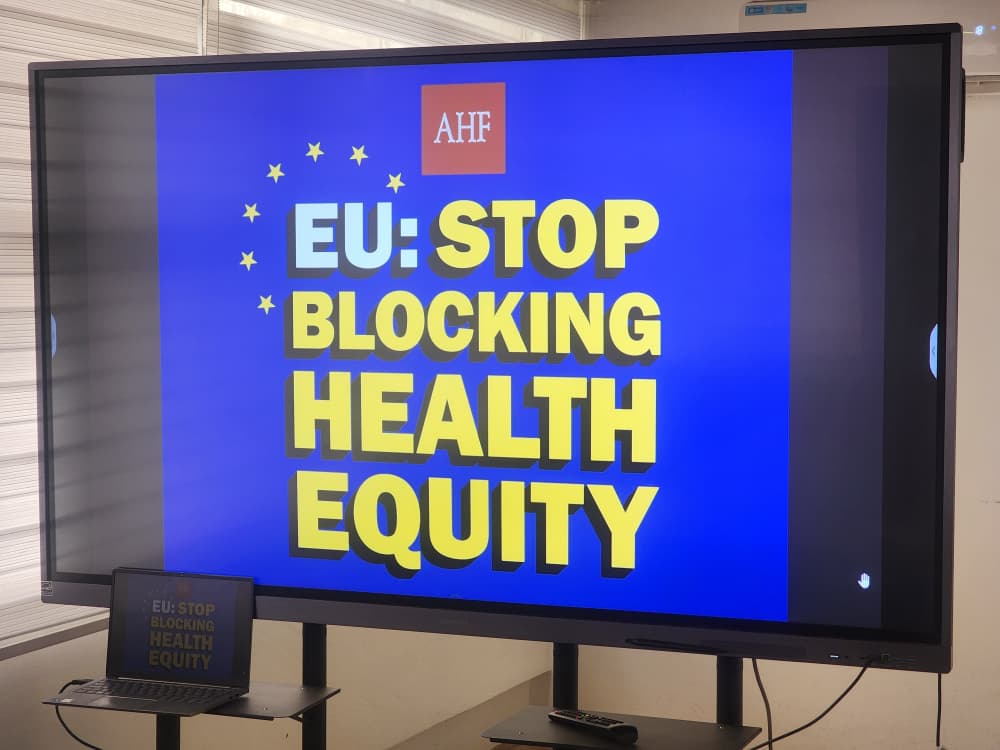
… AHF Sierra Leone Warns of Vaccine Apartheid Repeat
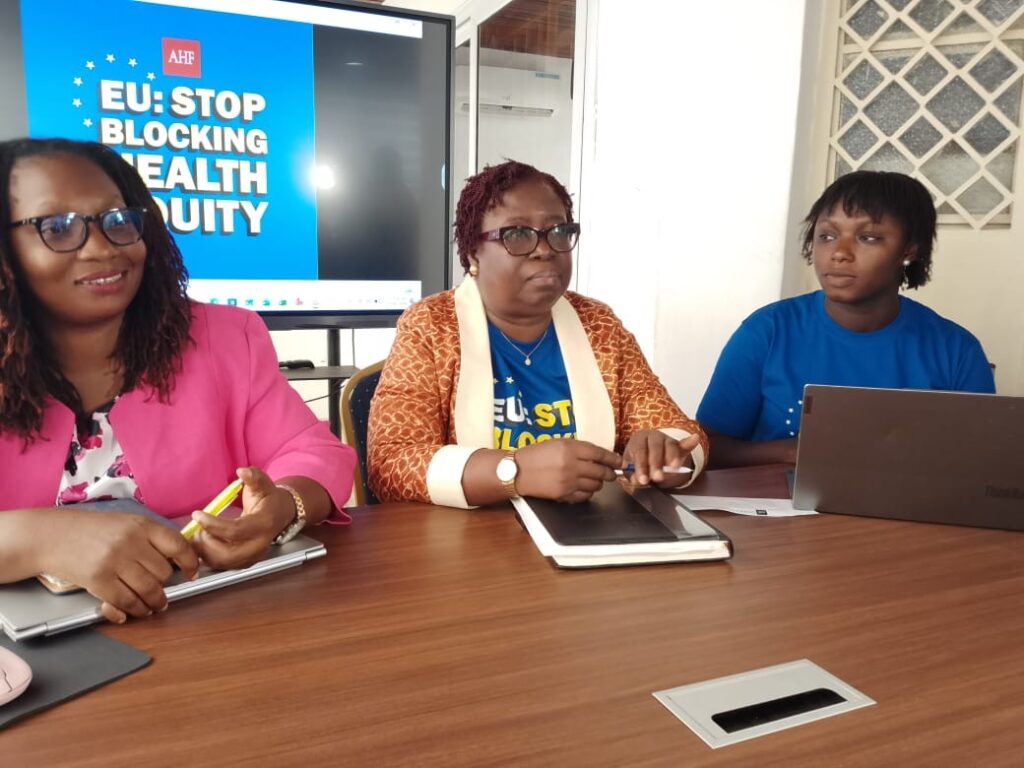
With the final round of World Health Organization negotiations just days away, the AIDS Healthcare Foundation (AHF) Sierra Leone has issued a stark warning: without binding equity provisions, the pandemic treaty risks leaving countries like Sierra Leone behind once again. The group is demanding that the European Union choose solidarity over hesitation and support mandatory benefit‑sharing rules in the Pathogen Access and Benefit‑Sharing (PABS) Annex of the WHO Pandemic Agreement.
Briefing the media on Wednesday at the AHF head office in Freetown, Country Programme Director Miata Jambawai said the extraordinary session of the Intergovernmental Working Group on the Pandemic Agreement, dubbed IGWG6 Part B, runs from 27 April to 1 May 2026 in Geneva. She noted that this is the last scheduled chance to agree on PABS before the World Health Assembly considers the full agreement in May 2026.
“Seize this moment not only to finalise the PABS Annex, but to conclude the Pandemic Agreement as a whole and move it decisively toward ratification,” AHF wrote in letters sent to African leaders, embassies and negotiators across Uganda, South Africa, Ethiopia, Nigeria and Sierra Leone.
At the heart of the dispute is Article 12 of the agreement: the PABS system, which governs how countries share pathogen samples and genomic data, and in return receive vaccines, diagnostics and treatments. Madam Jambawai insisted that the Pandemic Agreement cannot be ratified without the PABS Annex, and the Annex must not be approved without binding equity provisions. The group is demanding enforceable benefit‑sharing during pandemics, Public Health Emergencies of International Concern (PHEICs) and interpandemic periods.
“If countries are going to share virus samples and data, they must also share the benefits that result from what they share,” she said.
AHF has put forward a series of concrete demands. These include mandatory upfront benefits such as set percentages of vaccines, diagnostics and therapeutics reserved for low‑ and middle‑income countries, pre‑negotiated licences, technology and know‑how transfer, annual monetary contributions, and public access to non‑commercial research. The group also calls for standardised contracts, arguing that key terms must be negotiated by countries upfront rather than left to later bilateral deals between WHO and manufacturers. “Without standardised contracts, the benefit‑sharing system has no backbone,” AHF stated.
On traceability, AHF insists that all users of pathogen data or materials must register and be traceable, adding that this does not undermine open science and citing the 2021 UNESCO Recommendation on Open Science. The foundation rejects so‑called hybrid proposals that would allow access to data without benefit‑sharing obligations, calling them “a structural way to bypass responsibility”. It also demands pro‑public health intellectual property rules, meaning no monopolies on shared resources, licences granted to WHO for sub‑licensing to developing countries, and no IP claims that block others from using shared materials.
For Sierra Leone, the stakes could hardly be higher. The country recorded nearly 9,000 Ebola infections and close to 4,000 deaths between 2014 and 2016, crippling its health system. During COVID‑19, it faced limited access to vaccines and supplies, even though African scientists identified the Beta and Omicron variants and shared genomic data within days. More recently, the country has battled a surge in Mpox cases. According to BMJ Global Health, Africa, which accounts for 17 percent of the global population, received less than three percent of COVID‑19 vaccines. Health Policy Watch reports that roughly 100 low‑ and middle‑income countries want mandatory benefit‑sharing, while high‑income nations prefer voluntary commitments.
AHF identified the European Commission and Germany, alongside Switzerland, Japan and Australia, as resisting binding equity provisions. However, Spain, Belgium and Luxembourg have signalled sympathy toward equity demands. “The EU publicly champions solidarity and fairness — values its current negotiating position directly contradicts,” AHF said. “We call on EU leaders to join the Global South in supporting mandatory benefit‑sharing, legal certainty and real accountability. A weak Annex risks repeating the vaccine apartheid of COVID‑19.” AHF also warned that the EU’s stance supports anonymous access to pathogen data, “compromising system integrity and creating biosecurity risks”.
The Pandemic Agreement was adopted at the World Health Assembly in May 2025 but cannot open for signature until PABS is completed. IGWG6 Part B is the final negotiating window. The Resilience Action Network Africa has coordinated a joint civil society letter ahead of the talks. “Allowing negotiations to stall is worse than an agreement with strong foundations and a clear pathway for strengthening over time,” the letter warns.
For Sierra Leone, AHF argues, a pandemic agreement that fails to prioritise fairness risks repeating the inequalities of COVID‑19. The PABS system — Pathogen Access and Benefit‑Sharing under Article 12 — links access to pathogen samples and sequence data with equitable sharing of medical countermeasures. AHF is a global non‑profit providing medicine and advocacy to more than 2.8 million people in 50 countries.