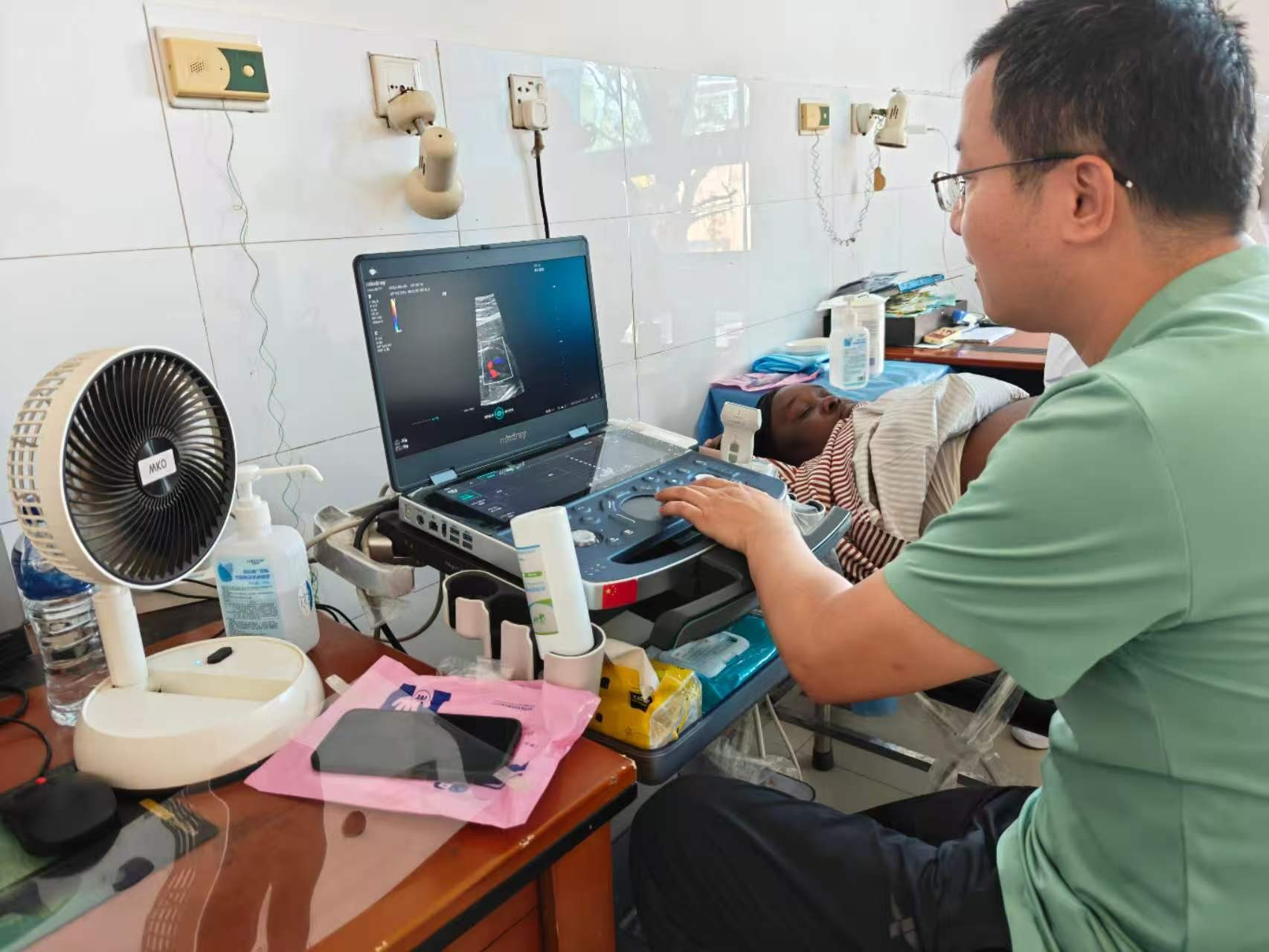
The 27th Chinese (Hunan) Medical Team successfully performed the first standardized fetal echocardiogram in Sierra Leone’s history at the Sierra Leone-China Friendship Hospital. During the procedure, the team accurately diagnosed a rare and complex congenital heart disease known as Taussig-Bing Syndrome, marking a significant milestone in the country’s prenatal diagnostic capabilities.
Precision Detection amidst Limited Prenatal Care
In Sierra Leone, systematic prenatal screening remains uncommon. The patient, a local woman six months into her second pregnancy, had not received any prior ultrasound checkups, representing a high-risk “zero prenatal care” case.
Dr. Zhou Cheng, a deputy chief physician and ultrasound expert from the Hunan Provincial Maternal and Child Health Care Hospital, identified abnormal cardiac structures during a routine obstetric scan. Recognizing the critical impact of such malformations on the fetus, Dr. Zhou immediately initiated a specialized fetal echocardiography assessment following international technical standards.
Dr. Zhou Cheng performs a fetal echocardiogram at the Sierra Leone-China Friendship Hospital.
Due to local limitations, the team utilizes a portable ultrasound machine in a clinical environment cooled only by a small fan.
Technical Innovation Under Challenging Conditions
Fetal cardiac imaging is highly demanding and typically requires specialized equipment. Working with limited hardware and without a dedicated fetal cardiac probe, Dr. Zhou relied on his extensive clinical experience to perform the scan.
Despite the sweltering heat in the clinic, Dr. Zhou meticulously evaluated the fetal heart through multiple planes. The examination revealed a rare malformation where both the pulmonary artery and the aorta arose in parallel from the right ventricle. Combined with findings of significant pulmonary stenosis and a ventricular septal defect, the case was definitively diagnosed as Taussig-Bing Syndrome.
A close-up of the ultrasound screen showing the “three-vessel view.”
The parallel origin of the aorta and pulmonary artery, along with pulmonary stenosis, provided the definitive evidence for diagnosing Taussig-Bing Syndrome.
From Filling Technical Gaps to Safeguarding Lives
Taussig-Bing Syndrome is a complex defect where early prenatal identification is vital for managing the pregnancy and planning postnatal care. Previously, such cases in the region often went undetected until after birth, leading to missed opportunities for life-saving intervention.
The success of this procedure fills a critical gap in Sierra Leone’s prenatal diagnostics. The 27th Chinese Medical Team has pledged to continue providing technical training for local medical staff to enhance the country’s capacity for birth defect prevention and contribute Chinese medical expertise to the improvement of maternal and child healthcare in Sierra Leone.