By Komba Fillie
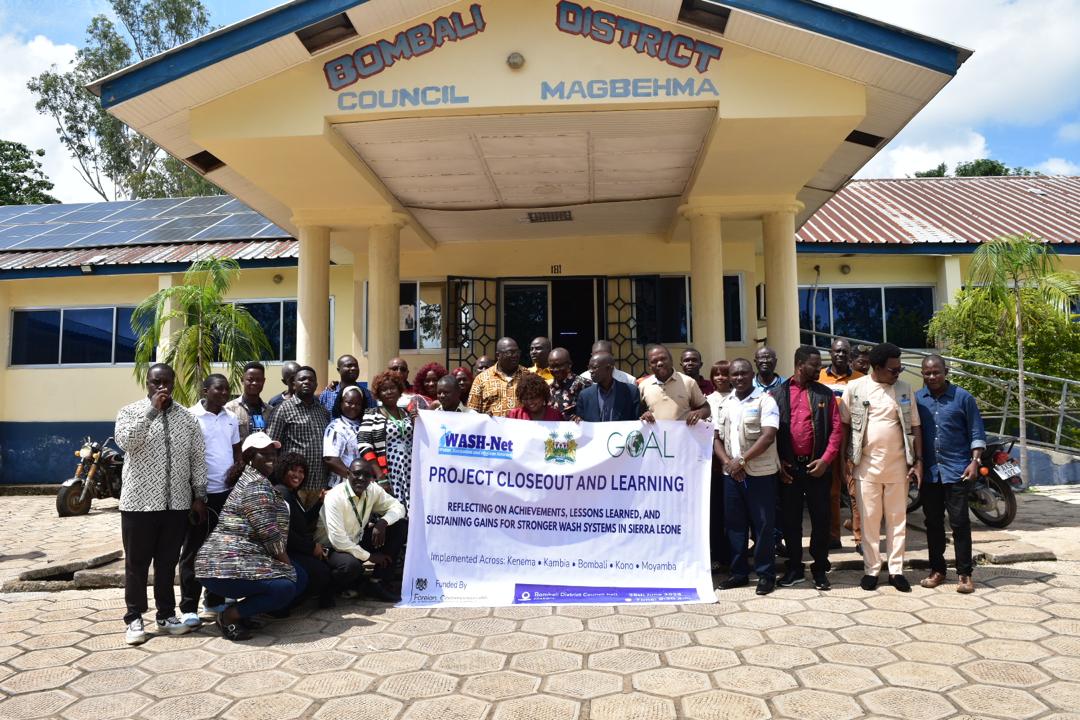
The WASH System Strengthening for Health Project held its closeout and learning session on 25th June 2026, bringing together stakeholders from five operational districts Bombali, Kono, Moyamba, Kambia, and Kenema to reflect on two years of transformative work and chart a path forward. The gathering, hosted by WASH-Net for Bombali District, served as both a celebration of achievements and a sobering reminder that the end of external funding marks not the conclusion of the work but the beginning of a new phase of local ownership and responsibility.
Political Leadership Reaffirms Commitment to Sustainable Development
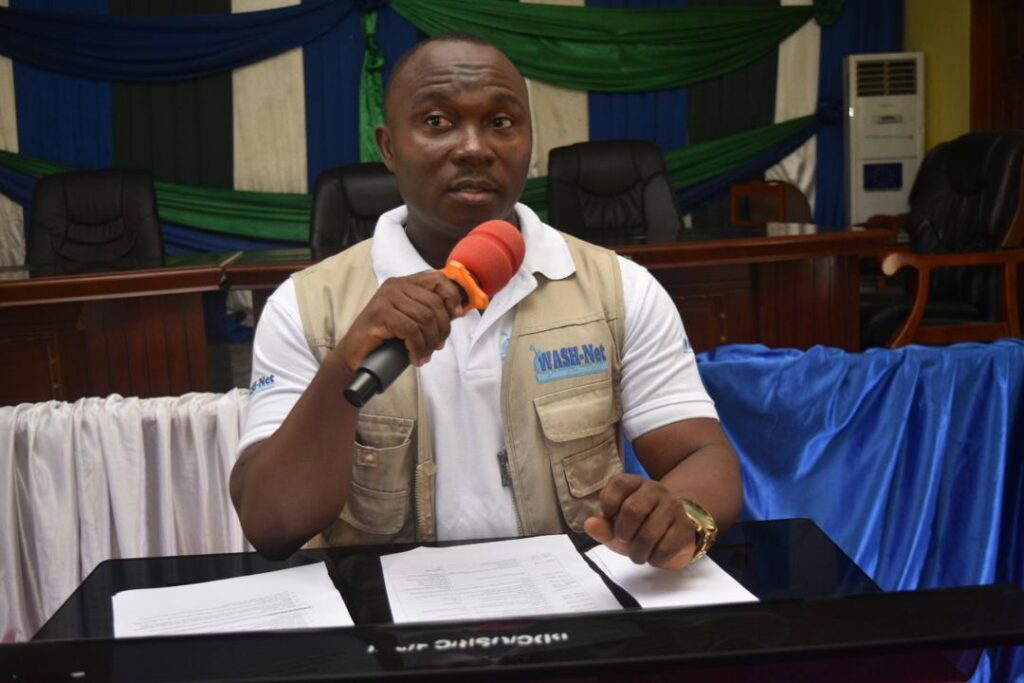
In his keynote address, the Chairman of Bombali District Council, Dr Mohamed Mark-Baba Sesay, expressed profound appreciation for the opportunity to represent not only Bombali but also his esteemed colleague Chairpersons from the other operational districts. He emphasized that the closeout extends far beyond fulfilling a procedural requirement, describing it as a moment to celebrate a journey of transformation, reflect on lessons learned, acknowledge partnerships that have changed lives, and renew the collective pledge to build healthier, stronger, and more resilient communities.
Dr Sesay extended deepest institutional appreciation to GOAL Sierra Leone, WASH-Net Sierra Leone, the Ministry of Health, and the Ministry of Water Resources for walking this journey alongside them. He made a compelling case for collaborative development, pointing out that government alone cannot do it, development partners alone cannot do it, and communities alone cannot do it. Success becomes possible only when all stakeholders unite behind one common purpose, with partnership creating strength, coordination creating efficiency, trust creating impact, and shared ownership creating sustainability.
The Chairman recalled that the collaboration between GOAL Sierra Leone and WASH-Net has been a model of development excellence, with WASH-Net strengthening sector governance, policy coordination, and strategic frameworks while GOAL transformed these frameworks into practical realities across healthcare facilities and urban sanitation systems. The session celebrated significant gains including strengthened WASH infrastructure, stronger local systems and coordination mechanisms, enhanced institutional and technical capacities, improved data systems and evidence-based planning, and empowered communities with strengthened local ownership structures.
Dr Sesay paid tribute to health workers, district technical teams, community leaders, women and youth, and every citizen whose commitment turned plans into reality, noting that infrastructure alone does not transform societies—people do. He asserted that the ultimate test of development is not what happens during implementation but what happens after external funding concludes, with true sustainability beginning when local systems absorb external investments into permanent institutional structures.
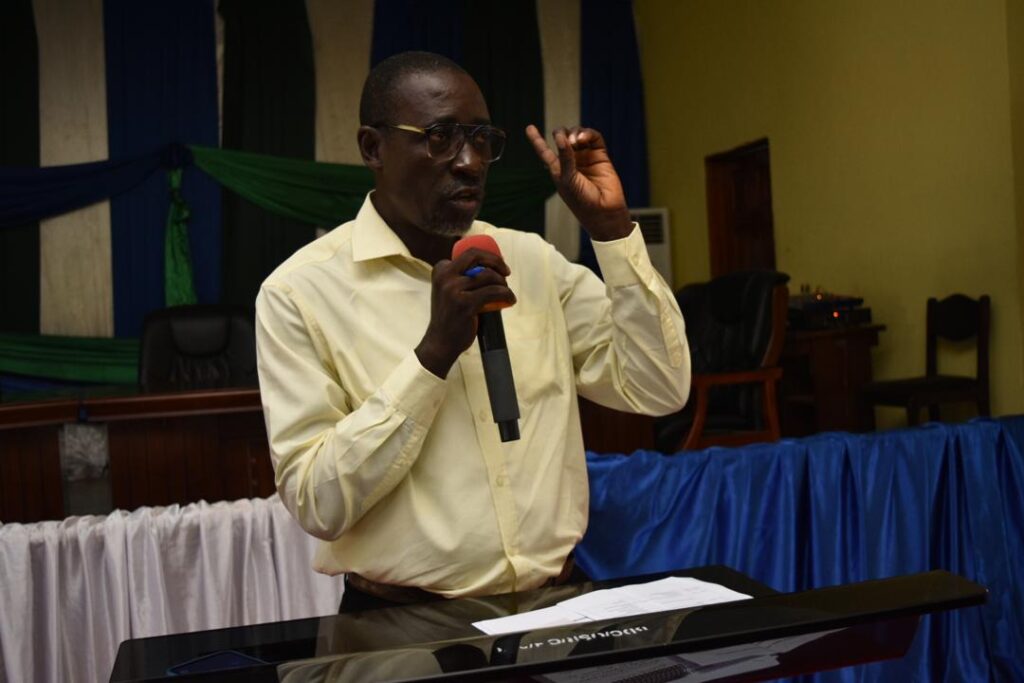
As leaders of the five districts, Dr Sesay reaffirmed their commitment through three key actions: the institutionalization of systems ensuring coordination structures, reporting mechanisms, and monitoring systems shall be integrated into District Development Plans; resource integration and co-financing through exploring sustainable financing models and strengthening partnerships with relevant ministries; and sustained oversight and accountability by continuing to provide oversight to local technical structures and community WASH committees.
Programme Overview and Closeout Context
Peter Senesie, Programme Manager for WASH-Net, framed the gathering as a significant milestone marking the conclusion of a two-year initiative that has driven substantial progress across the five targeted districts. He underscored that the project’s achievements in strengthening leadership, coordination, accountability, financing, and the delivery of sustainable WASH services were only made possible through robust collaboration among government institutions, local authorities, development partners, civil society organizations, communities, and the consortium partners.
While acknowledging these successes, Senesie emphasized that system strengthening for health is inherently a continuous process, candidly noting that sector challenges remain formidable and sustaining hard-won gains will demand persistent leadership, sustained investment, and enduring partnerships beyond the project’s lifespan. He outlined the session’s threefold purpose: facilitating collective reflection on the project’s national and district-level impacts, capturing essential lessons learned and good practices from implementation, and identifying concrete actions and commitments to maintain and build upon these achievements.
Yambasu M. Coker from GOAL Sierra Leone provided a comprehensive overview of the project, explaining that the initiative was launched in 2024 with funding from the Foreign, Commonwealth and Development Office specifically designed to strengthen WASH systems in healthcare facilities. He revealed that although the project was originally planned to continue until December 2027, an unexpected directive from FCDO announced the withdrawal of funding not only from Sierra Leone but from all six countries where the project was operational.
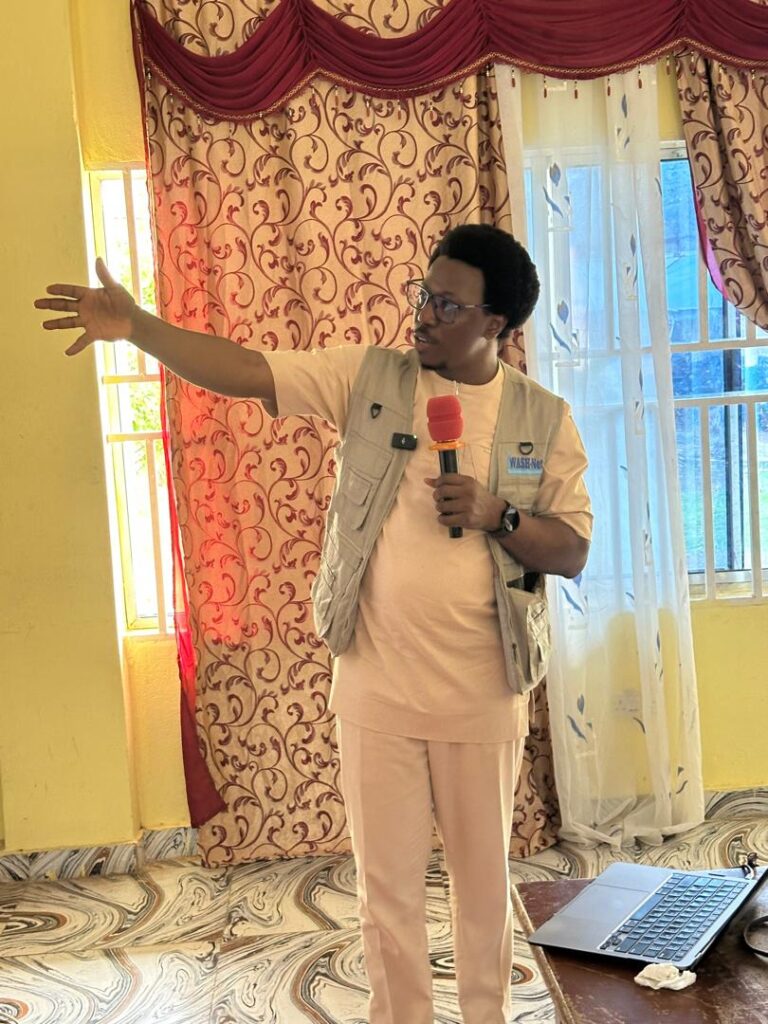
Despite this abrupt change, Mr Coker noted that significant achievements have been realized across the five districts, including the establishment of a dashboard used for training Monitoring and Evaluation officers at the council level. The team has developed comprehensive WASH guidelines aligned with global standards, successfully rolled out from the national to the district levels. The Ministry of Health has issued a circular adopting the WASH FIT approach as a model, and the project has provided critical support to both the Ministry of Health and the Ministry of Water Resources to integrate these activities into their routine responsibilities.
Mr Coker emphasized that the closeout process marks the end of external funding rather than the conclusion of the project itself, noting that the initiative extends far beyond infrastructure construction. He reflected on the heavy reliance on external donors, which has historically created vulnerabilities in the healthcare system, citing past public health crises such as the Ebola outbreak that left significant gaps in service delivery. The core objective of the project was to foster ownership by creating an nabling environment where both the government and citizens take responsibility for sustaining WASH services.
District Experiences: From Fragmented Efforts to Coordinated Impact
Edward Kai from Kenema reported that the project commenced when knowledge of system strengthening was minimal. Key achievements included joint advocacy through radio and other media outlets to promote capacity building, collaboration, and visibility. Although WASH-Net was already operational, the project facilitated a much closer working relationship with the district council formalized through the signing of a Memorandum of Understanding. Training on resource mobilization emerged as a notable success, leading to engagements with taxpayers and at the Peripheral Health Unit level, dedicated efforts to raise funds for effective facility functioning.
The project further built the team’s capacity on budget analysis and radio programming, enabling them to connect more directly with end-users. Regular coordination meetings with GOAL, SALWACO, and other service providers opened up new collaborative opportunities, while the implementation of Monitoring and Evaluation frameworks significantly strengthened intersectoral collaboration by identifying high-performing areas and minimizing duplication in service delivery.
Key Achievements and Evidence-Based Impact
Musa Ansumana Soko, Team Lead for WASH-Net, underscored the importance of the 21-month closeout report, stating that the project successfully built a robust evidence base and foundational governance structures to strengthen WASH systems, accountability, and domestic financing. He noted that the project mapped the national landscape, assessed every healthcare facility in five target districts, and empowered civil society to hold the government accountable, with the challenge now being to sustain this momentum and translate evidence into tangible investment and policy action.
The creation of the 16-District WASH Systems Index marked the first comprehensive diagnostic of its kind, scoring all districts across nine systemic building blocks. The project completed 100% WASHFIT assessment coverage in five districts covering 510 healthcare facilities, identifying a $6.47 million investment need to bring these facilities up to standard. Critical gaps were exposed, including 46% of facilities with no hand hygiene service and 41% with no sanitation service. Specific facility-level deficits were uncovered, such as 73-74% of healthcare facilities in Moyamba and Kambia having no menstrual hygiene management facilities, data which empowers targeted advocacy.
WASH-Net facilitated a mandate transition for sanitation from the Ministry of Health to the Ministry of Water Resources, including drafting frameworks and securing Parliamentary resolutions, and provided direct technical assistance to the Ministry of Water Resources while establishing sector coordination structures such as the Technical Working Group and district meetings. The project catalysed a $40 million World Bank grant approved in 2025, with the project helping to build the investment case.
In terms of training, over 35 civil society organisations were trained on budget advocacy, five formal memoranda of understanding were signed between district councils and CSOs, and citizen-led accountability tools were developed and deployed, including the BudgIT Citizen Tracker for budget tracking and the mWater platform for community monitoring of WASH services. However, key challenges remain, including the Ministry of Health’s absence from key dialogues which poses a risk to the success of the mandate transfer, persistently late fund transfers that disrupted implementation and staff payments, district resource constraints with even basic operational budgets for coordination meetings unavailable, and implementation disruption due to an abrupt activity closure in April 2026 that slowed progress on key milestones.
District Reflection Panel: Voices from the Ground
In Kambia, WASH-Net Focal person Foday DM highlighted that the district and township lacked access to safe drinking water, with service delivery resting largely on SALWACO despite the presence of other partners. Through the project intervention, Kambia adopted evidence-based advocacy to engage citizens on these water access challenges, successfully bringing on board the sitting paramount chief, religious leaders, youth groups, and other civil society organizations to raise massive awareness on the need for water access. Communities are now accessing safe drinking water, and under new leadership, SALWACO has become significantly more responsive in water provision across the district.
The District Planning Officer for Kambia noted that throughout the project, a series of stakeholder platforms were created to strengthen the health system, and while challenges with SALWACO persisted, the project enabled the district to be the first to formally engage the utility company. She appealed for all gains and commitments to be practicalized, emphasizing that the district is fully committed to a system approach to prioritize WASH despite ongoing resource constraints. Other changes included community ownership, involvement of PHU in rolling out the project, and collaboration with the WASH fit team and IP in those facilities. It was agreed that all IP should work with one plan from the ministry to ensure synergy, and she confirmed there is no WASH IP in Kambia district that will not recognize the practical guideline.
In Bombali, improvements have been observed in the collaborative efforts between the Council, the District Health Management Team, and other sector partners, particularly in the area of service delivery. In the past, partners worked in isolation from the Council, but there is now a clear collaboration due to the intervention of the system strengthens for health project. This enhanced coordination has been further supported by targeted training sessions aimed at strengthening system capacities and improving information-sharing mechanisms. The Council has become more engaged in discussing critical issues related to system strengthening, and a proposal has been developed to strategically enhance the revenue base.
Another notable change is in the area of accountability, where they have been able to identify specific areas that can foster greater transparency and responsibility among stakeholders. There has been a marked improvement in coordination and joint planning, which has helped to reduce previous overlaps and clarify divisions of responsibility. This has contributed to better system strengthening, less duplication of efforts, and a stronger sense of community ownership, as communities are now able to identify home-grown sources of resources for project implementation. Regular monthly coordination meetings have been established to sustain this momentum.
Regarding institutional and systemic changes introduced following the withdrawal of funds, the primary change has been the continuation of District Council Coordination Department and sector coordination meetings despite challenges in resource mobilization. A Memorandum of Understanding has been signed to support domestic revenue mobilization, and efforts are underway to factor the WASH budget into the annual work plan. Advocacy initiatives have also been undertaken with other donors to ensure continuity, and existing structures remain in place with line ministries continuing to provide oversight.
In Kono, the project has had a notable influence on the diamond-rich area, particularly through the working relationship with the local council. However, the district continues to face significant challenges, especially with the WASH District Engineer, and there remains a need for clearer lines of communication and collaboration between the council and other institutions. Over time, the overall working relationship has become more coordinated and constructive. The district has also been able to engage political leaders directly, making it clear that in the future, training community people to take charge of their own development will be a key part of sustaining these improvements.
In Moyamba, significant technical and operational progress has been made, particularly through the integration of WASH improvement planning. A major breakthrough has been the shift in collaboration between the council, ministries, and civil society organizations. Previously, these groups viewed each other with suspicion, often perceiving oversight as witch-hunting, but the project has successfully transformed this dynamic into one of partnership where CSOs and the media are now seen as allies rather than adversaries.
Operationally, an agreement has been reached with the council to support waste collection efforts, ensuring that sanitation services are now a shared responsibility. Furthermore, district development planning has been deliberately structured to promote inclusivity, a contribution championed by the Moyamba Assistant Director in the Ministry of Water Resources, Engineer Amara, who has been instrumental in advancing the “One WASH” approach within the district. In terms of community ownership, clear evidence has emerged through increased local engagement and commitment, with the signing of a Memorandum of Understanding with the council providing a formal guarantee of cooperation while the sitting Paramount Chief has made public pledges in support of WASH activities.
Communities have begun mobilizing domestic revenue to sustain these initiatives, demonstrating growing self-reliance. Notably, Moyamba, which has long faced the challenge of having no safe drinking water, has now seen tangible progress with SALWACO commencing work in the area, and garbage collection has been initiated to address longstanding sanitation gaps. These coordinated efforts reflect a holistic and sustainable approach to WASH service delivery in the district.
A New Chapter in WASH System Strengthening
As the closeout session concluded, participants left with a renewed sense of purpose and collective responsibility. The message resonated throughout the hall that a project may close but responsibility never closes. The ultimate test of development is not what happens during implementation but what happens after external funding concludes, with true sustainability beginning when local systems absorb external investments into permanent institutional structures.
Dr Sesay’s words captured the spirit of the occasion when he noted that a statesman is remembered not for the projects completed during his tenure but for the foundations laid for generations to come. The experiences and evidence generated across the five districts now serve as a model for national strengthening efforts, with stakeholders committed to ensuring that safe, equitable, and sustainable WASH services become a reality for all Sierra Leoneans.
The Path Forward
The session generated comprehensive recommendations aimed at ensuring the sustainability and scalability of the project’s achievements. Participants emphasized the importance of regular coordination and joint planning with councils taking the lead at district level, collaboration from district level to national, and willingness from government to provide support. Strengthening and implementation of assigned roles was identified as critical, along with all agencies and NGOs mainstreaming WASH into their programs.
Councils were urged to ensure they have budget lines for WASH and to explore establishing a district basket fund to pool resources. All stakeholders were called upon to take ownership of the initiatives, with continued reporting on WASH fit functionality and support for CSOs advocating for mandate transfer. The guide of the WASH Fit approach should be utilized consistently, with continuing communication and collaboration maintained across all levels.
Specific recommendations included government constructing health facilities in communities rather than using private homes, mining companies addressing WASH as part of their corporate social responsibility, councils ensuring implementation of Memoranda of Understanding, and councils signing MOUs with media to broadcast WASH Fit as part of their CSR. Participants also called for scaling up the mWater community monitoring approach to monitor health projects across the country, and emphasized the importance of political will on the nine building blocks of the WASH system being implemented fully.
The institutionalization of the WASH Fit approach was identified as crucial for improving standards across healthcare facilities nationwide, with district-level monthly sector coordination continuing as a cornerstone of sustainable service delivery. The learning exchange visits between different IP operation areas were highlighted as valuable opportunities for shared learning and best practice adoption.
The closeout of the WASH System Strengthening for Health Project marks not an end but a transition a moment when external support gives way to local ownership, when investments become institutions, and when partnerships evolve into permanent commitments. The foundations laid over the past two years provide a solid platform for continued progress, and the collective resolve demonstrated at this historic gathering suggests that the gains achieved will not be lost but will instead serve as the catalyst for even greater transformation in the years ahead.