By Komba Fillie
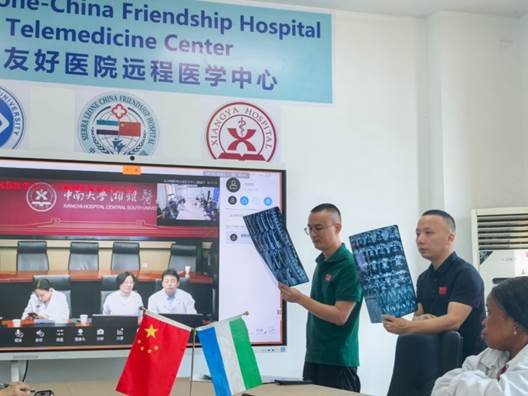
In a demonstration of international medical cooperation, a telemedicine consultation was recently conducted connecting experts in China with physicians in Sierra Leone. The session was organized through the Xiangya Hospital counterpart assistance program, linking multidisciplinary specialists from Central South University’s Xiangya Hospital with the medical team at the China-Sierra Leone Friendship Hospital.
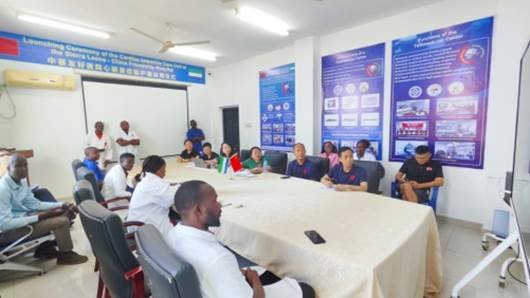
Facing a complex and severe case of spinal cord pathology under conditions of limited local resources, the collaborative effort aimed to develop an effective treatment strategy. The Chinese expert panel included Dr. Li Jian, Deputy Chief Physician of Neurosurgery; Dr. Huang Qing, Chief Physician of Neurology; and Dr. Cai Ying, Chief Physician of Rehabilitation Medicine.
The patient, a 50-year-old male, presented with progressive weakness and numbness in both lower limbs for over a month, which had recently worsened. His condition included left lower limb edema, difficulty urinating, complete paralysis, sensory impairment, and serious complications such as deep vein thrombosis and a neurogenic bladder.
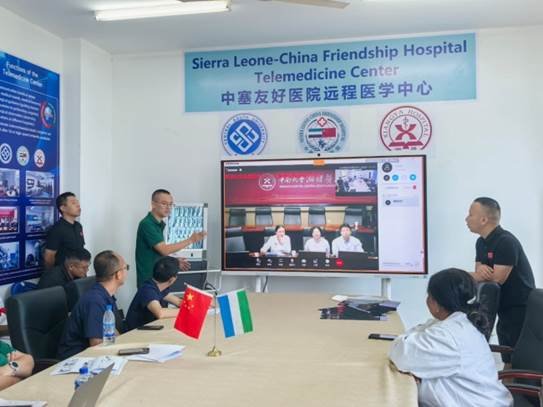
The remote consultation yielded several significant outcomes. The Xiangya team first established a standardized diagnostic pathway, offering a clear clinical framework for differentiating potential causes such as syringomyelia, subacute combined degeneration, multiple sclerosis, or spinal cord infarction.
Recognizing the constraints on advanced diagnostic testing locally, the experts then formulated a practical, context-adapted treatment plan. This innovative approach proposed a stepwise pharmacological strategy, using therapeutic response as a guide to help identify the underlying etiology, a method praised by all involved.
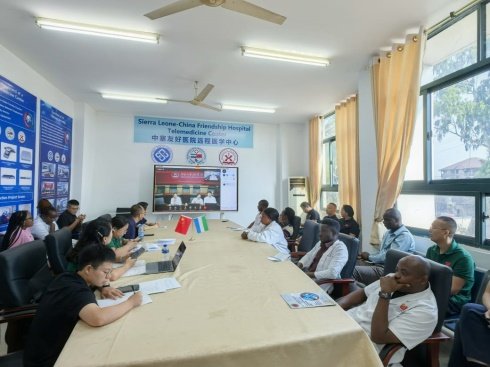
Furthermore, a personalized rehabilitation plan was designed for implementation in a resource-limited setting. It included specific guidance on postural management, passive joint mobilization, and bladder function training. To ensure the immediate commencement of treatment, China’s 26th medical aid team to Sierra Leone followed the consultation with an on-site donation of urgently needed medications, including anticoagulants and neurotrophic drugs.
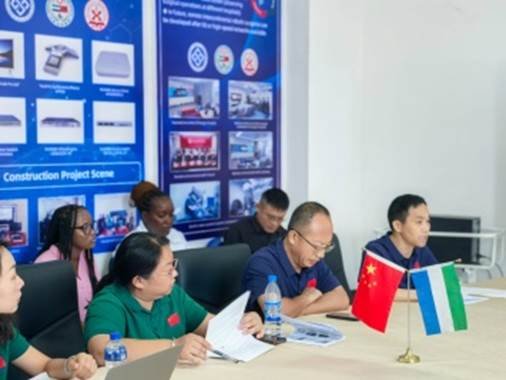
This telemedicine initiative highlights how international collaboration and technological bridges can help overcome geographical and resource barriers, bringing specialized medical expertise directly to where it is most needed to improve patient care.