By Mohamed Konneh
A recently published social audit on how mining companies transfer revenues meant for host communities has uncovered widespread non-compliance with mining laws, weak and undemocratic governance of Community Development Committees (CDCs), and abandoned projects across four mining districts in Sierra Leone.
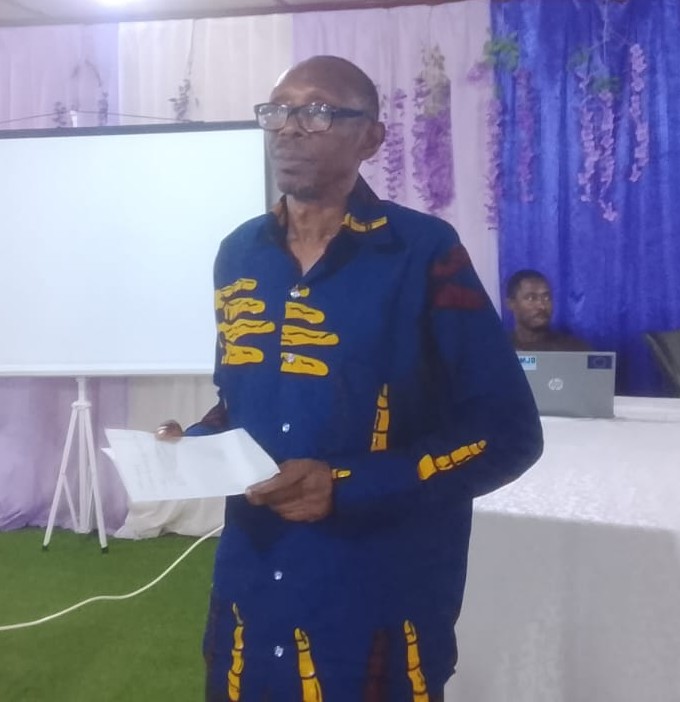
Salieu Kamara- NMJD
The report was presented by the Network Movement for Justice and Development (NMJD) in collaboration with its partners, with technical and financial support from Development and Peace Caritas Canada. Titled Social Audit on Sub-national Mining Revenue Transfers, the audit covered the period 2017 to 2023 and focused on the management and utilization of Community Development Funds (CDF).
The social audit was conducted in five chiefdoms in four districts: Tankoro/Gbense and Nimikoro Chiefdoms in Kono District; Lower Bambara Chiefdom in Kenema; Mosenessie in Moyamba; and Mogbemo in Bonthe. It targeted five mining companies: Koidu Limited, Sierra Diamonds, Gold Lion Mining Company Limited [Wongor Investment and Mining Corporation], Sierra Mineral Holdings/Vimetco, and Sierra Rutile Limited.
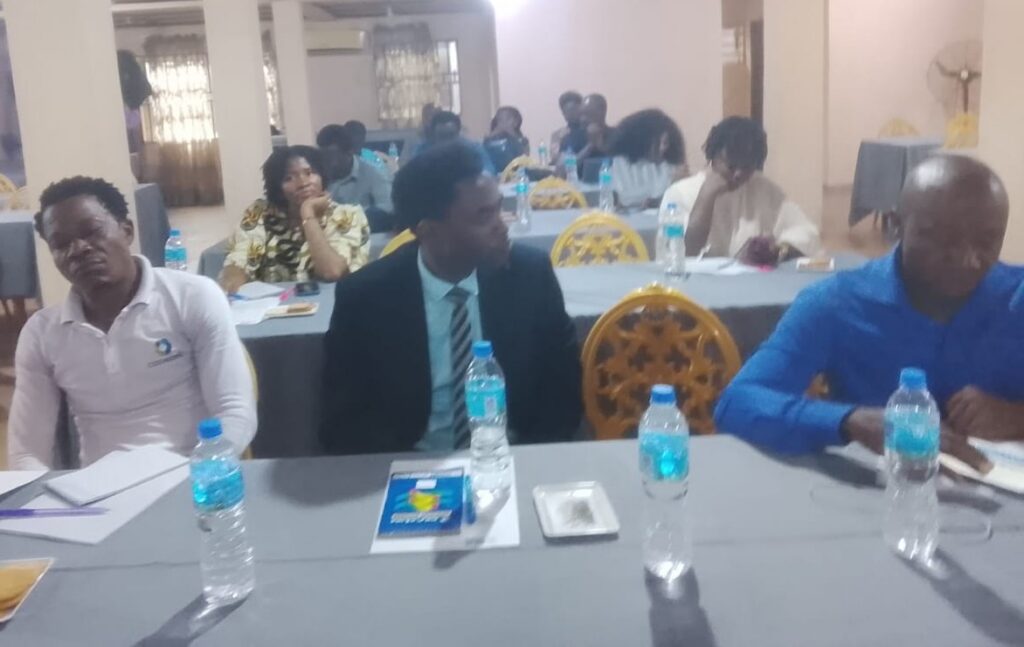
According to Salieu Kamara of NMJD, the audit used multiple methodologies including literature review, informant interviews, focus group discussions, town hall meetings, and technical expertise outsourced from the Budget Advocacy Network (BAN), which trained social auditors and accompanied field tests.
He said the team also engaged the National Minerals Agency (NMA) and the Ministry of Mines and Mineral Resources (MMMR) ahead of the exercise.
Presenting the Key Findings, Emmanule Gbondo noted that companies Pay What They Want and that the report says almost all the companies audited failed to comply with the 0.01% and 1% sub-national revenue transfers to CDCs as stipulated in the 2009 Mines and Minerals Act and the 2022 Mines and Minerals Development Act respectively.
He said instead, companies paid varying amounts of their own choosing.
‘’Sierra Rutile, is paying a bulk sum of US$100,000 annually irrespective of its turnover, citing the 2002 Sierra Rutile Agreement Act. Koidu Limited is still paying 0.25% of its gross annual revenue instead of the 1% required by the 2022 law, citing its Community Development Agreement (CDA). Sierra Diamonds paid an annual bulk sum of SLE1 Billion before production started and 0.3% after production and export began, Mr. Gbondo narrated.
Mining communities, the audit found, are also concerned about lack of transparency in determining gross annual revenues. Communities are not represented in the calculation process and have no way to verify figures, leaving room for companies to shortchange them.
Undemocratic CDCs and Company Control On governance, NMJD found that the internal system of some CDCs is not democratic and lacks transparency and accountability. Incoming executives face challenges because outgoing executives fail to do proper handing over, creating suspicion and bad blood.
In Mosenessie, the situation is more extreme. The CDC has no control over transferred funds. According to the report, Sierra Minerals controls and manages the finances that should go to the CDC – disbursing funds, preparing financial statements and keeping all documents, while the CDC has no access to essential records.
Low capacity in financial management, record keeping, procurement and project monitoring among CDC executives and community members was also flagged, making it difficult to keep proper books or interrogate transactions. The audit further links irregular or discontinued payments to stalled projects. At Mosenessie, a 100-bed hospital project was abandoned for lack of funds to pay contractors, while a community health centre and staff quarters were abandoned at Nimikoro after building materials were stolen.
Communities also complained of growing environmental destruction, including water pollution, failure to restore mined-out areas, and inaction by the Environmental Protection Agency (EPA) and NMA.
The report Recommended for a review of the Mines and Minerals Act 2023 and the Mines and Minerals Development Regulation 2023 to fully capture the CDF, its governance, implementation and accountability for sustainable development of host communities.
It recommends redefinition of roles of all stakeholders – mining companies, NMA, Ministry of Mines, local authorities including Paramount Chiefs and Councils, and EPA – for effective implementation of the CDF.
Other recommendations include participatory budgeting through public disclosure in open forums where communities discuss and vote on projects; creation of accessible and anonymous platforms by NMA and CSOs for reporting misuse; regular town hall meetings between CDCs, communities, companies and MDAs; making it legally binding for CDCs to publicly display income and expenditure reports on village notice boards and community radio; and reconstituting CDCs to put affected people in control, with political leaders given other roles.
NMJD also calls for sustained capacity building for CDCs on transparency and accountability.
“Not a Mission to Destroy” In his conclusion, Emmanuel Gbondo says the findings are not surprising given years of advocacy, but the depth of transparency and accountability failures across all major players, including the prolonged inaction of state agencies established by law to protect communities, is both disturbing and saddening.
He said while CDCs were meant to balance power and give communities leverage, their voice remains marginal and their composition does not allow them to assert space. The few community members on CDCs are often shackled by powerful interests whose interests conflict with those of affected communities.
The organisation urges stakeholders, especially those unfavourably cited, to accept the process not as an attempt to destroy their image but as a national Call to Action to sanitize the mining sector and make it more productive, responsive and beneficial for everyone.