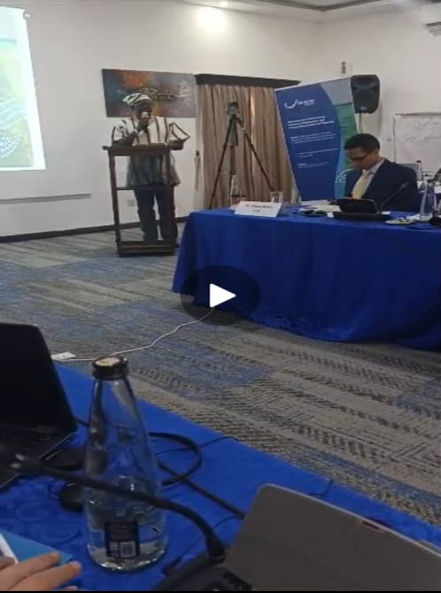
The Deputy Minister of Public Administration and Political Affairs Hon. Philip Tetema Tondoneh represented Sierra Leone at the Workshop on Credit Ratings, Resource Mobilization, and Climate/Blue Economy Financing from 12th to 13th June, 2026, in Mombasa, Kenya.
The Workshop was organized by the United Nations Economic Commission for Africa (ECA) the African Island States Climate Commission (AISCC). The work shop was aim at strengthening the capacity of African Island states under sovereign credit ratings methodologies better and to leverage climate resilience and blue economy assets to improve access to sustainable financing.
The Deputy Minister of Public Administration and Political Affairs Hon. Philip Tetema Tondoneh during the workshop acknowledged the essence of the dialogue and the current economic crisis around the globe and how it can be harmonise globally. He expressed his satisfaction to be a member of the coalition.
“As for we in Sierra Leone, we are happy to join the Sustainable Debt Coalition (SDC) Family, we have hope in your leadership and guidance to lead us in maintaining a sustainable debt path through huge concessional borrowing”. Minister Tetema stated.
The Minister in his statement said, the workshop will address critical challenges facing participating countries, including limited access to affordable long-term financing and the under-representation of climate vulnerability and resilience investment in Credit rating assessment.
He further stated that, It will also explore how our countries can better communicate their economic and environmental strength, including blue economy assets, such as marine resources, sustainable tourism, and fisheries, to investors and rating agencies.
He concluded his statement that in managing the current Domestic Debt Challenges, they must build a resilient economy that will help reduce the vulnerability to external shocks. They must optimize the domestic debt markets, extend maturity profiles, and manage local crowding-out risks to signal deep fiscal discipline to global observers. The workshop provided a high level platform for dialogue among policymakers, experts, and partners on integrating climate vulnerability, resilience investments, and blue economy potential into national credit narratives.
He further urge you to actively engage, challenge assumptions, and collaborate in the discussion. The insights they gain there will directly shape their strategies to lower financing costs and fund national development.
The Participants engage in technical sessions and peer exchanges covering key areas such as sovereign rating methodologies, integration of climate resilience into macroeconomic frameworks, improvement of data systems, and alignment of debt management and climate finance strategies. The programme will also examine innovative financing tools, including sustainability-linked bonds, resilience clauses, and blended finance mechanisms.