By Mohamed Konneh
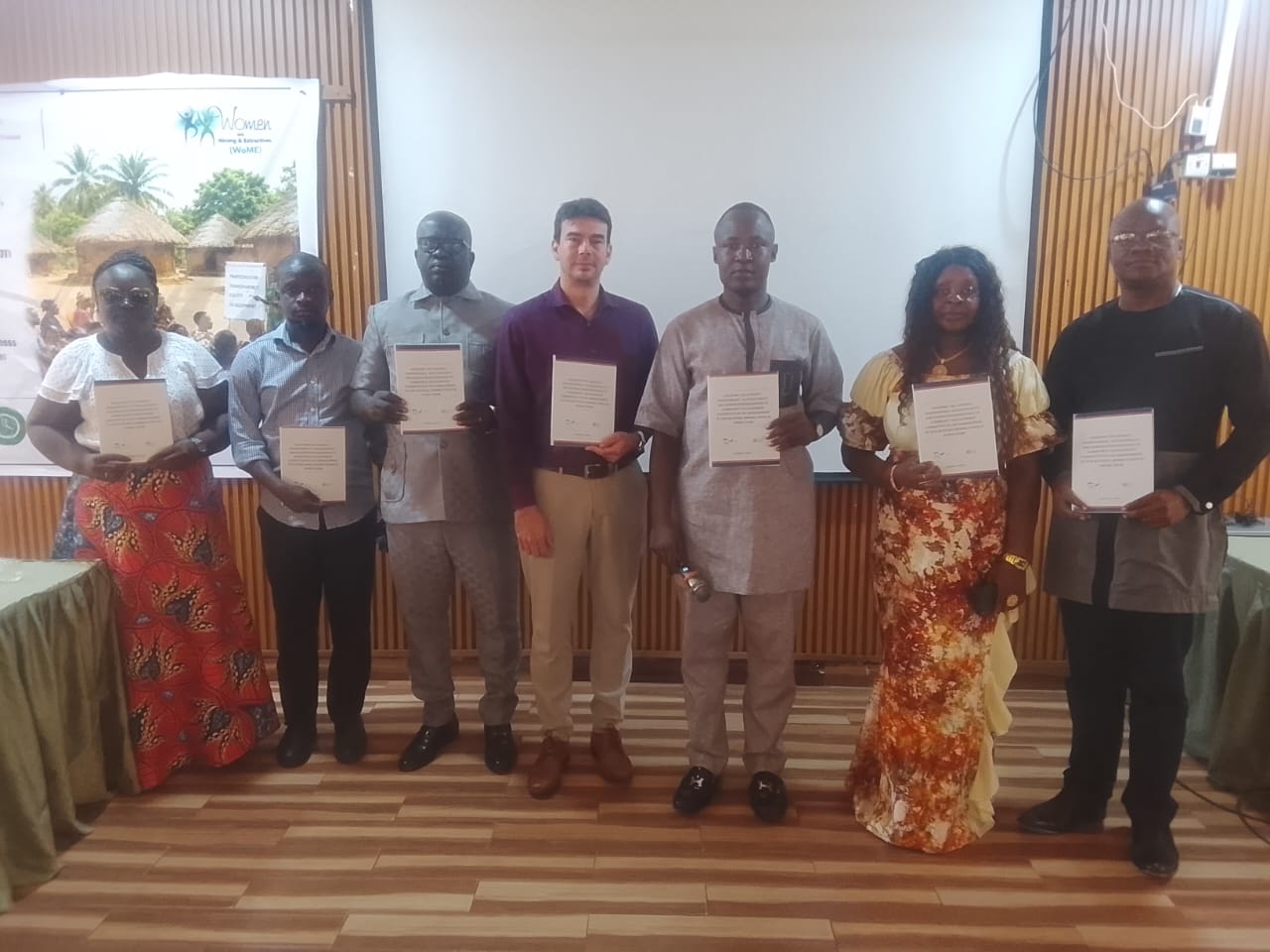
With funding from GIZ, Women on Mining and Extractives (WOME) on Wednesday 2nd September 2026 launched a research report on the Sub-National Mining Payments and Community Development funds. The launching done at the CCSL Conference Hall on Kingharman Road in Freetown, was title: Assessing the Capacity, Transparency, Accountability, and Gender Responsiveness of Community Development Committees in the Management of Sub-National Funds Sierra Leone.
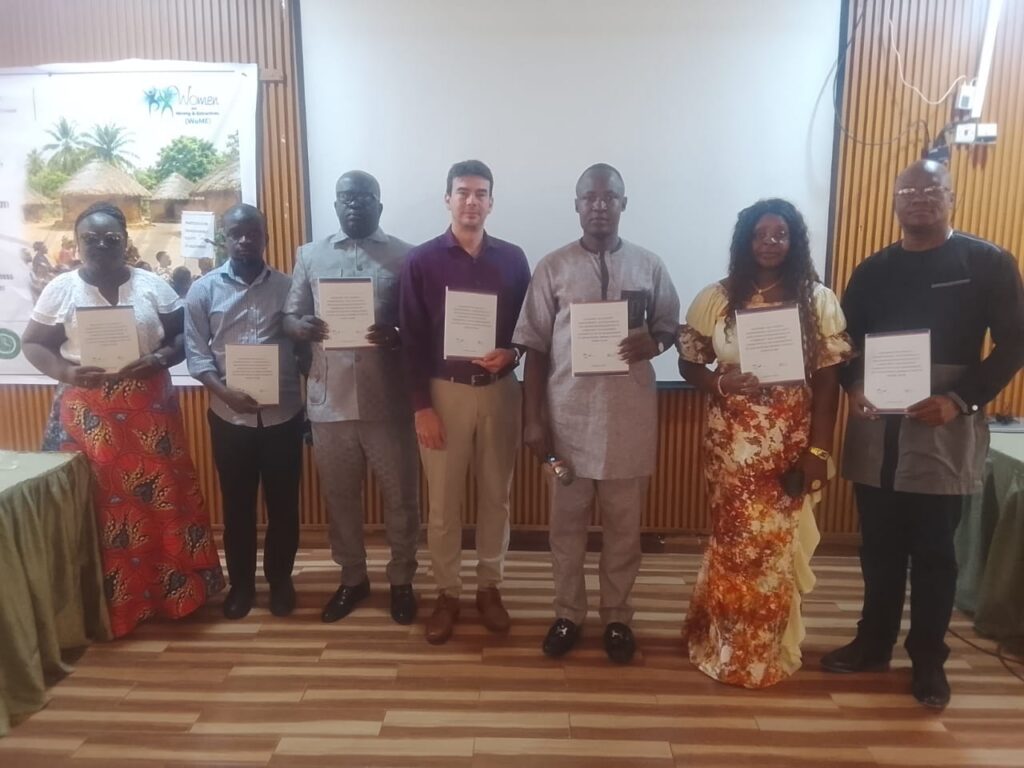
The launch is part of a project, ‘’promoting transparency, accountability and gender-responsive governance in the management of sub-national mining revenue and land rehabilitation in Sierra Leone.’’
Esther Finda Kandeh, Executive Director of WOME while making her opening remarks said Sierra Leone has seen an increase number of mining companies but much benefits is yet to be seen.
Ms. Kandeh noted that the research assess the capacity of communities in relation to community development fund that goes to communities for their own development.
‘’The finding of this research will help communities to managed their resources, know how the funds are utilized for the benefit of communities. Mining is our business and we all must be interested in it,’’ she said.
The WOME Executive Director called on the Ministry of Mines to upload payment information on CDAs and other payments to communities on their website.
Presenting the findings the Consultant, Sahr Ansumana said the economic significance of mining remains substantial according to the Sierra Leone EITI report 2022-2023.
He said Sierra Leone’s mining sector remains an important contributor to national economic activity, employment, livelihoods, and local development.
‘’In mining-affected communities, various community development funds and benefit-sharing mechanisms are intended to ensure that communities derive tangible benefits from natural resource extraction.
Community Development Committees (CDCs) play an important role in identifying community priorities, managing or overseeing development resources, supporting project implementation, and promoting accountability between communities, companies, government institutions, and other stakeholders;’’ the Consultant noted.
Mr. Ansumana however noted that, concerns remain regarding the capacity of CDCs to effectively perform these responsibilities, particularly in relation to financial management, transparency, accountability, project monitoring, community participation, and gender-responsive decision making.
This research was undertaken to generate evidence on the institutional and operational capacity of CDCs and to identify key governance and capacity gaps that may affect the effective management and oversight of community development funds and resources.
The study was conducted in five mining-affected districts: Kono, Tonkolili, Port Loko, Bonthe, and Moyamba. A mixed-methods research approach was adopted, combining quantitative and qualitative data collection.
He said the findings indicate that CDCs have established structures for managing community development resources, including access to formal bank accounts and defined leadership positions, but noted that significant differences exist in their institutional and technical capacity.
He said key capacity gaps identified include financial management, procurement, budgeting, project monitoring, report writing, bookkeeping, development planning, environmental management, knowledge of mining laws, and understanding of CDC roles and procedures. ‘’Respondents also highlighted inadequate and irregular training, limited funding, communication challenges, and difficulties associated with meeting arrangements and accessibility,’’ he said.
The GIZ Representative, Max–Cmatugz Hatzold, while making his statement said GIZ work in Liberia, Ivory Coast and Sierra Leone.
He gave a brief story on mining boom is some African countries while working as a young researcher noting that funds from mining activities always comes with its own challenges.
He said challenges here in Sierra Leone are similar to other countries while applauding the research work.
Max-Cmatugz also asked whether women are been considered, or their voices included in mining decisions. This he said is critical and that Germany is interested in helping to develop the sector in the country.
‘’The money going to communities are important because this is money that is used for development of communities and having their saying in their own development. The findings are good and the research brings out the gaps in managing local resources.
The National Coordinator SLEITI, Mohamed Baimba Koroma in his statement said mining revenues should benefit communities where mining takes place.
He said the effectiveness of Community Development Committees is critical for translating mining into tangible, sustainable benefits and that Transparency and accountability must go beyond national-level payment disclosure.
‘’Citizens need to see how funds are allocated, managed, and turned into projects.
Mr. Koroma noted that SLEITI welcomes the report as it focuses on capacity, transparency, accountability, and gender responsiveness.
‘’These are key to inclusive participation and responsible management of mining funds. The findings and recommendations are useful for: policymakers, mining companies, local authorities, Community Development Committees, civil society, and communities,’’ he said.
Mr. Koroma noted that SLEITI is ready to work with stakeholders to promote greater disclosure, citizen engagement, and accountability while commending WoME and GIZ, and urge stakeholders to turn recommendations into practical action.
“Mining communities should not merely be recipients of mining revenues, but informed participants and beneficiaries in the development process,’’ he concluded.