By Mohamed Konneh
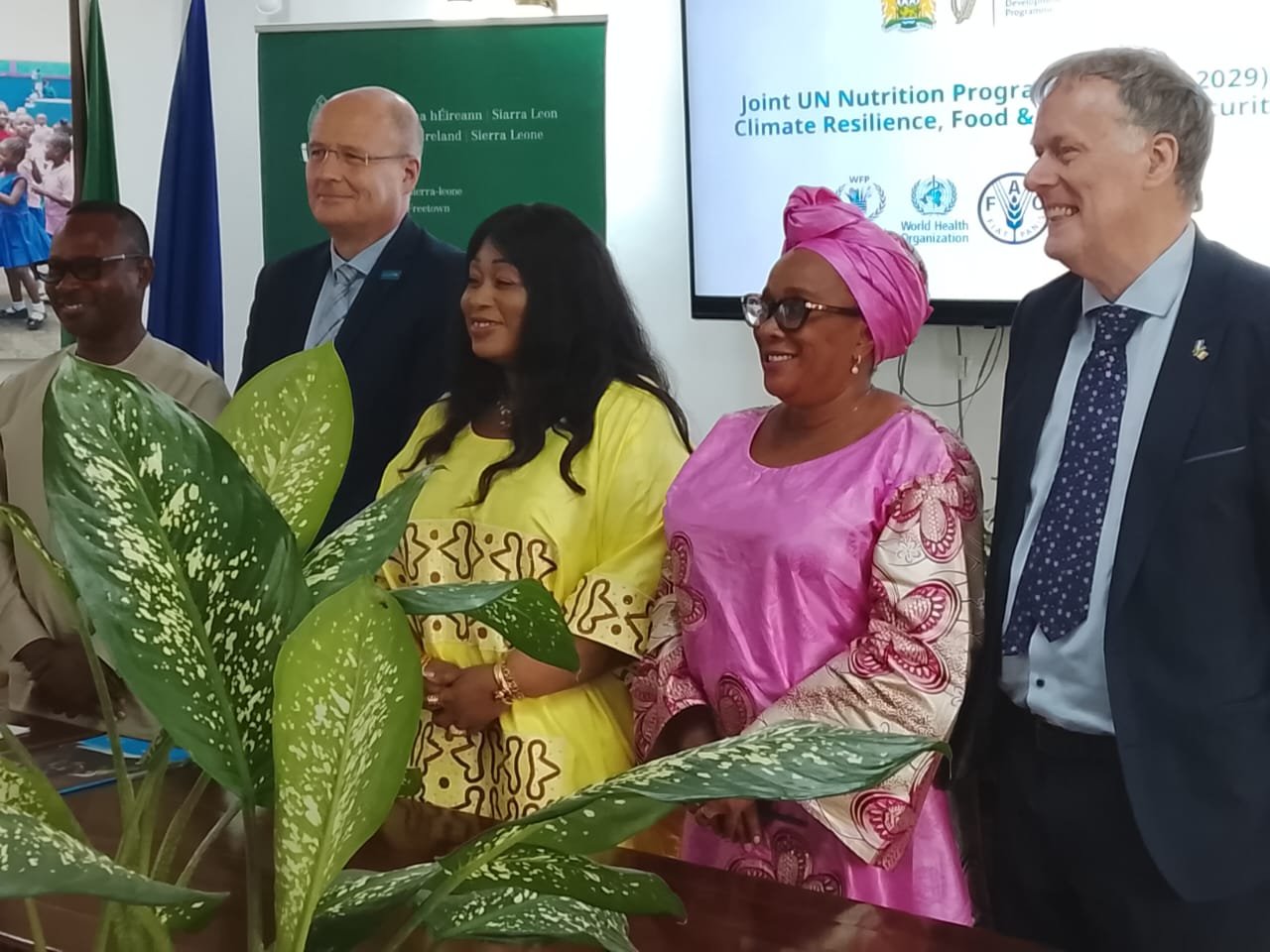
UNICEF and the Irish Embassy in Sierra Leone on Thursday 29th January 2026 launched a joint UN Nutrition Programme (2025-2029) geared towards Building Climate Change Resilience, Food and Nutrition Security. The programme will be implemented in four districts of Bombali, Kailahun, Kenema and Moyamba respectively.
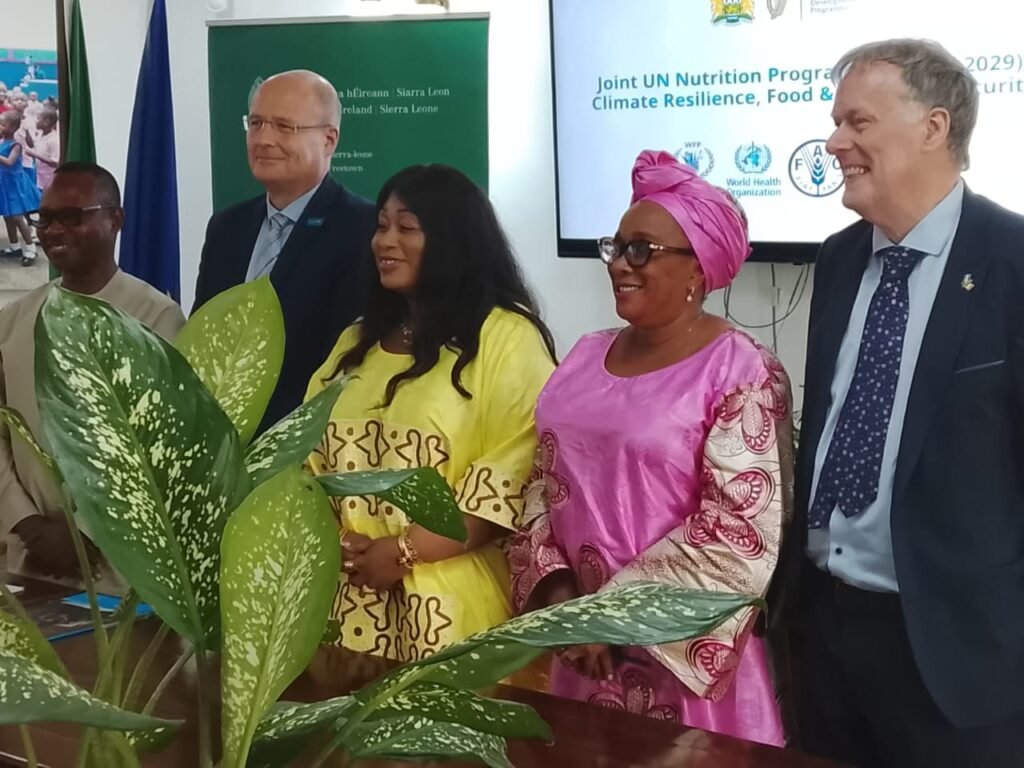
UNICEF Representative in Sierra Leone, Rudulf Shwenck and Chair of the UN Nutrition while making his statement said malnutrition remains one of the leading causes of illness and death among children under five in Sierra Leone.
‘’While the country has made progress, 26% of children are still stunted and 5.2% are underweight, placing national efforts off-track to meet the global 2030 nutrition targets,’’ he said.
The UNICEF Representative noted that the joint Nutrition Programme brings together government and UN Agencies to deliver a coordinated, malti-sectoral response that strengthens climate resilience systems, improves food and nutrition security and support national commitments under the Feed Salone priority, the mid-term National Development Plan and the UN Sustainable Development Cooperation Framework.
He said the programme contributes directly to SDGs 1,2,3,5,6, and 13.
He said the implementation will be led through existing government systems, with community-level engagement to ensure ownership and sustainability.
The Irish Ambassador to Sierra Leone, Patrick McMamus said he was delighted to be part of the programme.
‘‘UN Nutrition strengthen climate change resilience and food system in Sierra Leone. This programme is to make sure that pregnant women give birth to healthy babies. The programme will be implemented in four districts across the country.
The Minister of State, Office of the Vice President, Manty Tarawally, thanked the government of Ireland, UNICEF and other UN agencies noting that the programme is important as it align with the Government of Sierra Leone Mid-Term Plan.
She said the Joint Programme supports a holistic and integrated approaches in food and nutrition interventions in Sierra Leone with the aim of contributing to the Government’s “Feed Salone” priority of the Medium-Term National Development Plan 2024-2030 and Sustainable Development Goals 1, 2,3,5,6, 13 and related outcomes of the United Nations Sustainable Development Cooperation Framework (UNSDCF).
‘’The programme is unique as it brings the UN family and government of Sierra Leone to work together. This programme will also address malnutrition, and we expect good result,’’ she said.
The governance structure for the Joint Programme comprises a Steering Committee with oversight responsibility for the overall management and functioning of the programme.
The Steering Committee will be the decision-making authority and highest body for strategic guidance, fiduciary and management oversight and coordination. It will facilitate effective and efficient collaboration between participating United Nations agencies, Government Representative of Sierra Leone and donors for the implementation of the Joint Programme.
The committee will review and approve the Joint Programme documents, including the results, monitoring and evaluation (M&E) framework and the overall implementation of the Joint Programme, on a semi-annual basis. In addition, the committee will review and approve the annual consolidated narrative and financial reports, the terms of reference for the evaluation exercise (if applicable) and such evaluation findings and will follow up on the implementation status of accepted recommendations from the evaluation.