By Hassan Solokoh Bockarie
Nearly two decades after Sierra Leone’s Truth and Reconciliation Commission (TRC) released its landmark report recommending reparations for victims of the civil war, thousands of survivors still wait for justice that was promised but never fully delivered. The TRC’s final report, published in 2004, urged the government to prioritise reparations for amputees, war-wounded, victims of sexual violence, war widows, and children affected by the conflict. It described reparations as “a moral and legal obligation of the State to acknowledge the suffering of victims and assist them in rebuilding their lives.”
In the early years, the National Commission for Social Action (NaCSA), the agency mandated to implement the programme, made some progress. Through donor funding and partnerships, NaCSA provided limited cash payments, prosthetic limbs, and skills training to a small number of victims. But the scope was narrow. The reparations programme faced serious funding and logistical constraints.
According to the agency’s Project Officer, Umaru Samai, he alluded that the real number is only about a third of the officially registered victims. NaCSA insists it continues to engage the government and partners to expand support, but admits that momentum has slowed drastically.
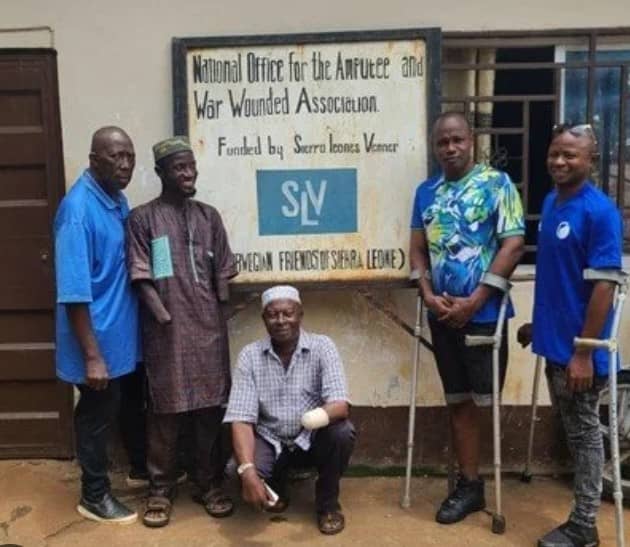
For victims, however, the story is one of disappointment and neglect. The Amputees and War-Wounded Association says most survivors feel abandoned. “Many of us were used for publicity when reparations started, but after that, nothing came again,” said Mohamed Jalloh, a member of the association in Grafton, Freetown. Mohamed Jalloh added that they were promised livelihoods, education for their children, and medical care but most of that never happened. He noted that he only received le 300,000 when the program started but nothing was done after that.
Jenneh Gaima, who lost both feet in an attack in 1992, shares a similar struggle. She noted that her husband was killed, leaving him to raise seven children alone. “My husband and one of my daughters were shot right in front of my eyes,” Jenneh added. She noted that she was promised financial support, but nothing came and that her children are on the streets because she cannot provide for them.
This failure to fulfil reparations is not just an issue of insufficient funds; it’s also a story of broken promises, mismanagement, and political inefficiency. The Amputees and War Wounded group has repeatedly called for renewed government attention and transparency in how funds allocated for reparations are managed.
Abubakar Kargbo, Chairperson of the Amputees and War Wounded Association (AWWA) in Grafton, said most war victims are living in destitution, which forces them to desert the camps and settle where they feel they can get help. He vividly recalls the day rebels stormed her village, forever altering his fate. “I spent eight months in the hospital after they cut off my left hand. When I left, there was nothing for me, no pension, no medical care, no counselling, just survival,” he says. Like many others in the country, he relies on charity and cloth weaving to provide for his children.
The TRC Report had warned of this risk nearly twenty years ago. It emphasised that reparations should not depend solely on donor funding, but be embedded in the national budget to guarantee continuity. “Failure to provide adequate reparations could perpetuate the sense of injustice that fueled the conflict,” the report noted. Analysts now say that the warning went unheeded, as donor support dwindled and state commitment weakened.
NaCSA, for its part, says it remains committed to fulfilling its mandate, but acknowledges challenges. “The Reparations Programme was never designed as a one-off activity, It should have evolved into a permanent social support system for war victims,” says NaCSA’s Project Officer. He added that limited funding and changing government priorities affected sustainability. The agency says it is currently reviewing the possibility of a new national victims’ registry to identify those who were left out of earlier phases.
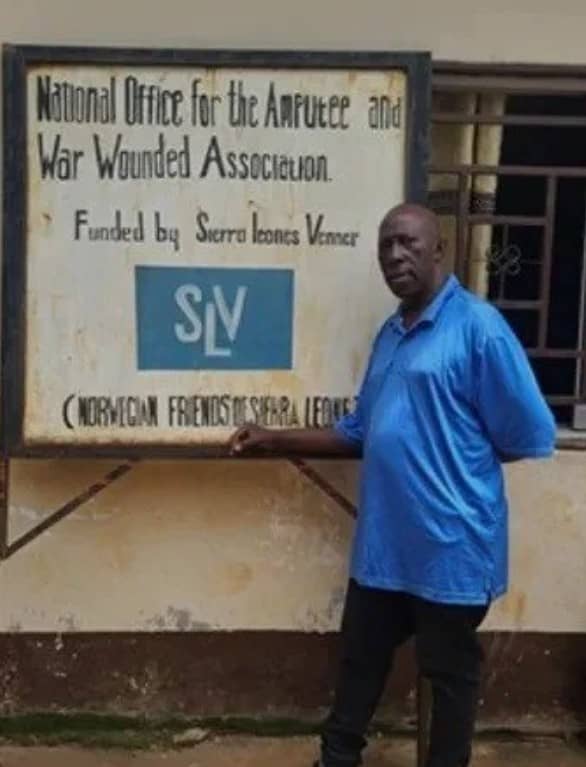
The Truth and Reconciliation Commission (TRC) of Sierra Leone made specific recommendations regarding reparations. The detailed recommendations can be found in vol.4, chp.5, sec.100-209, p250-265 of the TRC final report. These areas outline the call for a comprehensive reparations program, including healthcare, financial assistance, housing, and skills training for survivors of the war.
As Sierra Leone reflects on 20 years since the TRC, the unfinished business of reparations remains a moral test for the state. Survivors’ groups, civil society, and international partners are now calling for a renewed roadmap — one that includes a transparent audit, dedicated funding, and a public recommitment to justice for victims. Until that happens, the promise of reparations will remain a haunting reminder of a peace process left incomplete.
This article is produced with support from Media Reform Coordinating Group (MRGC) through Africa Transitional Justice Legacy Fund – ATJLF project “On engaging the media and communities to change the narrative on Transitional Justice (TJ) issues in Sierra Leone.”