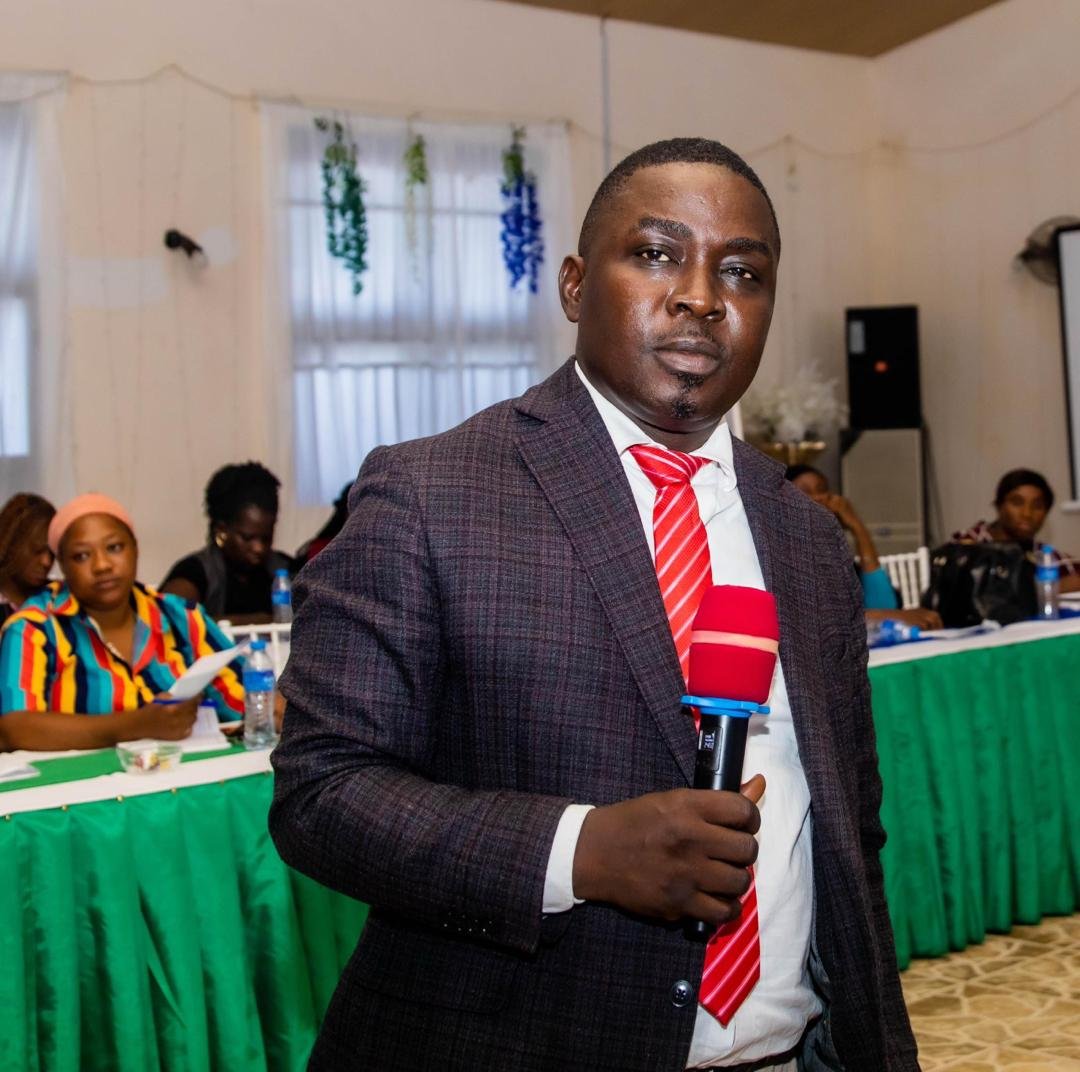
On the 4th November 2025 I (#SahrKendema) had the honor to have been invited by the Female Caucus of the Republic of Sierra Leone parliament to present the “Sierra Leone National Women’s Communique on the Constitutional Review Process” to the Chief Minister, Parliamentarians, He4She Champions, the Media, the office of Attorney General and Minister of Justice and other key stakeholders.
My presentation highlighted Sierra Leone Truth and Reconciliation Commission (TRC) encounter on how women suffered from discrimination, marginalization, before, during and after the Sierra Leone civil conflict. According to the TRC report 2004 – Volume 2, Paragraph 345, page 171, “Women and girls in Sierra Leone, before, during, and after the conflict, were subjected to discrimination by practice, custom and law”. The report further states that “There is no base to justify the discrimination that women have endured in Sierra Leone”
After presenting the different forms of discrimination women have suffered from, I drew their attention to some of the TRC’s recommendations in support of women’s empowerment: (i).“Legal apparatus that entrenches discrimination against women must be dismantled…. repeal of all statutory and customary laws that discriminate against women.
(ii). Government and Parliament work towards achieving 50/50 gender parity in representative politics (Parliament, District Council, and Local Government)
(iii) Government work towards achieving a representation of at least 30% women in the cabinet and other political posts. Government should also work towards incrementally achieving 50/50 parity in the cabinet and political posts…”
Next-I juxtaposed the 2016 Constitutional Review Committee (#CRC) recommendations vis-à-vis the Government of Sierra Leone Whitepaper, during which I highlighted some of the key women’s empowerment priorities policy issues government rejected, though worth considering. My presentation ended by sharing the Women’s communique recommendations to following authorities/stakeholders (i) Government (ii) Members of Parliament, especially the female cause, (iii) Women’s and Civil Society and the Previte sector and (iv) the International Development partners.
Breakdown of the recommendations
FOR GOVERNMENT
1. The right to health, safety, and adequate medical and health facilities to be made enforceable in the revised Constitution.
2. The right to universal free basic education and adequate educational opportunities and learning facilities for women and girls be made justiciable.
3. The right of accused persons especially pregnant, lactating and women with disability to conditions in detention that are consistent with human dignity.
4. Government to include the minimum one-third quota representation for women in all three arms of government- the Executive, Legislature and Judiciary, at all levels and for both elective and appointive positions as an entrenched clause in the Constitution.
5. A new chapter on commission and independent offices be adopted which provides for equality in leadership and decision-making positions.
6. The Rights to land ownership, control and tenure be spelt out very clearly in the Constitution;
7. The Chieftaincy Act of 2009 to remove the obnoxious clause “Where culture permits”, which is discriminatory to women. Women’s Right to contest for all chieftaincies across the country to be confirmed and stated in the Constitution;
8. For the sake of peace and national cohesion, proportional representation be entrenched in the Constitution with a threshold of not more than five percent;
FOR MEMBERS OF PARLIAMENT, ESPECIALLY THE FEMALE CAUCUS:
15. To review the current Whitepaper by the Government of Sierra Leone and consider the over one hundred (100) recommendations which were rejected by the Government in the White paper;
16. Female caucus to be engaged to deepen their understanding of the contents of the Whitepaper and the recommendations emanating from the women’s conference with a key focus on the recommendations made on women’s rights in the CRC report and
17. The Yellow Ribbon Campaign Group and partners to support parliament through the female caucus to conduct outreach programs to increase awareness of citizens on recommendations of women’s priority needs in readiness for the referendum.
FOR WOMEN’S AND CIVIL SOCIETY AND PRIVATE SECTOR:
18. That the final consolidated report of women’s specific recommendations emanating from the National Women’s Conference of 27th June 2024 be adopted as the working document for all future engagements with key government and non-governmental organizations.
19. Women’s groups are expected to engage an MP or a Minister to continue the advocacy for our recommendations;
20. A national advocacy strategy and awareness-raising campaign be developed to reach every woman in the country on the consolidated women-specific constitutional recommendations and also to ensure effective/inclusive participation of the public in the process, (i.e. before and during the referendum);
21. The GEWE Yellow Ribbon Committee collaborates with critical stakeholders like members of parliament (gender and legislative committees, the Female Caucus, NEWMAP) and the Attorney-General’s office for the expulsion of discriminatory clauses in the current Constitution and to have Members of Parliament support the integration of more women’s gender priority issues into the reviewed Constitution;
22. The media should also be encouraged to be part of the process, as this might aid transparency and influence decisions around the constitution review process;
23. CSOs coordinate messages and information sharing on a gender-responsive revised Constitution;
24. They build partnerships and solidarity groups around critical recommendations which have been omitted in the White paper, and
25. Capacity building, training and dialogue meetings are held to amplify women’s rights in the constitutional process to amplify women’s rights in the constitutional process.
26. Women-focused CSOs to support parliament through the female caucus to conduct outreach programs to increase citizens’ awareness of recommendations of women’s priority needs in readiness for the referendum.
FOR INTERNATIONAL DEVELOPMENT PARTNERS
27. To fully monitor, engage and track the constitutional review process.
28. To make funding available to women’s focused CSOs, and gender-line ministry among others to engage the constitutional review process; and
29. International financial institutions—UN family, Embassies, Donors make conditional support to the government based on the acceptance of critical recommendations on women’s rights in the White paper and subsequently the revised Constitution.
A copy of the recommendations was officially presented to the Chief Minister for integration into the reviewed 1991 Constitution of Sierra Leone, as well as for the attention of His Excellency, the President of the Republic of Sierra Leone, Rtd. Brig. Dr. Julius Maada Bio. The Government’s demonstrated commitment to incorporate these recommendations into the ongoing constitutional review process was indeed commendable.
I, however, pray that this commitment will be intentional and transformative, as women’s empowerment is not a privilege or a favor—it is a fundamental human right, firmly anchored in international laws, treaties, and protocols. No nation can achieve sustainable development without the effective and equitable participation of women in its socioeconomic and political life.
Therefore, it is imperative that all discriminatory clauses within the current 1991 Constitution of Sierra Leone that hinder women’s meaningful participation in national development be expunged.
As stated in Volume 2, Paragraph 348 of the Sierra Leone Truth and Reconciliation Commission (TRC) Report (2004): “If Sierra Leone is serious about giving a meaningful voice to women in representative politics, then serious efforts have to be made to achieve this end.” The ongoing constitutional review process presents a timely and critical opportunity to do just that.
We are urging the Government to integrate strong and actionable provisions on women’s empowerment in the reviewed 1991 Constitution of Sierra Leone.