By Ngozi Obi Sesay
The tragedy that unfolded within the colonial walls of Pademba Road Prison on 29th April 2020 is scar that cannot be erased. Pademba Road Prison was built to hold fewer than 300 people — yet over 1,000 men were detained there during the outbreak of the Covid virus, face-to-face in overcrowded, unsanitary conditions that made social distancing, quarantine, or even basic hygiene impossible.
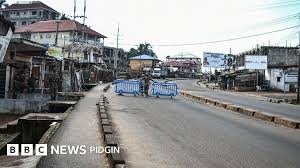
Prisoners found themselves deprived not only of contact with loved ones, but of access to adequate food, sanitation and medical protection. These are not luxuries. They are basic human rights. And under these degraded conditions — desperation erupted.
On 29 April 2020, violence broke out — reportedly after some inmates set fire to walls and parts of the prison. Guards responded with live ammunition. According to Amnesty International, at least one prison officer died when hit by a stray bullet. It is suggested that over 31 people died in the riot — only one of them a prison officer, the rest inmates.
Instead of calming the situation, instead of dialogue, instead of trained crisis intervention, the state chose bullets. For hours, the sounds of gunshots echoed off the worn walls of Pademba. When silence finally returned, it was heavy with death.
In the days that followed, survivors reported that they were denied food, water and medical care. Some were tortured as authorities attempted to identify “ringleaders.” Several reportedly died in the days after the riot due to lack of treatment.
If this is not a massacre, what is? The wanton disregard for human life—a failure that began with extreme overcrowding and ended with the lethal deployment of live ammunition against unarmed prisoners.
The tragedy at Pademba was not a spontaneous misfortune, but the foreseeable consequence of structural injustice and state neglect: decades of overcrowding, failing infrastructure, and a refusal to protect vulnerable lives during a pandemic. Facilities across Sierra Leone were already inadequate, with hundreds held for long periods in pre-trial detention. The pandemic intensified the fear and abandonment among prisoners, who felt trapped in a place where the virus could sweep through unopposed. The use of live ammunition against desperate, overcrowded, and unarmed prisoners—under conditions the state itself created—demands full accountability. However, what followed was a mixture of official defensiveness, delayed explanations, and a worrying lack of transparency. The failure to offer full accountability, open truth-telling, and genuine national mourning suggests the lives lost were treated as an inconvenience, as though deaths of those in prison uniform do not deserve remembrance. But prisoners are citizens; they lose their freedom, not their humanity or their rights to life, health, and humane treatment.
I speak plainly now: Sierra Leone cannot move forward if we continue to tiptoe around painful truths. A country that does not acknowledge the suffering of its most vulnerable citizens is a country that risks repeating its darkest chapters.
I join the call for an independent, transparent, judicial-led inquiry into the riot, the killings, and the treatment of survivors. There must also be an immediate policy reforms to reduce overcrowding — including the release of non-violent, pre-trial detainees, and those especially at risk (elderly, sick, etc.). We must have improved prison infrastructure, sanitation, access to medical care, nutrition and basic human dignity. Because justice is not optional — and human dignity must never be negotiable.
The men who died in Pademba may not have been perfect. Some may have committed terrible offenses. Some were still awaiting trial, presumed innocent under the law. But even the guilty deserve life. Even the condemned deserve dignity. A state that kills its prisoners — directly or indirectly — is a state that must confront itself.
We cannot reform our systems by pretending nothing happened. We cannot call ourselves a just society while families still wait for answers about their children.
The world is watching. But more importantly — our children are watching.
Civil societies countrywide are calling for a full investigation and accountability without delay, the retraining of prison officials and a clear road map to address congestion
This is not too much to ask. This is the bare minimum for a country that values life. Accountability is not an insult. It is our right. This is not an attack on the state it is merely a call for the protection of our democracy. A nation that respects human dignity is a nation that respects itself. Let our voices be heard – the Pademba incident must never happen again.