By Mohamed Konneh
With support from ActionAsid International Sierra Leone, the Network Movement for Youth and Children’s Welfare (NMYCW) in collaboration with YASDev on Thursday 4th December 2025 held a stakeholders conference to deepen Reflection on Sierra Leone’s Education Outcomes and Challenges to Inform Action.
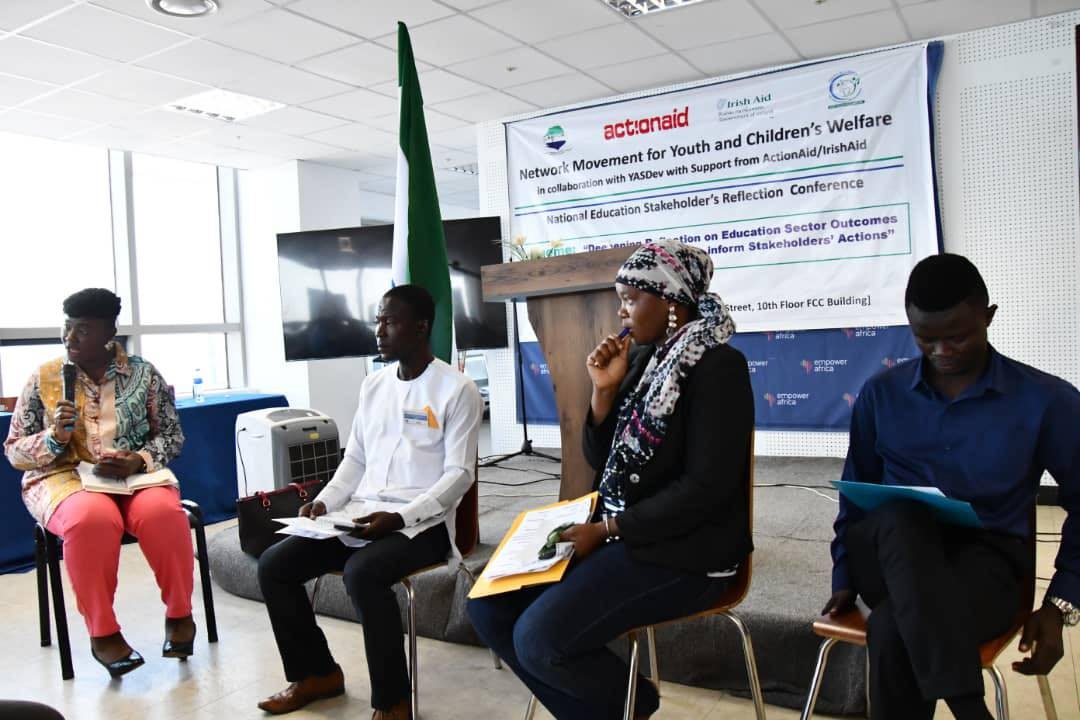
Education stakeholders from across Sierra Leone convened at the 10th Floor of the Freetown City Council building on the theme “Deepening Reflection on Education Sector Outcomes and Challenges in Sierra Leone to Inform Stakeholders’ Actions.”
The conference set the purposeful for a day of candid assessments, live testimonies, and solution‑oriented dialogue.
In his opening remarks, the Executive Director of ActionAid Sierra Leone, Foday Bassie Swaray presented a clear position on sector accountability and the imperative to improve quality learning outcomes.
Foday Bassie Swaray underscored the need to align resources, performance management, and community oversight to ensure learning gains that are both measurable and sustained.
‘’I implore you all to lead the discussion to practical actions so as to restore trust and integrity in the sector, reaffirming ActionAid’s commitment to collaborative reforms,’’Swaray said.
Swaray noted that that education in Sierra Leone has reach a point that people tend to doubt whether we are progressing or not.
‘’We have seen progress in education with increase investment from government. We also see effort in inclusive education and these gains must be maintain. But despite this milestone the reality on the ground shows that more needed to be done,’’ Swaray said.
He said these challenges threatens to undermine the progress made and that the reflection conference will look deep into the systemic problem of the sector.
‘’Our position is rooted in the human right base approach and we believe education is a fundamental right of our children.’’
The chairman of the occasion, Umaru Fofanah while making his statement questions series of actions taken by government but also sector players especially school authorities.
He said government is spending lot of money on the sector and yet the challenges continues.
The representatives of the Teaching Service Commission (TSC) and the Ireland in Sierra Leone, each affirmed the importance of teacher professionalism, integrity in school systems, and investments to improve outcomes.
The Deputy Commissioner of the Anti-Corruption Commission Sierra Leone, Augustine Foday Ngobie, who delivered the keynote address, emphasized the commission’s commitment to ensuring accountability and transparency in the education sector.
The Deputy ACC Commissioner said that education, which receives over 20% of the national budget, is central to the government’s Human Capital Development initiative and must be safeguarded from corruption.
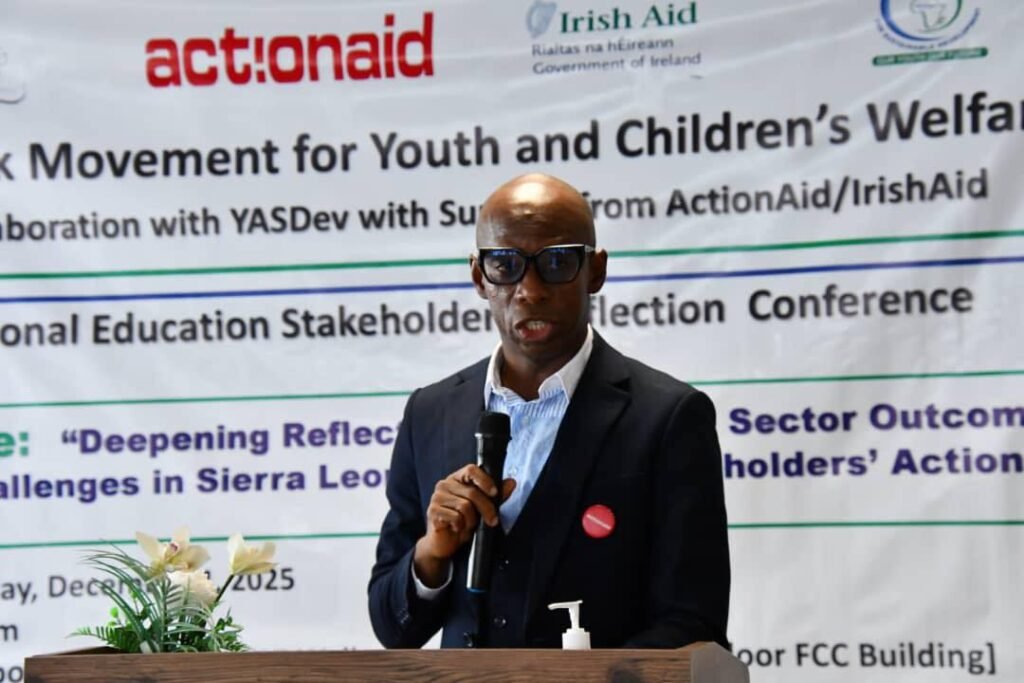
He highlighted progress made through the 2019 amendment of the Anti-Corruption Act, which introduced academic malpractice as a criminal offense, resulting in prosecutions and convictions of offenders.
The keynote Speaker urged for integrity among students and called for increased funding, teacher training, community engagement, and technology to improve education quality.
Participants engaged in three core panel conversations; each anchored in evidence and lived experience:
Teachers’ Roles and Conditions in Delivering Quality Education: Teacher deployment imbalances, professional development gaps, class size pressures, etc.
Education Governance and Accountability (exams malpractice, sector fund management, teacher payroll)
The Role of Parents, Students, and Communities in Promoting Integrity and Strengthening School Systems: Limited parental engagement, social tolerance of malpractice, and weak community‑school partnerships.
The panels were followed by an interactive plenary session where school heads, teachers, parents, and students shared practical experiences; from tackling absenteeism to improving school governance and reporting malpractice. Live testimonies highlighted how transparent communication, community scorecards, and teacher mentoring improved learning environments and outcomes.