The WFP recently engaged women in Kambia District on the National Gender Issue Paper concerning the 30% quota. The meeting began with a welcome address from Kambia Council Chairman Osman Marrah, who praised DAD/SA SL for championing non-governmental organizations and issues related to women and other related burning issues. He stated that Kambia District is a home for everyone and that matters concerning women must be taken into serious account, emphasizing that when the issues of women are addressed, the issues of the community are directly addressed.
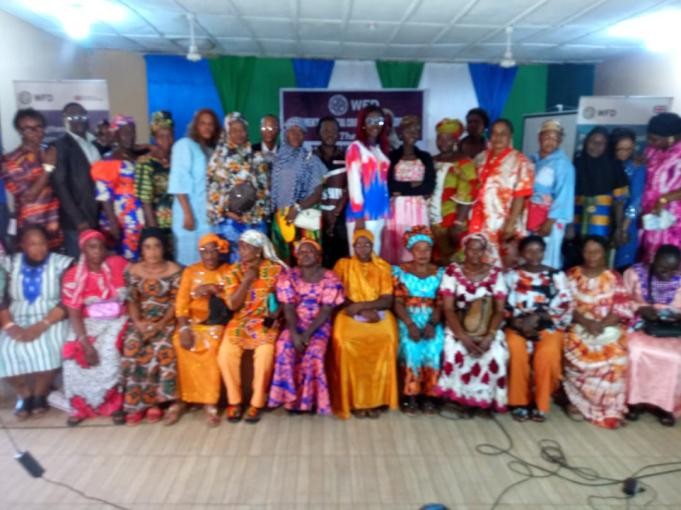
Following this, DAD/SA SL’s Foday Sesay outlined the purpose of the gathering. He recalled that an assessment had been conducted some time ago with council staff who were not present at the current meeting, noting that a good number of the council had welcomed their proposal regarding the assessment of the 30% quota for women. He explained that during that assessment, a good number of women had cited key issues that prevented them from going for positions alongside men. Based on that initial assessment, a validation was conducted, and he stated that input could also be made by the women present in the house, calling on them to provide support so that Kambia could emerge as a leading district.
The Kambia District Development Officer, Isha Kabba, underscored the importance of the meeting, stating that women are parties and should occupy key positions. She spoke on the role of women and the need to support women’s programs, calling on other women to see Kambia as a key study area. The Acting Director of WFP, Wurie Bah, then recalled his past development work with Kambia, noting that based on data, the district has taken gender issues very seriously. He explained that WFP is funded by FCDO based on the UK and that they are supervised by the British High Commission. He asserted that women should be supported regardless of their political party affiliation. He further noted that in the Sierra Leone Parliament, it has been a challenge that for the administrative functions of Parliament, women should either be the Clerk or the Speaker of Parliament.
A member of the consulting firm, Jalikatu Jalloh, stated that their role was to look at the report and assess it from the different districts. She asked all women to change the narrative about women, despite challenges such as women not supporting women. The lead consultant, Jaloh, then provided a comprehensive overview of the findings from the different councils, with specific reference to Kambia. This overview covered the National Gender Issue Paper on the 30% promise and the mapping of women’s representation in Sierra Leone’s local government.