By Millicent Senava Mannah
The Human Rights Defenders Network Sierra Leone (HRDN-SL) has raised fresh concerns over the persistent failure of law enforcement authorities to execute court orders, following a press conference held at its office on 23 Rasmusson Street, Brookfields in Freetown.
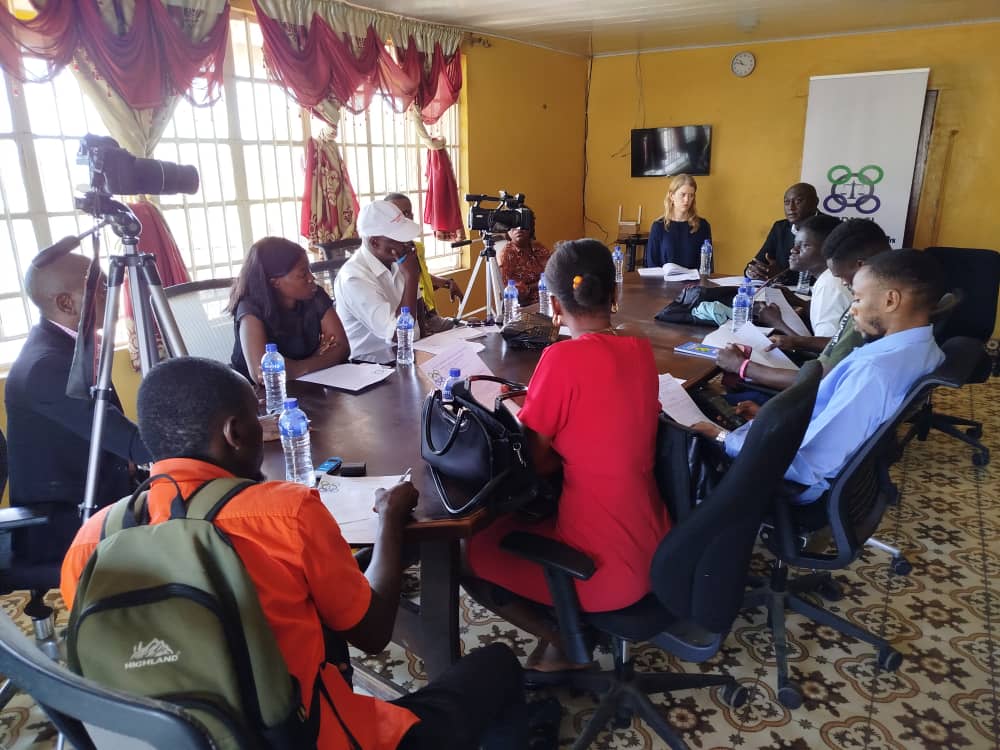
The briefing was delivered by Rachel Walters, a Human Rights Officer, alongside Alphonsus B. M. Gbanie, who both outlined what they described as a growing pattern of non-compliance by the Sierra Leone Police (SLP) in enforcing judicial decisions.
Addressing journalists, the presenters warned that the continued delay or refusal to implement court orders, injunctions, and non-bailable warrants represents a serious threat to the rule of law and undermines the authority of the Judiciary of Sierra Leone.
According to HRDN-SL, recent monitoring has revealed that more than 25 court orders within the Western Area alone have been delayed or put on hold since January 2025. Many of these cases involve civil and land disputes, which are often highly sensitive and prone to escalation when legal decisions are not enforced.
The organisation cautioned that failure to uphold court rulings could encourage unlawful practices, including “jungle justice,” where citizens resort to self-help measures due to frustration with the formal justice system. Such developments, they noted, risk fostering a culture of impunity and weakening public confidence in state institutions.
Threat to Rule of Law and Stability
Legal experts maintain that enforcement is a critical component of justice delivery. Without it, court judgments lose their effectiveness, regardless of their legal merit.
Sierra Leone’s justice system depends on the police to enforce rulings handed down by the courts. When this enforcement mechanism fails, it creates uncertainty and increases the likelihood of disputes escalating into conflict, particularly in cases involving land ownership and civil rights.
Analysts also point to systemic challenges such as limited resources, logistical constraints, and weak institutional coordination as contributing factors to the enforcement gap.
During the press conference, HRDN-SL called on the Inspector General of Police to take urgent and decisive steps to ensure that all outstanding court orders are implemented without further delay.
The organisation urged the Police Council to hold senior police leadership accountable for compliance with judicial directives and to ensure that officers provide adequate support to bailiffs and court officials responsible for executing court decisions.
It further appealed to the Judicial Council to take disciplinary action against officers who fail or refuse to enforce court orders, stressing that accountability is essential for restoring public trust.
HRDN-SL also called on the donor and diplomatic community to support civil society organisations in strengthening independent monitoring of court enforcement processes.
The concerns raised come at a time when issues of accountability and institutional reform remain central to Sierra Leone’s governance agenda. Delays in enforcing court decisions continue to have far-reaching implications, particularly in a country where access to justice is uneven.
Land disputes remain a major source of tension across communities, and failure to enforce rulings in such cases can heighten the risk of violence. Similarly, delays in executing criminal warrants may allow suspects to evade justice, further undermining confidence in law enforcement.
Observers argue that improving enforcement mechanisms within the police force is critical not only for justice delivery but also for maintaining national stability.
As a coalition of civil society organisations and individuals, HRDN-SL continues to play a vital role in promoting and protecting human rights, particularly for human rights defenders.
The press conference highlights the growing role of civil society in demanding accountability from state institutions. Experts believe that sustained advocacy, coupled with institutional reforms and political will, will be key to addressing the challenges within Sierra Leone’s justice sector.
With increasing public attention on the issue, stakeholders say decisive action will be necessary to restore confidence in the rule of law and ensure that justice is both delivered and enforced.