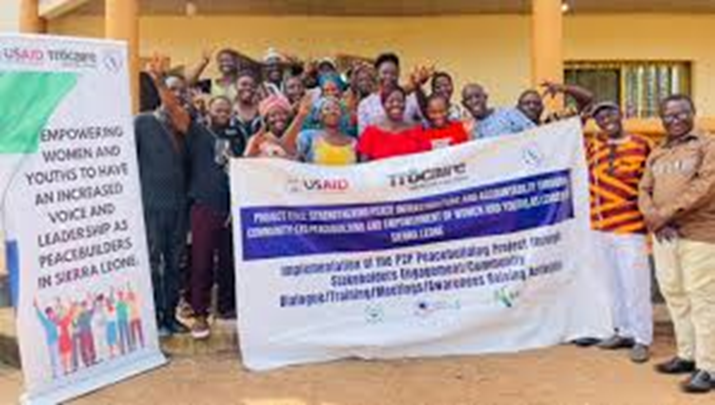
The Justice Cowan on the 15th April 2016, following the release of the 1st proposed draft of the Constitutional Review Committee (CRC) report.
When the first draft of the proposed reviewed constitution was released in February 2016, findings from the first proposed draft show no absolute parity provision for male and female candidates for elected positions as prescribed in the Senegalese parity law, Article 53 of the Angolans, and Section 157(2) of the Zimbabwean constitution.
The drafted constitution made no provision for the minimum 30% quota recommendation for the appointment of women in elective and appointive positions, as is in the Swazi, Burundian and South African Constitutions. It made no provision for one-third (30%) of local government council positions to be reserved for women, as is the case in Uganda. Recommendation for gender equity in the parliament, as it is in section 24(1), section 259(1)(b) of the Zambian constitution, was not reflected in the first proposed draft of the reviewed constitution. Also, recommendations for the appointment of judges to be guided by gender equality in the performance of function as prescribed in Section 184 of the Zimbabwean Constitution, and Section 172(2) of the Kenyan Constitution were also not reflected in the drafted constitution. Furthermore, equal rights in marriage as it is in the Angolan, Equatorial Guinean, Ethiopian and Malawian Constitutions did not reflect in the first draft of the reviewed constitution.
The absence of the aforementioned in the 1st proposed draft constitution resulted in public criticism. The women of Sierra Leone were concerned and complained that the constitution did not address many of the women’s priority policy issues, which violate the TRC recommendations that support women’s empowerment. Some discriminatory clauses, like section 27, were still evident in the drafted document.
In response to concerns raised by women and in the bid for women’s priority policy issues to be integrated into the first proposed drafted of the reviewed constitution, the president of the republic of Sierra Leone then encouraged community women, women’s groups and institutions working on women’s empowerment to meet and resubmit key women’s priority policy issues they may want to see being integrated into the reviewed constitution. A National Women’s conference was organized by CGG with support from Trocaire-SL in response to this request on 24th March 2016.
From the conference, the following nineteen (19) resolutions titled “Many Messages, one voice” were developed and submitted to the Chair of the Constitutional Review Committee and members for their integration into the first proposed draft of the reviewed constitution on the 15th April,2016. Please find below highlights of the 19-point resolutions submitted to the CRC chair and members of the constitutional review committee
Stand Alone’ Chapter on women’s socio-economic and political issues to be in the reviewed constitution.
Language that is simplified and Gender neutral to be used throughout the Constitution (Example: Use ‘Chairperson’, ‘he/she’ or ‘(s)he’.
Every citizen shall have the right to acquire, inherit, use, transfer, access, manage and administer land and natural resources.
CRC to add National values into the Constitution.
Women have the right to maternity leave with pay.
Social protection to be extended to vulnerable persons and survivors of sexual and gender-based violence.
Civil, Christian, Muslim and customary marriages are accorded equal recognition and respect.
Safeguarding the rights of vulnerable and disadvantaged persons such as women, children and persons with disability in securing educational facilities.
Every citizen has the responsibility to ensure proper education, maintenance, upbringing and control of his or her wards or children.
Protect life and liberty, security of the person in particular from all forms of violence against women, including the protection from sexual and gender-based violence, enjoyment of property and protection of the law.
The courts and law enforcement agencies shall ensure that victims and survivors of sexual and gender-based violence are given and enjoy full recognition and protection of the law.
Everyone should be equal before the law and have the right to equal protection and benefit of the law.
The Speaker and Deputy Speaker of the House of Parliament, Mayors and Deputy Mayors of City Councils, Chairpersons and Deputies of District Councils and other bodies must not be of the same gender.
Adopt a new section in line with PTRC Recommendations and CRC subcommittee recommendations.
14 a. Not more than 50% of every elective and appointive position shall be constituted of each gender.
b. There must be gender equality in the appointment of judges
c. Gender equality in all commissions, especially:
· The Parliamentary Service Commission
· The Judicial and Legal Service Commission
· The National Electoral Commission
· The Independent Media Commission
15. Political parties shall be required to select women candidates in at least 50% of constituencies and wards in every district or shall be barred by the NEC from contesting in that district.
16.The State needs to address historical gender imbalances against women.
17.The establishment of the Gender Equality and Women’s Empowerment Commission is provided for in the Constitution.
18. Everyone has the right to education and health, including sexual and reproductive health.
19.New Right to Citizenship to be entrenched.
These resolutions represent a final unified solidarity response that emanated from a National Women’s Conference on 24th March 2016 in response to the draft Constitutional Review Committee (CRC) Abridged Report of February 2016. It takes into account the many position papers, reports of several consultations with the CRC and other stakeholders over three years (2013- 2016), and it reflects the wishes and desires of the women of Sierra Leone. The women of Sierra Leone provided specific responses to the draft report, as well as suggesting a ‘Stand Alone’ Chapter”
I am pleased to report that most of the aforementioned resolutions were integrated into the final reviewed constitutional report submitted to the government by Justice Cowan and members of the CRC.
It’s worrying that we are still raising concerns, and we are not certain if all the proposed women’s priority issues are in the new draft bill. To address our worries and concerns, I would recommend that we ask the Attorney General and Minister of Justice to share with us for the full Amendment bill 2025 of the 1991 constitution of Sierra Leone to ascertain whether the recommended women’s priority issues are in the reviewed constitution, if it turns out to be contrary I will also recommend we go through the 19 point resolution of 24th March 2026 and women’s communique of the 27th June 2024 vis-à-vis the government white paper of March 2021 and come out with a one pager document of key women’s priority issues that should be integrated into the final reviewed 1991 constitution of Sierra Leone before the referendum.
See attached the 19-point resolution of 24th March 2016, and specific responses to the CRC Draft Abridged report, as well as the women’s communique of 24th July 2024, and the Government of Sierra Leone 2017 and 2021 whitepaper on the review of the 1991 constitution of Sierra Leone Act No 6 of 1991 to do a comprehensive analysis of the documents. Let’s act quickly, on the 27th of January 2026, the Attorney General and Justice laid the bill in the well of parliament for 1st reading. The second reading is due in two weeks.