By Wiseman Dee
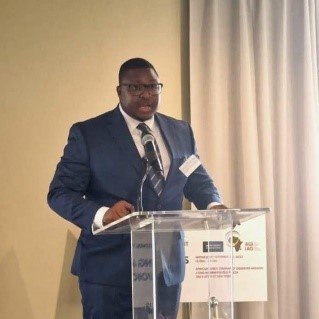
This weekend, Minister of Foreign Affairs and International Cooperation, Alhaji Timothy Kabba, will address a pivotal meeting of the Lower Bambara Descendants Association (LoBDA). The central question on everyone’s mind is whether the minister can successfully broker peace in a chiefdom plagued by animosity and political violence.
Minister Kabba is uniquely positioned for this challenge. He enters the fray not as an outsider, but as a “son and brother” of the chiefdom, a connection that grants him inherent trust and moral authority. The community itself has explicitly linked his political future to his success in resolving their conflicts, with one elder stating that “the sky would be the limit for his political ambition” should he restore unity.
Furthermore, the meeting’s agenda strategically blends the divisive issue of reconciliation with universally desired developmental goals like electricity, water, and road networks. This allows Kabba to position himself as a unifying benefactor, using the promise of development as an incentive for peace. The gathering also forces the warring factions—pitted between supporters of Sheku Farma and SLPP Chairman Mohamed Mustapha on one side, and Paramount Chief Alimamy Farma and MP Hon. Rugiatu Tarawally Mussafa on the other into a single room, creating a crucial, if forced, and opportunity for dialogue.
However, the path to peace is fraught with challenges. The divisions are deep and entrenched, having already resulted in violent clashes, hospitalizations, and ongoing court cases. A single meeting cannot erase such bitter grievances. The role of the Member of Parliament, Hon. Rugiatu Tarawally Mussafa, is a particular obstacle. She is publicly accused of absenteeism, offending constituents, and being a central figure in the disunity. Her willingness to participate constructively remains a critical unknown.
Additionally, Minister Kabba’s own rumoured presidential ambitions for 2028 are a double-edged sword. While they motivate him to succeed, they could also make him a target for factions seeking to undermine his political rise by sabotaging the peace process.
In conclusion, while a lasting peace will be a marathon, Sunday’s meeting represents a critical starting pistol. Timothy Kabba is poised to initiate a dialogue that has been long overdue. He can likely secure a short-term truce and set the stage for future talks, but the ultimate success of reconciliation depends on the warring parties choosing to walk through the door he opens. The future of Lower Bambara, and perhaps Kabba’s own political destiny, hinges on what begins this Sunday.