…Alpha Sesay
By Mohamed Konneh
Sierra Leone’s Attorney General and Minister of Justice, Alpha Sesay has said in Freetown that the Truth and Reconciliation Commission report was not history. It was a promise and that promise must be fulfilled. The Attorney General and Minister of Justice was speaking during a session organized by the Independent Commission for Peace and National Cohesion (ICPNC) at the commission’s mini conference room on Tuesday 14th July 2026. The meeting attracted political party leaders, civil society organization, government officials and host of others.
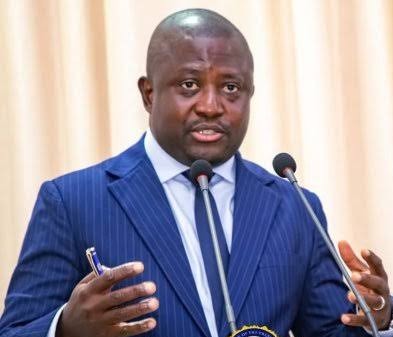
The Attorney General and Minister of Justice started by saying ‘’ I want to begin not as the Attorney General, but as a Sierra Leonean.’’
‘’I belong to the generation that came of age during our civil war. I was internally displaced. I witnessed things that no person — and certainly no child — should ever witness. Like many of my compatriots, I lost people to that conflict. And like many who survived it, I carried its weight into everything I subsequently chose to do with my life,’’ he said.
He said when the war ended, and when this country chose the difficult, uncertain, and deeply necessary path of truth and reconciliation, he did not stand at a distance and observe.
‘’I worked with the Truth and Reconciliation Commission. I practised before the Special Court for Sierra Leone. I spent years as a human rights lawyer and transitional justice practitioner, not because it was prestigious work, but because I believed — and I still believe — that what Sierra Leone endured demanded an account, and that the account, if given honestly, could be the foundation of something better,’’ the Attorney General said.
This is he said is dear to his heart because he want the audience to understand that when he stand before them as Attorney General, he was not bringing a disinterested Government perspective to this conversation.
‘’I am bringing a deeply personal one. The TRC was not, for me, a historical to be noted and filed. It was a process. Its findings touched people I knew. Its recommendations were made in the names of victims whose testimonies I heard. And the question of whether those recommendations are being implemented is not, for me, an administrative question,’’ he said.
The Sierra Leone Truth and Reconciliation Commission was constituted in 2002 as a direct response to one of the most devastating conflicts in West African history. It was mandated to create an impartial historical record, to address impunity, to respond to the needs of victims, to promote healing and reconciliation, and — critically — to prevent a repetition of the violations and abuses suffered.
The TRC’s Final Report — Witness to Truth — was a landmark document of extraordinary courage and depth. It told uncomfortable truths, named responsibilities that were painful, and made recommendations that were ambitious — about reparations, about institutional reform, about governance, about the rights of women and children, about the conditions in which the war took root. It was not a perfect process.
No truth commission is. But it was our process, conducted by Sierra Leoneans, for Sierra Leoneans, grounded in the testimonies of those who suffered most.
Following the extensive work of the Commission, Government committed to faithfully and timeously implement those recommendations.
Alpha Sesay was quick to put words into context and boldly mentioning word such as – Not aspirationally. Not when convenient. Faithfully. And timeously. Those were not decorative words. They were a legal and moral commitment made by the State to its own people.
He said twenty-four years have passed since the end of the war. About two decades have passed since the TRC submitted its final report.
‘’We must, as a nation, be willing to say plainly what the record shows.’’
Implementation has been uneven. There have been genuine achievements — the establishment of the Human Rights Commission of Sierra Leone, significant legislative reforms in areas that the TRC identified as critical, the work of the Special Court in holding perpetrators accountable, and the institutional memory that the TRC process itself generated. These are not nothing. They matter.
Despite, some progress, there are also significant and enduring gaps. The reparations programme for victims — which the TRC placed at the centre of its recommendations — has never been fully resourced or operationalised at the scale the report envisioned. The experiences of women and girls who survived sexual violence during the conflict remain.
The reform of governance institutions — of the structures that the TRC identified as having enabled the conditions for conflict — has been partial and inconsistent. And too many of the institutions that bear responsibility for specific recommendations have, over the years, provided insufficient information to the bodies charged with tracking implementation.
He said the Office of the Attorney General and Minister of Justice has a specific and non-negotiable role in this process.
As the principal legal adviser to the Government and the institution that leads on legislative reform, we bear responsibility for ensuring that the legal architecture of this country reflects the lessons of our past.
Alpha Sesay noted that many of the TRC’s recommendations had a legislative dimension — reforms to laws governing land rights, citizenship, women’s rights, access to justice, and the accountability of public officials. Some of those reforms have been delivered. Others remain outstanding.
‘’I commit, from this platform today, that the Office of the Attorney General will conduct a systematic review of the TRC’s legislative recommendations and report publicly on the status of their implementation, as part of the updated report that this review process is designed to produce.
He also committed that his office will engage seriously with the ICPNC in its mandate under Section 12(c) of the ICPNC Act, 2020 — not as a compliance exercise, but as an act of good faith toward the victims whose testimonies made the TRC’s recommendations possible.
The Attorney General concluded that Sierra Leone is currently engaged in a major constitutional review process (a recommendation by the TRC) — one that is designed to be genuinely participatory, grounded in the voices of ordinary citizens, and intended to address the governance deficits that have persisted since independence. That process and this review meeting are not separate conversations. They are the same conversation.
The TRC told us why our conflict happened. It pointed to bad governance, to exclusion, to impunity, to the absence of accountability, to the failure of institutions to serve the people.