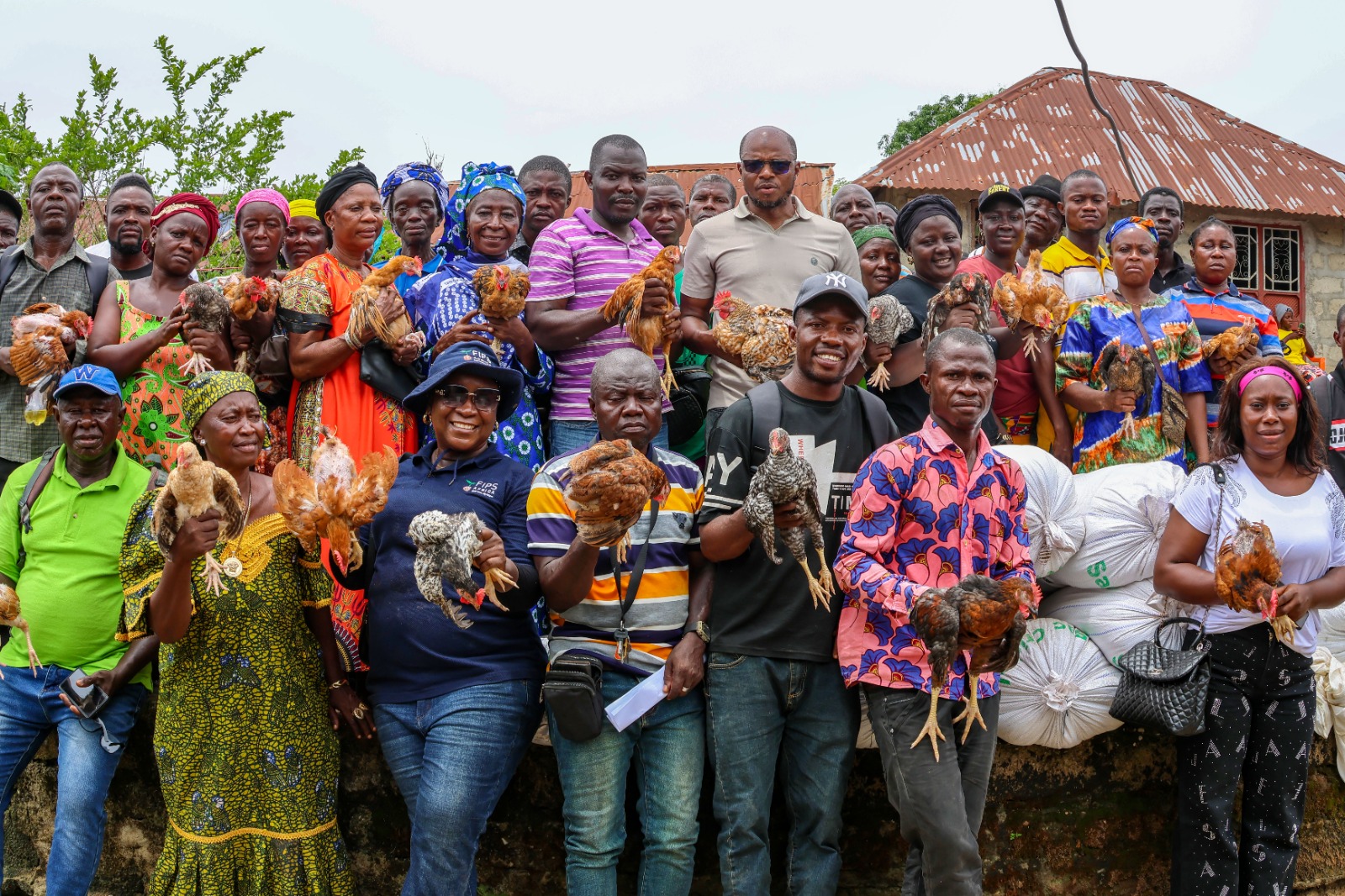
The Ministry of Agriculture and Food Security in partnership with Farm Input Promotions Africa based in Kenya (FIPS-Africa) has distributed 1,000 chicks each to five districts across Sierra Leone under the Small Pack Initiative aimed at supporting smallholder farmers.
The beneficiary districts include Bo, Kenema, Port Loko, Karene, and Moyamba. Farmers in these districts received chicks together with chicken feed and technical training support under the small pack nutrition-sensitive agriculture component of the project.
The Small Pack Initiative, funded by FIPS-Africa and implemented by the Extension Division of MAFS, supports rural communities through the Village-Based Advisors approach to improve food security and livelihoods among smallholder farmers.
Recently, farmers received improved rice seeds alongside technical training on modern farming practices to help increase productivity and income generation.
“Small Pack has been a very good initiative for us who cannot afford quality seeds and technical training,” said Jusu Kawa, a beneficiary farmer from Kenema.
“I received small pack of seeds and training on how to grow rice in Inland Valley Swamp. I realized a great difference compared to the old methods I used before. For me, the knowledge gained is a sustainable skill that I will continue to use to improve my yield and income,” Kawa added.
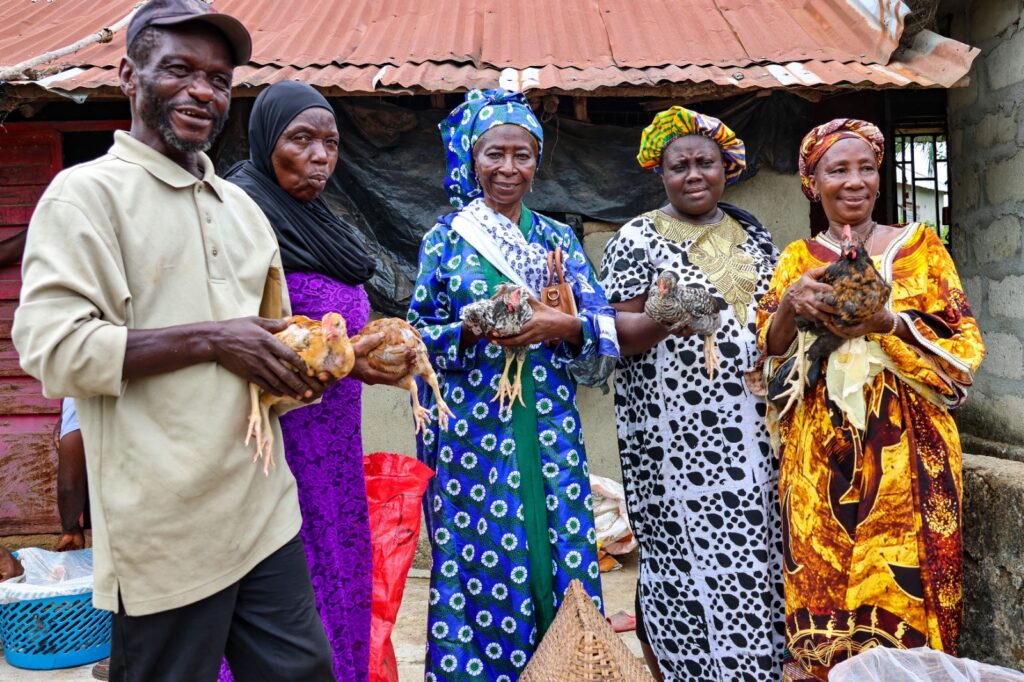
As part of the livestock support package, over 1,200 beneficiaries across the five districts also received five-week-old chicks, feed, and poultry management training. The intervention seeks to improve household nutrition while creating additional sources of income especially for rural women and farming families.
“I received five chicks, feed, and training under the Small Pack Initiative,” said Musu Kamara from Bo.
“I used to rear chickens without proper knowledge, and this affected their size and quality. People hardly bought local chickens at good prices because they were small. Now, I have improved breeds that grow faster and bigger. I will use the training to rear more chickens for food and income,” she explained.
The initiative continues to strengthen the Government Feed Salone commitment to empowering smallholder farmers through access to improved inputs, technical knowledge, and sustainable agricultural practices that contribute to food security, nutrition, and rural economic growth.