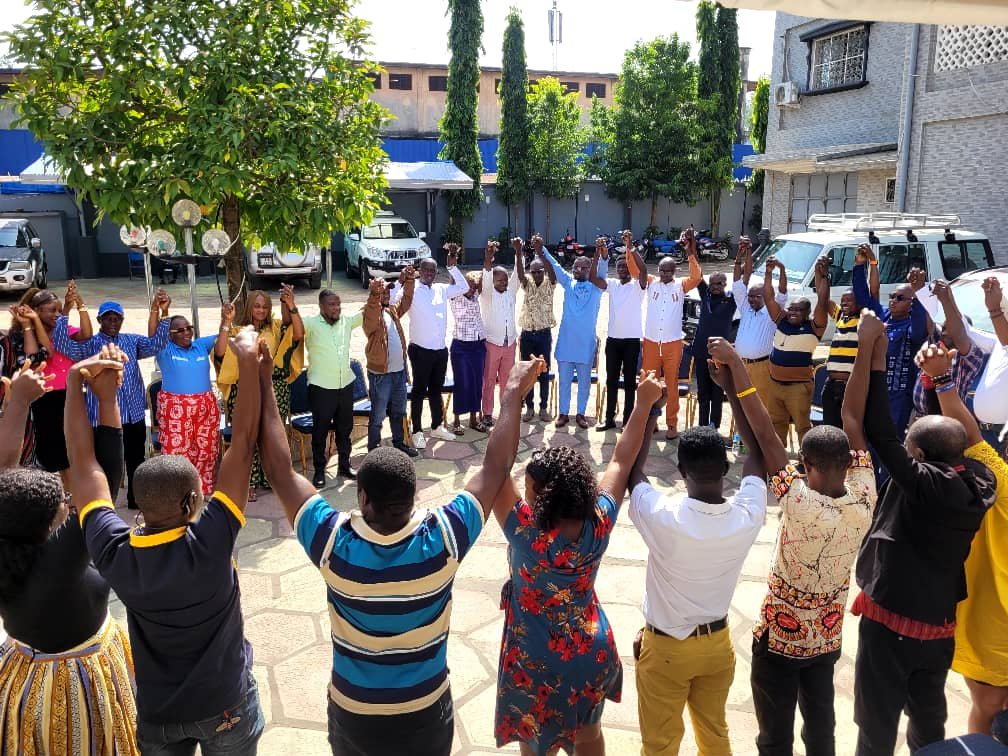
By Adonis Francis
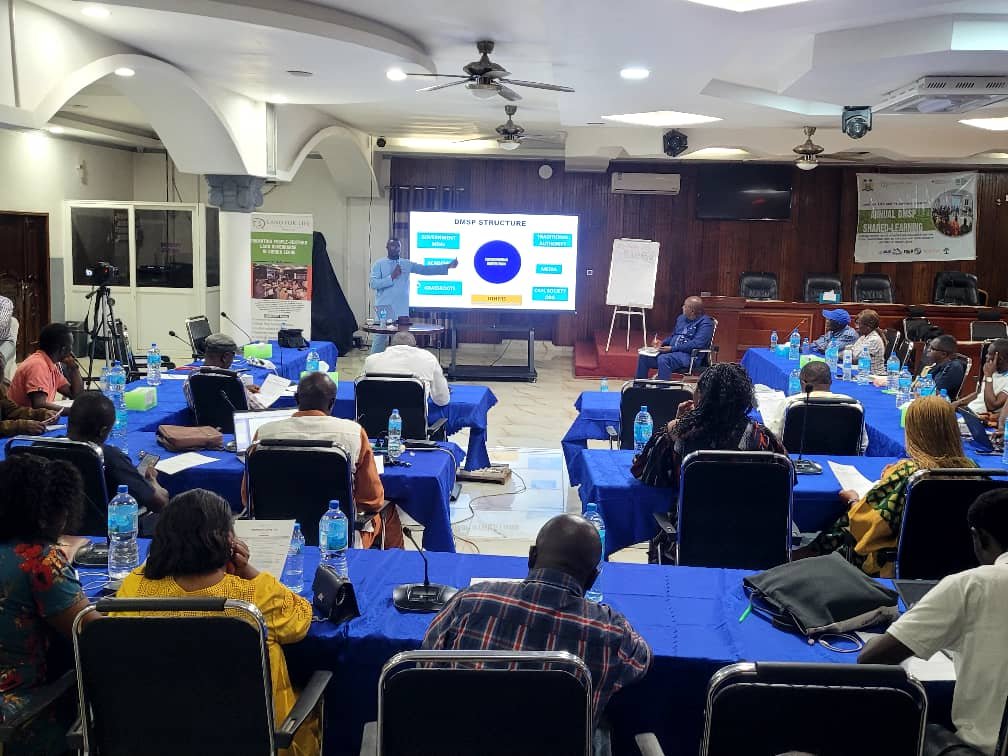
During an overview of the District Multi-Stakeholder Platform (MSP), National Coordinator for Land for Life, Aiah Komba Lebbie, highlighted the importance of the annual experience-sharing session. This structured opportunity fosters reflection, learning, and collective growth among participants. Key reasons for this session include:
- Knowledge Transfer: Participants share practical experiences, lessons learned, and best practices, enabling others to avoid repeated mistakes and adopt proven approaches.
- Reflection and Continuous Improvement: Reviewing successes and challenges from the past year encourages critical reflection, supporting better planning and decision-making.
- Capacity Building: Exposure to diverse experiences enhances skills, broadens perspectives, and strengthens problem-solving abilities within the group.
- Alignment and Shared Understanding: The session ensures that all participants understand common goals, strategies, and priorities, promoting consistency in future work.
- Recognition and Motivation: Acknowledging achievements boosts morale and motivates participants for the coming year.
- Networking and Collaboration: Bringing people together fosters relationships, trust, and collaboration, leading to improved teamwork and innovation.
- Organizational Learning and Memory: Documenting shared experiences preserves institutional knowledge, supporting long-term learning beyond individual participation
.
Lebbie explained that in Sierra Leone, the Multi-Stakeholder Platform (MSP), also known as a Multi-Actor Partnership (MAP), serves as a structured, inclusive space where diverse actors can dialogue and negotiate on contentious land governance issues. This approach emphasizes that sustainable land governance should involve all stakeholders—government, traditional authorities, civil society, landowners, women’s groups, private investors, and local communities—rather than being dictated by a single power holder.
He noted that the terms MSP and MAP are often used interchangeably, with MSP referring to the broader national process and MAP to the specific multi-actor platforms facilitated by Land for Life.
In appreciation of collaboration and resilience, the section chief of Kakua Chiefdom, representing the paramount chief, commended Land for Life for its efforts in mitigating land disputes and advancing land laws across the country. He also expressed both successes and challenges faced regarding land issues within the Chiefdom.
James Alpha, Partnership Manager representing Welthungerhilfe Sierra Leone, affirmed the organization’s commitment to the Land for Life initiative during the Annual District Multi-Stakeholder Platform (DMSP) Shared-Learning Session.
He stated that Welthungerhilfe recognizes the critical role of land governance in sustainable development, social cohesion, food security, and climate resilience. As such, the organization has consistently supported Land for Life under BMZ funding, aligning national land reform processes with community-level realities.
Welthungerhilfe’s contributions reinforce District Multi-Stakeholder Platforms as inclusive spaces that enable government institutions, traditional authorities, civil society, women, youth, and the media to constructively engage with land-related issues. This initiative has advanced transparency in land administration, promoted peaceful land dispute resolutions, and increased awareness of land rights and responsibilities, particularly for women and vulnerable groups.
Moreover, the organization acknowledges that effective land governance is interconnected with sustainable livelihoods and environmental stewardship. By promoting inclusive land governance processes, Welthungerhilfe enables communities to build the necessary trust and confidence to invest in sustainable land use and protect natural resources, ultimately reducing land-related conflicts.
Welthungerhilfe celebrates the gains achieved through the DMSP across nine districts, showcasing the potential of collaboration, shared learning, and local ownership in translating policy commitments into practical outcomes at the community level. The insights gained from these platforms provide valuable feedback for enhancing national land sector collaboration.
Under the theme “Celebrating the Gains, Demonstrating the Possibilities in Collaboration, Building Resilience for Sustainability,” Welthungerhilfe reaffirms its dedication to supporting Land for Life and promoting people-centered land governance that prioritizes equity and sustainability. The organization looks forward to further collaboration with the government and other partners to establish a resilient and accountable land governance ecosystem in Sierra Leone.
Mohamed Kallon, Senior Planning Officer from the Ministry of Planning and Economic Development, underscored the Strategic Imperative of integrating land governance into the Medium-Term National Development Plan (MTNDP). This plan serves as a definitive roadmap for achieving sustainable and inclusive national development, aiming for an inclusive green middle-income status by 2039.
Kallon emphasized that the success of the MTNDP’s “Big 5 Game Changers”—boosting agricultural productivity, investing in human capital, creating job opportunities, expanding infrastructure, and ensuring public service efficiency—relies heavily on an effective land governance system. The MTNDP highlights land governance as a strategic enabler for economic transformation.
The Ministry recognizes the importance of participating in the Annual DMSP Shared-Learning Session as it fosters collaboration to translate national policies into tangible local results. Effective land governance is essential for ensuring equitable access to land,