… Fostering Cross-Country Collaboration
By Fatmata Biankay Tarawallie
The recent WASH Systems Learning Forum brought together key stakeholders from Sierra Leone and Nigeria to address the critical challenges of strengthening water, sanitation, and hygiene (WASH) systems. Held in Abuja and hosted under the WASH Systems for Health (WS4H) programme, the forum served as a dynamic platform for knowledge exchange and strategic collaboration.
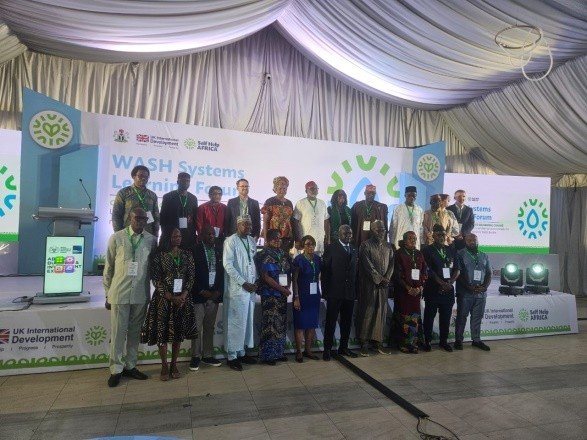
The event focused on the central themes of change mechanisms and measuring change, exploring what drives tangible progress in the WASH sector. Discussions delved into decentralized monitoring, enhancing planning cycles, and effectively mainstreaming gender and social inclusion, with a particular emphasis on operating in low-income and fragile contexts.
Partners from both nations openly shared their experiences, highlighting common challenges such as domestic financing constraints, weak subnational capacity, political shifts, and insecurity. A key insight was the struggle to maintain WASH services after the conclusion of external projects, underscoring the need for sustainable, system-level solutions.
The power of cross-country learning was a dominant theme. Sierra Leone’s work on budget tracking and financial flow analysis in a fragile context drew significant interest. In parallel, Nigeria’s experience in managing WASH programmes in security-compromised states provided practical insights for partners operating in difficult environments. Contributions from UNICEF further enriched the dialogue, highlighting flexible approaches and contingency planning for maintaining WASH services during emergencies.
The forum successfully facilitated sector-wide learning and strengthened collaboration. It provided a platform for reflection on the monitoring and evaluation processes necessary for vertical integration across different government levels. High-level government participation, including a working paper presented by a Director from the Federal Ministry of Water Resources and Sanitation, demonstrated a commitment to moving beyond project-focused approaches to a broader, learning-oriented sector.
Key lessons emerged on the importance of a systems approach, the central role of partnerships, and the need for evidence-based decision-making. The forum also reinforced that capacity building at all levels is crucial for creating resilient and sustainable WASH services.
In conclusion, the event highlighted the shared ambition of Sierra Leone and Nigeria to build robust WASH systems. The collaborative spirit and knowledge exchange have refocused efforts for the next phase of the WS4H programme, positioning it to better support governments and empower communities. The learning from Abuja is set to shape a more focused and collaborative path forward, prioritizing local government capacity, integrating accountability tools, and ensuring that inclusivity and climate resilience are at the heart of WASH systems strengthening.